
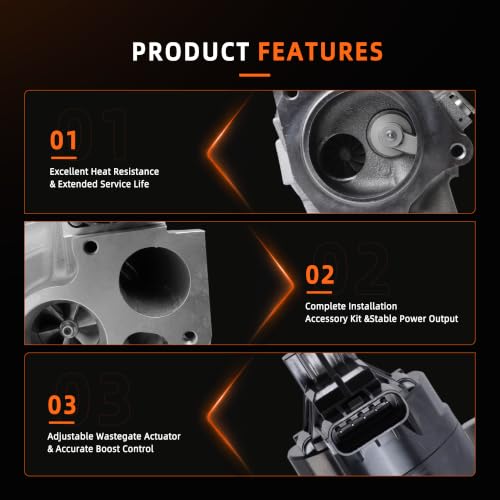
49373-07010 Turbocharger Kit for 2016–2020 Honda Civic and CR-V 1.5T
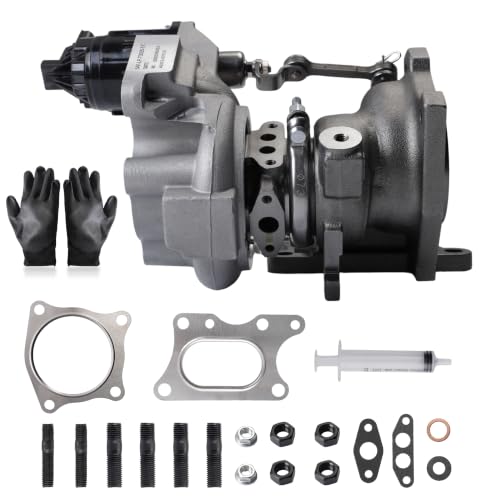
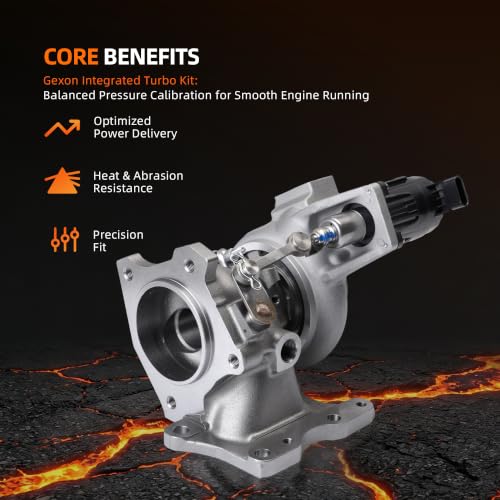
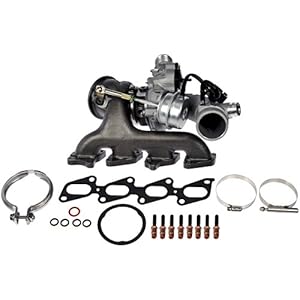
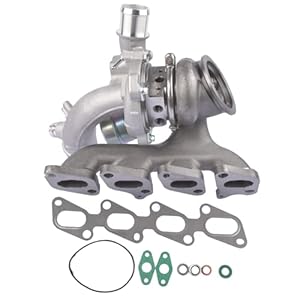
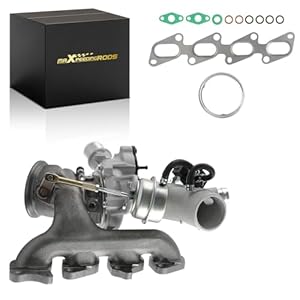
Restore factory-style boost response with this replacement turbocharger assembly for select Honda Civic and CR-V models equipped with the L15B7 1.5-liter turbocharged engine. The kit includes the turbocharger, wastegate actuator and installation gaskets for a more complete replacement.
This is an OE-style replacement intended to restore normal boost delivery, acceleration and drivability. It is not a larger performance turbo or automatic horsepower upgrade.
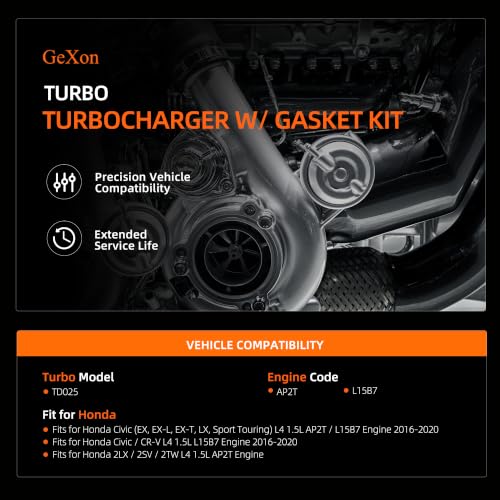
Vehicle Fitment
Honda Civic 1.5T
Compatible with select 2016–2020 Honda Civic 1.5L turbo applications, including:
- EX
- EX-L
- EX-T
- Touring
- Sport
- Sport Touring
- Select LX hatchback applications equipped with the 1.5T engine
Honda CR-V 1.5T
Compatible with select 2017–2020 Honda CR-V 1.5L turbo applications.
The original listing describes CR-V fitment as 2016–2020, but the North American CR-V did not receive the 1.5L turbo engine until the 2017 model year.
$299.99
Important Civic Fitment Warning
Not every 2016–2020 Civic uses this turbocharger.
It does not fit:
- Civic models with the naturally aspirated 2.0L engine
- Civic Si unless the OE turbo number matches
- Civic Type R 2.0T
- Hybrid models
- Applications with a different turbo or actuator
- Vehicles outside the specified engine and OE-number range
The Civic LX is especially important to verify. Many LX sedans and coupes use the naturally aspirated 2.0L engine, while certain hatchback applications use the turbocharged 1.5L. Trim name alone is not enough—because Honda apparently wanted the VIN to feel included.
Engine and Turbo Requirements
Confirm that the vehicle has:
- L15B7 1.5L turbocharged engine
- Matching AP2T-style turbo configuration
- Compatible actuator connector
- Matching compressor and turbine housing
- Correct oil and coolant connections
- Matching intake and exhaust flanges
- One of the listed OE or Mitsubishi reference numbers
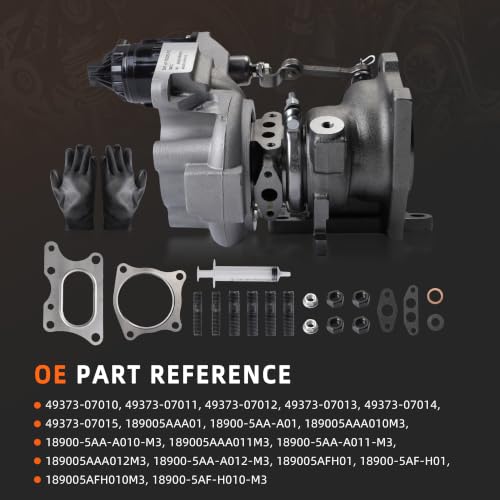
Reference and Interchange Numbers
Mitsubishi turbo references
- 49373-07010
- 49373-07011
- 49373-07012
- 49373-07013
- 49373-07014
- 49373-07015
Honda Civic references
- 18900-5AA-A01
- 189005AAA01
- 18900-5AA-A010-M3
- 189005AAA010M3
- 18900-5AA-A011-M3
- 189005AAA011M3
- 18900-5AA-A012-M3
- 189005AAA012M3
Honda CR-V references
- 18900-5AF-H01
- 189005AFH01
- 18900-5AF-H010-M3
- 189005AFH010M3
These numbers should not automatically be treated as interchangeable across every Civic and CR-V. Match the complete number found on the original turbocharger and confirm by VIN.
Package Contents
The kit includes:
- Complete turbocharger assembly
- Wastegate actuator
- Turbine housing
- Compressor housing
- Center bearing housing
- Installation gaskets
- Mounting seals listed by the supplier
Oil lines, coolant lines, mounting studs, nuts, clamps and intake hardware may not be included. Inspect the package before disassembling the vehicle.
Factory-Style Performance
This replacement turbocharger is designed to restore:
- Normal boost pressure
- Factory-style throttle response
- Smooth acceleration
- Consistent wastegate control
- Original engine drivability
- Reliable daily operation
The phrase “abundant power reserve” should not be interpreted as additional horsepower beyond the factory calibration. A replacement turbo restores performance lost to a worn unit; it does not rewrite Honda’s ECU tables through enthusiasm.
Integrated Wastegate Actuator
The included actuator controls the internal wastegate, regulating turbine speed and boost pressure by diverting exhaust around the turbine wheel when commanded.
A faulty actuator or wastegate may cause:
- Low boost
- Delayed turbo response
- Inconsistent acceleration
- Overboost
- Underboost
- Reduced-power mode
- P0299 underboost codes
- P0234 overboost codes
- Wastegate-related rattling
Do not adjust actuator-rod length or preload unless required by the appropriate Honda service procedure.
Signs of a Failing Turbocharger
Replacement may be necessary if diagnosis confirms:
- Excessive turbo shaft movement
- Compressor or turbine-wheel damage
- Oil leaking into the intake or exhaust
- Persistent blue exhaust smoke
- Metallic scraping or siren-like noises
- Slow boost response
- Reduced power under acceleration
- Damaged wastegate linkage
- Cracked or leaking housings
- Persistent underboost or overboost codes
These symptoms can also result from damaged charge piping, intercooler leaks, restricted oil lines, boost-control faults or internal engine problems.
Before replacing the turbo, review Pro Street’s guide to checking engine health before working with boost.
Diagnose the Original Failure
Common causes of premature turbocharger failure include:
- Restricted oil supply
- Contaminated engine oil
- Blocked oil-return passages
- Low oil pressure
- Excessive crankcase pressure
- Foreign-object damage
- Intake-system leaks
- Engine overheating
- Incorrect wastegate operation
- Exhaust restrictions
Replacing the turbo without correcting the original problem can quickly damage the new assembly.
Critical Installation Instructions
Professional installation is recommended. Before installation:
- Verify the OE number and actuator configuration.
- Determine why the original turbo failed.
- Inspect the intake system for compressor debris.
- Clean contaminated intercooler and charge pipes.
- Inspect the exhaust for turbine debris or restrictions.
- Replace the engine oil and filter.
- Inspect or replace the turbo oil-feed line.
- Confirm that the oil-return passage is unrestricted.
- Inspect all coolant lines and fittings.
- Prime the turbocharger with clean engine oil.
- Crank the engine without starting until oil pressure develops.
- Start the engine and check all connections for leaks.
Garrett’s professional installation guidance recommends fresh oil and filters, a clean intake system and inspection of the crankcase-breather system during turbo replacement. www.garrettmotion.com
Gasket Installation
The included gaskets help seal the turbocharger’s exhaust, oil and coolant connections.
Before assembly:
- Remove old gasket material
- Clean every mating surface
- Inspect flanges for cracking or warping
- Keep sealant away from oil passages
- Follow Honda’s tightening sequence
- Use the specified torque values
Do not reuse crushed metal gaskets or bury a damaged sealing surface under silicone. Turbo oil passages are not an appropriate storage location for excess RTV.
Post-Installation Checks
After installation:
- Verify engine-oil and coolant levels
- Check for oil, coolant and exhaust leaks
- Allow the engine to idle before applying load
- Confirm wastegate operation
- Monitor requested and actual boost pressure
- Scan for stored or pending trouble codes
- Recheck fluid levels after the first heat cycle
Warranty
The turbocharger is advertised with a one-year quality warranty. Review the seller’s terms, exclusions and documentation requirements before installation.
Warranty coverage may depend on proof that the oil system was serviced and the cause of the original failure was corrected.
Specification: 49373-07010 Turbocharger Kit for 2016–2020 Honda Civic and CR-V 1.5T
|
User Reviews
Be the first to review “49373-07010 Turbocharger Kit for 2016–2020 Honda Civic and CR-V 1.5T”
You must be logged in to post a review.





There are no reviews yet.