
4500A Car Battery Jump Starter with 150 PSI Air Compressor – Portable 12V Jump Box
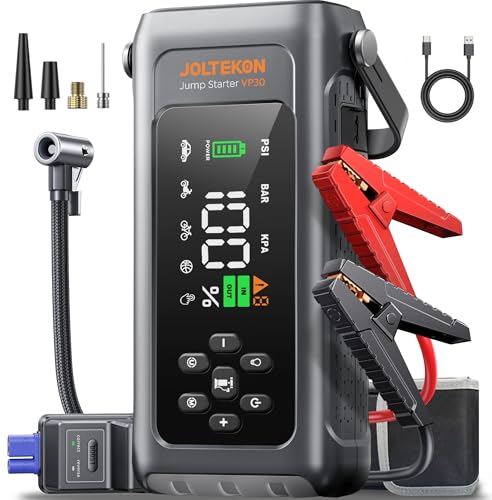
A dead battery is annoying. A dead battery and a low tire at the same time is your car making the situation personal. The 4500A Car Battery Jump Starter with 150 PSI Air Compressor combines portable starting power, tire inflation, pressure monitoring, USB charging and emergency lighting into one compact roadside tool.
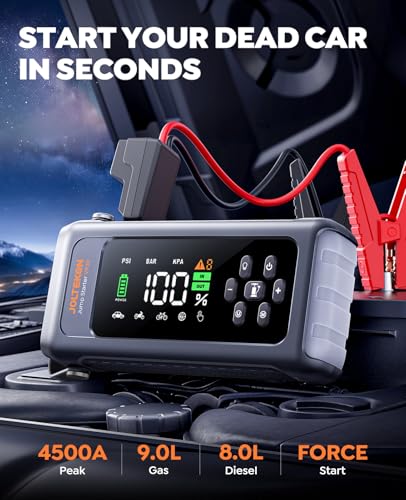
Designed for 12V vehicles with gasoline engines up to 9.0L and diesel engines up to 8.0L, this portable jump box delivers up to 4500A peak starting current and includes a Force Start function for difficult low-voltage battery situations.
An integrated 150 PSI tire inflator, 3.3-inch smart display, USB-C device charging and four-mode 500-lumen emergency light make it useful well beyond simply jump-starting a car.
4500A Portable 12V Jump Starter
The jump starter provides a claimed 4500A peak output for starting compatible 12V vehicles without requiring another vehicle or conventional jumper cables connected to a donor battery.
Rated applications include:
- Gasoline engines up to 9.0L
- Diesel engines up to 8.0L
- Cars
- Pickup trucks
- SUVs
- Motorcycles
- Boats
- Lawn equipment
- Other compatible 12V starting systems
The portable power pack is designed to provide multiple starting attempts from a charge, depending on battery condition, vehicle requirements, temperature and the jump starter’s remaining charge.
Force Start for Severely Discharged Batteries
Some smart jump starters have difficulty recognizing a battery when its voltage becomes extremely low.
This unit includes a Force Start function designed for situations involving severely discharged or low-voltage batteries. It is intended to provide starting assistance when the normal smart-starting system cannot detect sufficient battery voltage.
Force Start should be used strictly according to the supplied instructions because it can alter or bypass portions of the jump starter’s normal automatic safeguards.
A dead battery also isn’t always the actual problem. If the vehicle has electrical power but still won’t start, starter, cable, ground, relay or control-system problems may require further diagnosis.
$99.99
Designed for Hot and Cold Conditions
The jump starter has a stated operating temperature range of approximately -4°F to 140°F (-20°C to 60°C).
That range makes it suitable for emergency use across a wide variety of weather conditions, although extreme temperatures can affect both the vehicle battery and the internal battery inside the jump starter.
For best starting performance, the manufacturer recommends keeping the jump starter above 50% charge before attempting to start a vehicle.
Built-In 150 PSI Portable Tire Inflator
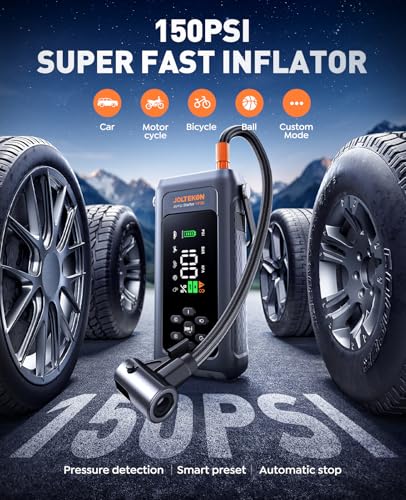
The integrated compressor delivers up to 150 PSI and uses a 19-cylinder pump design for rapid inflation.
Rather than carrying a separate jump pack and tire compressor, the same device can help address both starting and tire-pressure emergencies.
The inflator includes:
- Maximum pressure up to 150 PSI
- Five inflation modes
- Automatic pressure memory
- Automatic shutoff
- Four inflation nozzles
- Detachable extended air hose
- PSI display
- BAR display
- KPA display
Automatic shutoff allows the desired pressure to be selected before inflation and stops the compressor after reaching the target setting, helping reduce the risk of accidental over-inflation.
Always use the tire pressure specified by the vehicle manufacturer rather than inflating a tire to the compressor’s maximum pressure rating.
Digital Tire Pressure Gauge
The built-in compressor also functions as a digital tire-pressure gauge, allowing tire pressure to be checked before adding air.
Pressure can be displayed in three common units:
PSI – commonly used for automotive tire pressure in the United States
BAR – commonly used in many international applications
KPA – metric pressure measurement used by many manufacturers
This makes the jump starter useful for routine tire-pressure checks as well as roadside emergencies.
8-in-1 Roadside Emergency Tool
The unit combines eight functions into one portable package:
- 4500A portable jump starter
- 150 PSI tire inflator
- Digital pressure gauge
- Portable power bank
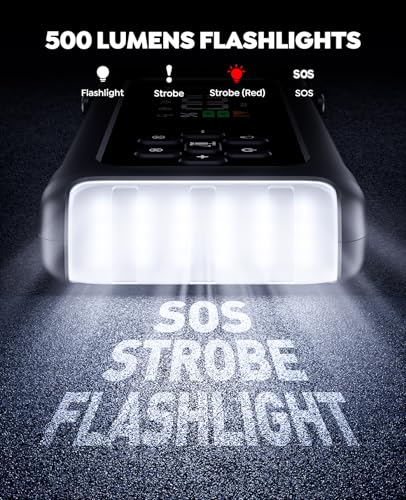
- 500-lumen flashlight
- SOS emergency signal
- White strobe light
- Red roadside warning strobe
Combining these functions reduces the amount of emergency equipment required in the trunk while keeping the most commonly needed roadside tools together.
Because apparently batteries, tires and phones have formed an alliance and agreed to die simultaneously.
500-Lumen Four-Mode Emergency Light
The integrated 500-lumen wide-area light provides illumination for nighttime breakdowns and roadside repairs.
Four lighting modes provide different emergency functions:
- White flashlight
- SOS signal
- White strobe
- Red warning strobe
The standard white light can illuminate the engine compartment, battery terminals or tire area.
SOS and strobe functions can provide additional signaling during emergencies, while the red strobe can improve visibility when the vehicle is stopped along the roadside.
For safety, the vehicle should still be moved as far from active traffic as practical whenever conditions permit.
Portable USB-C Power Bank
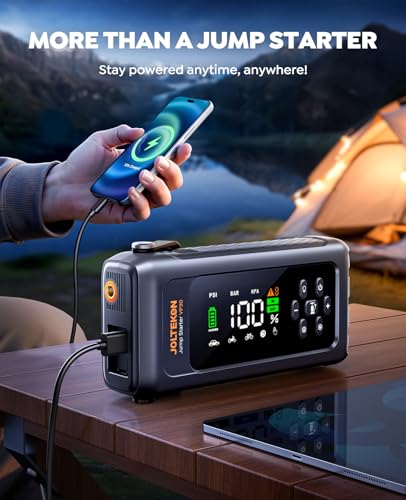
The internal battery can also provide emergency charging for compatible electronic devices.
USB-C support makes it useful for powering devices such as:
- Smartphones
- Tablets
- Cameras
- Portable electronics
- Other compatible USB-C devices
This is particularly useful during roadside emergencies where maintaining phone power may be necessary for navigation, communication or roadside-assistance services.
The manufacturer states energy efficiency above 90%, while the display provides information about the jump starter’s remaining battery level.
Large 3.3-Inch Smart Display
A 3.3-inch digital display provides operating information and remaining battery status.
The screen is designed to remain visible under bright conditions, making it easier to monitor the unit while jump-starting a vehicle or inflating tires outdoors.
Knowing the jump pack’s actual state of charge is particularly important because the manufacturer recommends having more than 50% remaining charge before attempting a vehicle start.
10 Integrated Safety Protections
The smart jumper-cable system incorporates 10 protection functions intended to help protect the vehicle, jump starter and operator from common connection and operating errors.
The unit also uses a V0-rated fire-resistant battery enclosure/material system, according to the supplied specifications.
Its outer shell is designed to provide additional resistance against everyday exposure to rain, dust and accidental drops.
Safety electronics don’t make connection procedures optional, however. Always verify correct polarity and follow the supplied starting procedure before activating the jump starter.
When Jump-Starting Doesn’t Fix the Problem
A successful jump start doesn’t necessarily mean the battery is defective.
A weak battery, poor terminal connection, excessive cable resistance, charging-system problem or parasitic draw can all eventually leave a vehicle unable to crank.
If you hear rapid clicking when attempting to start the engine, battery voltage and battery connections are logical places to begin diagnosis.
If the battery repeatedly becomes discharged after the vehicle sits, our guide explaining why a car battery keeps dying covers common causes ranging from aging batteries to parasitic electrical loads.
For more difficult starting problems, an automotive voltage-drop test can uncover resistance in starter cables and ground connections that a basic voltage measurement may miss.
Long-Term Storage and Maintenance
Like the vehicle battery it’s supposed to rescue, the jump starter’s internal battery needs periodic attention.
Before first use, fully charge the unit.
When stored for extended periods, the manufacturer recommends recharging approximately every two to three months to maintain battery performance and service life.
The supplied specifications indicate:
- Approximately 24 months maximum standby capability under specified conditions
- Support for more than 1,000 recharge cycles
- Operating range of -4°F to 140°F
- Multiple vehicle starts possible per charge
Actual performance and battery life depend on storage temperature, usage, battery age and maintenance.
Do not leave the unit exposed to excessive heat for extended periods.
Basic Jump-Starting Procedure
Before attempting to start the vehicle, confirm that the jump starter has adequate charge and consult both the jump starter manual and vehicle owner’s manual.
Connect the smart clamps to the correct battery terminals or designated jump-starting points.
Once the smart clamp system indicates a proper connection, the manufacturer recommends attempting to start the vehicle within 30 seconds.
After the engine starts, disconnect the jump starter according to the manufacturer’s specified sequence.
Some modern vehicles use dedicated remote jump terminals or have specific jump-starting requirements, so always follow the vehicle manufacturer’s procedure.
Key Features
- 4500A peak starting current
- Designed for 12V vehicle batteries
- Supports gasoline engines up to 9.0L
- Supports diesel engines up to 8.0L
- Force Start function for severely discharged batteries
- 150 PSI maximum compressor pressure
- 19-cylinder air-pump design
- Five inflation modes
- Automatic inflation shutoff
- Pressure-memory function
- Four inflation nozzles
- Detachable extended air hose
- PSI, BAR and KPA pressure units
- Digital tire-pressure gauge
- 500-lumen emergency lighting
- White flashlight
- SOS mode
- White strobe
- Red warning strobe
- USB-C power-bank functionality
- 3.3-inch smart display
- 10 integrated safety protections
- V0-rated fire-resistant construction
- Durable protective outer housing
- Stated operating temperature from -4°F to 140°F
- Multiple starts per charge
- 1,000+ stated recharge cycles
A Practical All-in-One Roadside Kit
The 4500A Car Battery Jump Starter with 150 PSI Air Compressor packs several useful roadside tools into a single portable device.
Instead of carrying a separate jump starter, tire compressor, pressure gauge, flashlight and USB battery pack, this unit combines them into one package suitable for cars, SUVs, pickups, motorcycles and other compatible 12V vehicles.
Keep it charged, check it every few months and hopefully it spends its entire life sitting unused in the trunk.
That’s one automotive tool where never needing it is basically the five-star review.
Specification: 4500A Car Battery Jump Starter with 150 PSI Air Compressor – Portable 12V Jump Box
|
User Reviews
Be the first to review “4500A Car Battery Jump Starter with 150 PSI Air Compressor – Portable 12V Jump Box”
You must be logged in to post a review.





There are no reviews yet.