

Vehicle Fitment
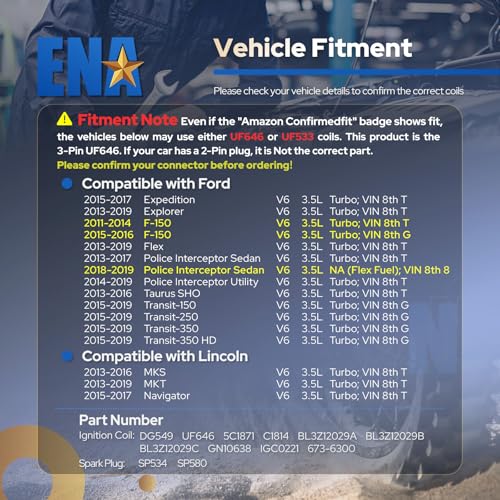
| Make | Model | Years | Engine/fitment notes |
|---|---|---|---|
| Ford | F-150 | 2011–2016 | 3.5L EcoBoost V6 only |
| Ford | Explorer | 2013–2019 | 3.5L EcoBoost; generally Sport and Platinum trims |
| Ford | Expedition | 2015–2017 | 3.5L EcoBoost V6 |
| Ford | Flex | 2013–2019 | 3.5L EcoBoost V6 only |
| Ford | Taurus SHO | 2013–2016 | 3.5L EcoBoost V6 |
| Ford | Police Interceptor Sedan | 2013–2017 | 3.5L EcoBoost-equipped applications |
| Ford | Police Interceptor Utility | 2014–2019 | 3.5L EcoBoost-equipped applications |
| Ford | Transit-150 | 2015–2019 | 3.5L EcoBoost V6 only |
| Ford | Transit-250 | 2015–2019 | 3.5L EcoBoost V6 only |
| Ford | Transit-350 | 2015–2019 | 3.5L EcoBoost V6 only |
| Ford | Transit-350 HD | 2015–2019 | 3.5L EcoBoost V6 only |
| Lincoln | MKS | 2013–2016 | 3.5L EcoBoost V6 |
| Lincoln | MKT | 2013–2019 | 3.5L EcoBoost V6 only |
| Lincoln | Navigator | 2015–2017 | 3.5L EcoBoost V6 |
For reference, Ford identifies the 3.5L EcoBoost as standard equipment on the 2019 Explorer Sport and Platinum—not every 3.5L Explorer. ford.com
Complete Six-Cylinder Ignition Service
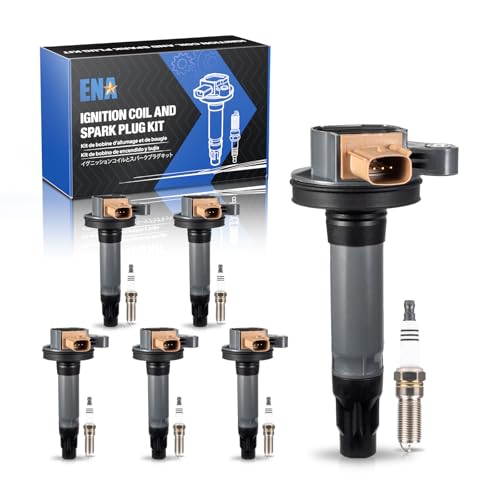
The kit includes:
- Six UF646/DG549-style ignition coils
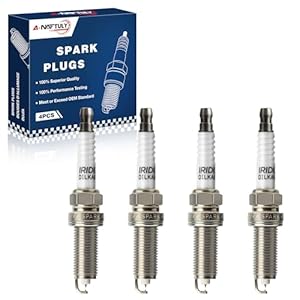
- Six iridium spark plugs
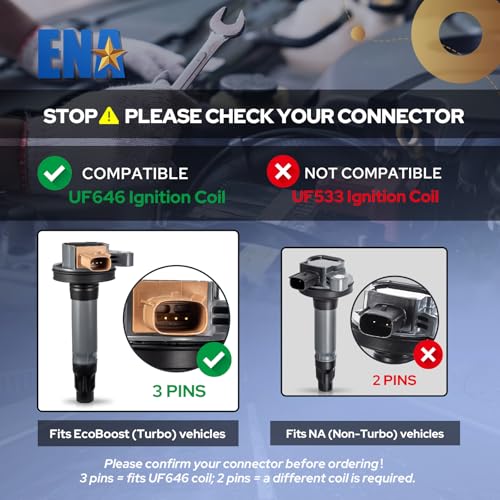
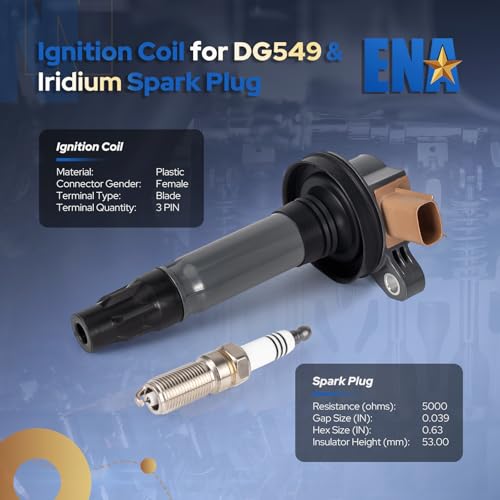
- Three-terminal coil connectors
- Bolt-on, coil-on-plug configuration
- 12-volt coil design
- 12-month limited product warranty
Replacing all six coils and plugs together can help restore consistent combustion when existing components have become worn or unreliable. It may correct ignition-related misfires, but it will not repair injector faults, wiring problems, vacuum leaks, low compression, or tuning issues. Parts cannons are entertaining right up until the invoice arrives.
If you are still diagnosing the problem, review these Pro Street resources:
- Bad ignition-coil symptoms
- Engine-misfire symptoms and diagnosis
- P0300 random or multiple-cylinder misfire guide
- How to choose spark plugs for your engine
Reference and Interchange Numbers
Ignition-coil references
- UF646 / UF-646
- DG549
- DG548
- BL3Z-12029-A
- BL3Z-12029-B
- BL3Z-12029-C
- C1814
- 5C1871
- GN10638
- IGC0221
- 673-6300
Ford’s current DG549 listing identifies BL3Z-12029-C and describes the coil as a turbocharged-engine application. Ford.com
Spark-plug references
- SP534
- SP580
- CYFS-12-YT3
- CYFS-12-YT4
- AI5363
- AI5863
- XP5363
- XP5863
Part numbers are provided for comparison only. Confirm the currently specified plug for the exact VIN because Ford and Motorcraft part numbers can be superseded.
Spark-Plug Gap Warning
Do not publish or rely on the supplied 0.039-inch gap as a universal specification for this kit.
Ford documentation identifies SP-534/CYFS-12-YT3 for earlier 3.5L EcoBoost applications, while an NGK technical bulletin lists that plug at 0.032 inch. fordservicecontent.com Exact specifications can change by vehicle, model year, plug revision, calibration, or replacement part number.
Before installation:
- Confirm the plug number against the VIN or current Ford service information.
- Measure every plug with a proper wire-style gauge.
- Follow the specification for the exact vehicle and plug revision.
- Never force the fine-wire iridium electrode against a conventional ramp-style gap tool.
Boost makes an excessive plug gap announce itself quickly—usually as hesitation or a misfire when the engine is under load.
Installation Notes
Install the coils and plugs only when the engine is cool. Inspect each coil connector, wiring pigtail, plug well, and valve-cover area for corrosion, damaged terminals, oil, or water intrusion.
Use the vehicle manufacturer’s specified spark-plug torque. Do not apply anti-seize unless the plug manufacturer specifically requires it, since lubricant can alter torque loading. Apply dielectric grease sparingly inside the coil boot rather than coating the spark-plug terminal.
After installation, clear stored misfire codes and verify operation under idle, cruise, and controlled load conditions. A flashing check-engine light indicates an active misfire and should not be ignored.
Why Replace Coils and Plugs Together?
A worn plug requires more voltage to bridge its gap. That additional demand can stress an aging ignition coil, particularly in a turbocharged engine where cylinder pressure rises under boost.
Servicing both components together provides:
- Consistent ignition components across all six cylinders
- Reduced risk of pairing new coils with worn plugs
- Fewer repeated intake and ignition-system teardowns
- A solid baseline for continued misfire diagnosis
- More dependable cold starting and operation under load
The kit restores worn ignition components to proper operation; it should not be advertised as a guaranteed horsepower or fuel-economy upgrade.






There are no reviews yet.