
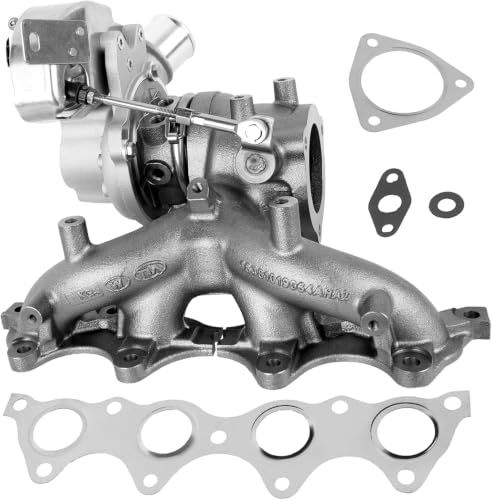

28231-2B770 Turbocharger Assembly for Hyundai Sonata and Kia Optima 1.6T
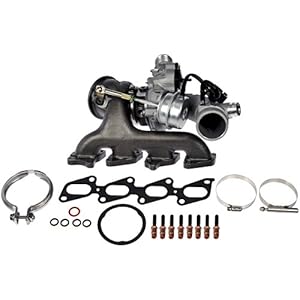
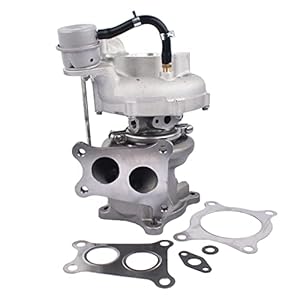
Restore factory-style boost response with this 28231-2B770 turbocharger assembly for select Hyundai Sonata and Kia Optima models equipped with the Gamma 1.6L turbocharged gasoline engine. The complete assembly includes a pre-calibrated wastegate actuator for direct replacement of the compatible original turbo.
This replacement is designed to restore normal boost delivery and drivability. It is not a larger performance turbo and should not require custom fabrication or aftermarket tuning when installed in the correct factory application.
Vehicle Fitment
Hyundai
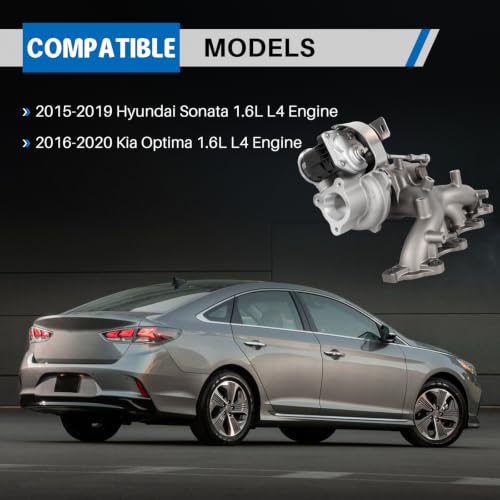
- Sonata Eco 1.6T: 2015–2019
Kia
- Optima 1.6T: 2016–2020
- Common applications include LX 1.6T, EX 1.6T and EX Premium 1.6T, depending on model year
Official Kia specifications confirm that the 2020 Optima was available with separate 1.6L and 2.0L turbocharged engines. This turbo fits the 1.6L turbo only. kiamedia.com
Important Engine Requirement
This turbocharger is intended for compatible:
- 1.6L turbocharged inline-four engines
- Gamma/G4FJ engine applications
- Gasoline direct-injection systems
- Vehicles originally equipped with turbo number 28231-2B770
- Matching electronic or pneumatic control hardware
- Factory-style intake, exhaust, oil and coolant connections
It does not fit:
- Sonata 2.0T
- Optima 2.0T
- Naturally aspirated 2.4L engines
- Hybrid or plug-in-hybrid models
- Newer Smartstream 1.6T engines
- Other Hyundai/Kia 1.6T vehicles unless the VIN and OE number confirm compatibility
Hyundai’s OE catalog associates 28231-2B770 with the 2015–2019 Sonata, while Kia’s corresponding catalog lists it for the 2016–2020 Optima 1.6L.
$242.00
Confirm Fitment Before Ordering
Verify:
- Vehicle year, make and model
- Sonata Eco or compatible Optima 1.6T trim
- G4FJ/Gamma 1.6T engine
- OE turbocharger number
- Exhaust-manifold configuration
- Compressor-housing orientation
- Oil-feed and oil-return fittings
- Coolant-line arrangement
- Wastegate actuator connector and linkage
- Intake and charge-pipe connections
Do not order this turbo solely because the vehicle has a Hyundai or Kia 1.6T badge. Several engine generations share that displacement while using completely different hardware—because one 1.6-liter turbo family would have been suspiciously convenient.
Reference and Interchange Numbers
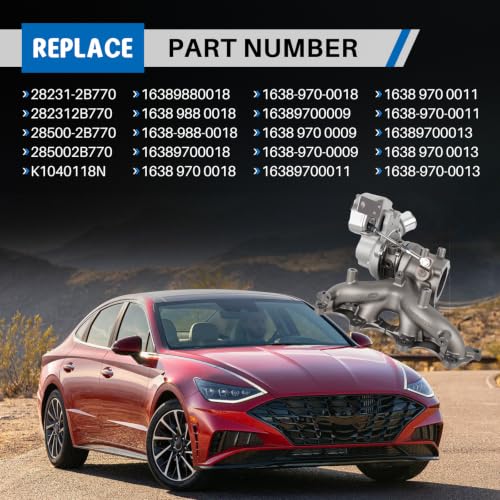
This assembly may replace or interchange with:
- 28231-2B770
- 282312B770
- 28500-2B770
- 285002B770
- K1040118N
- 1638-988-0018
- 16389880018
- 1638-970-0018
- 16389700018
- 1638-970-0009
- 16389700009
- 1638-970-0011
- 16389700011
- 1638-970-0013
- 16389700013
Reference numbers must be used alongside VIN and physical-part verification.
Product Specifications
| Specification | Details |
|---|---|
| Product type | Complete turbocharger assembly |
| OE reference | 28231-2B770 |
| Engine | Gamma/G4FJ 1.6L turbo |
| Configuration | Turbocharged inline-four |
| Fuel system | Gasoline direct injection |
| Turbine housing | Nodular cast iron |
| Turbine wheel | Nickel-alloy construction |
| Compressor housing | Cast aluminum |
| Wastegate actuator | Included |
| Actuator calibration | Factory-style preset |
| Replacement type | Direct replacement |
High-Temperature Construction
The nodular-iron turbine housing is designed to withstand exhaust heat and repeated thermal cycling. Nickel-alloy turbine blades provide heat resistance at normal operating temperatures, while the cast-aluminum compressor housing reduces weight and resists corrosion inside the engine bay.
Durability still depends on proper lubrication, cooling and boost control. Even excellent metallurgy cannot negotiate with a blocked oil-feed line.
Dynamically Balanced Rotating Assembly
The compressor wheel, turbine wheel and shaft assembly are dynamically balanced to help reduce vibration at operating speed. Proper balance is essential because the turbocharger can spin at extremely high rpm.
A balanced assembly may provide:
- Smooth turbo operation
- Consistent boost delivery
- Reduced bearing vibration
- Quieter operation
- Longer bearing and seal life
The replacement turbo should restore normal performance. It should not be advertised as a guaranteed horsepower upgrade beyond factory output.
Pre-Calibrated Wastegate Actuator
The included actuator controls the internal wastegate, helping regulate turbine speed and boost pressure within the factory operating range.
Wastegate or actuator problems may cause:
- Slow turbo response
- Inconsistent boost
- Underboost
- Overboost
- Hesitation
- Reduced-power mode
- P0299 or P0234 codes
Do not adjust the actuator rod unless factory service information specifically requires it. Randomly adding preload is not tuning; it is simply giving the engine computer a new problem to document.
Signs of a Failing Turbocharger
Replacement may be required if diagnosis confirms:
- Excessive shaft movement
- Compressor or turbine-wheel damage
- Oil leaking into the intake or exhaust
- Persistent blue exhaust smoke
- Metallic scraping or siren-like noises
- Slow boost response
- Reduced power during acceleration
- Damaged wastegate linkage
- P0299 underboost
- P0234 overboost
- Cracked or leaking turbo housing
These symptoms can also come from boost leaks, control-solenoid faults, restricted oil lines, damaged intercooler plumbing or internal engine problems.
Before replacement, review Pro Street’s guide to checking engine health before working with boost.
Installation Requirements
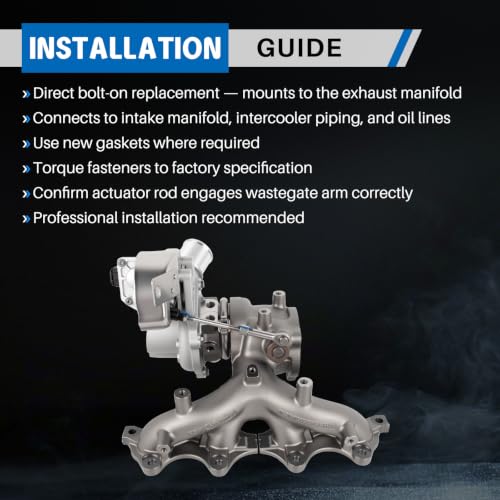
Professional installation is recommended. Before fitting the replacement turbo:
- Determine why the original turbocharger failed.
- Check the intake and intercooler for compressor debris.
- Inspect the exhaust system for restrictions.
- Replace the engine oil and filter.
- Inspect or replace the turbo oil-feed line.
- Confirm the oil-return line is unrestricted.
- Inspect all coolant lines and fittings.
- Verify that the new rotating assembly moves freely.
- Prime the center housing with clean engine oil.
- Crank the engine without starting until oil pressure develops.
- Start the engine and check every connection for leaks.
- Monitor boost pressure and scan for stored codes.
Garrett’s turbo-replacement guidance recommends clean oil, fresh filters, a clean intake system and inspection of the crankcase-breather system during installation. www.garrettmotion.com
Diagnose the Original Failure First
Common causes of turbo failure include:
- Restricted oil supply
- Contaminated engine oil
- Blocked oil return
- Low oil pressure
- Excessive crankcase pressure
- Foreign-object damage
- Intake leaks
- Engine overheating
- Incorrect wastegate control
- Exhaust restrictions
Installing a replacement without correcting the root cause can quickly damage the new turbocharger.
Specification: 28231-2B770 Turbocharger Assembly for Hyundai Sonata and Kia Optima 1.6T
|
User Reviews
Be the first to review “28231-2B770 Turbocharger Assembly for Hyundai Sonata and Kia Optima 1.6T”
You must be logged in to post a review.





There are no reviews yet.