
What’s Included?
The package contains:
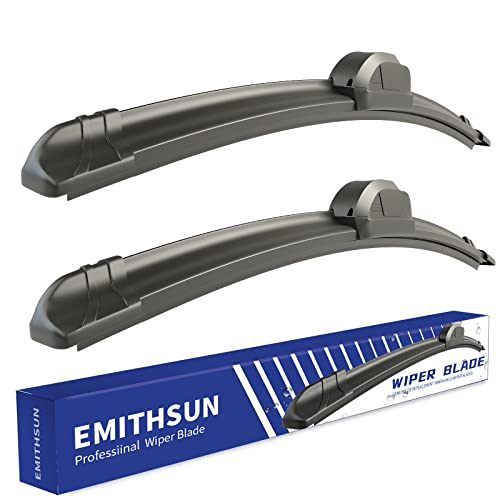
26-inch driver-side wiper blade
and:
18-inch passenger-side wiper blade
for compatible vehicles requiring this specific front-windshield combination.
This is a two-blade set rather than an individual replacement blade, allowing both front wipers to be replaced during the same service.
Designed for U/J-Hook Wiper Arms
The most important fitment characteristic is the connector.
These blades are designed for compatible:
U/J-hook wiper arms
including commonly used:
9x3mm
and:
9x4mm
hook configurations.
That makes installation straightforward on compatible vehicles because the blade is designed around the hook connection instead of relying on a collection of bulky universal adapters.
Not a Universal Wiper Blade
Do not assume these wipers fit every vehicle using 26-inch and 18-inch blades.
Many modern vehicles use other attachment systems, including:
- Pinch-tab
- Top-lock
- Side-lock
- Push-button
- Bayonet
- OE-specific connections
A correct blade length combined with the wrong connector is still the wrong wiper blade.
Before ordering, verify:
Year → Make → Model → Wiper Arm Type
26-Inch Driver-Side Blade
The larger blade measures:
26 inches
or approximately:
660mm.
It is intended for the driver side on compatible applications.
The larger driver blade provides a broad sweep through the driver’s primary field of view.
18-Inch Passenger-Side Blade
The companion blade measures:
18 inches
or approximately:
457mm.
It is intended for the passenger side on compatible applications requiring this combination.
The difference between 26-inch and 18-inch blade lengths may seem substantial, but asymmetric front-wiper sizing is common.
Why Do Vehicles Use Different Wiper Sizes?
Windshield wiper dimensions are determined by more than windshield width.
Engineers must account for:
- Windshield curvature
- Wiper pivot position
- Cowl geometry
- A-pillar clearance
- Blade overlap
- Sweep pattern
A longer driver blade can provide greater coverage directly ahead of the driver while a shorter passenger blade avoids interference with surrounding components.
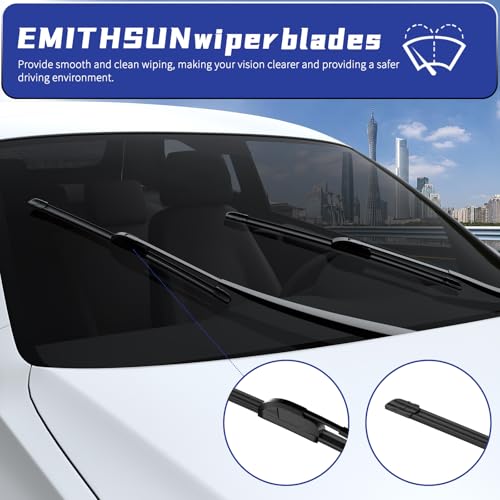
Frameless Beam-Blade Construction
These wipers use an:
unsupported beam design
rather than the articulated external frame found on traditional conventional wipers.
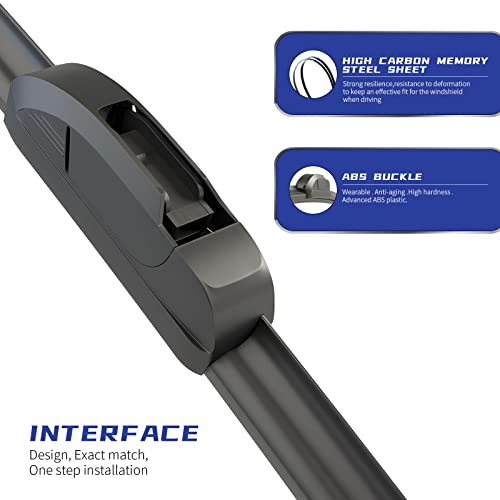
A beam blade uses internal spring elements to distribute force across the wiping edge.
Potential advantages include:
- Consistent windshield contact
- Reduced exposed hardware
- Lower aerodynamic profile
- Fewer joints for snow to accumulate around
- Smooth wiping across curved glass
Dual Memory Spring-Steel Structure
The seller describes the internal structure as using:
dual high-tenacity memory spring-steel elements.
These spring elements are designed to distribute wiper-arm pressure along the length of the blade.
Maintaining consistent pressure can help reduce:
- Streaking
- Skipping
- Missed areas
- Edge lift
Windshield curvature and vehicle fitment still affect actual wiping performance.
Asymmetric Aerodynamic Spoiler
The blades also incorporate an:
asymmetric wind spoiler.
The spoiler is designed to help maintain blade contact as vehicle speed increases.
At highway speeds, airflow traveling over the hood and windshield can create aerodynamic forces capable of lifting a poorly designed wiper away from the glass.
The spoiler is intended to counteract this effect by helping maintain downward pressure.
Why High-Speed Wiper Contact Matters
A blade that works well around town may perform differently at 70 mph during a rainstorm.
As speed increases, airflow across the windshield becomes more significant.
Poor aerodynamic control can contribute to:
wiper lift.
Even slight separation between the wiping edge and windshield can cause:
- Streaking
- Skipping
- Missed water
- Reduced visibility
The beam structure and integrated spoiler are intended to promote stable windshield contact.
Quiet Wiper Operation
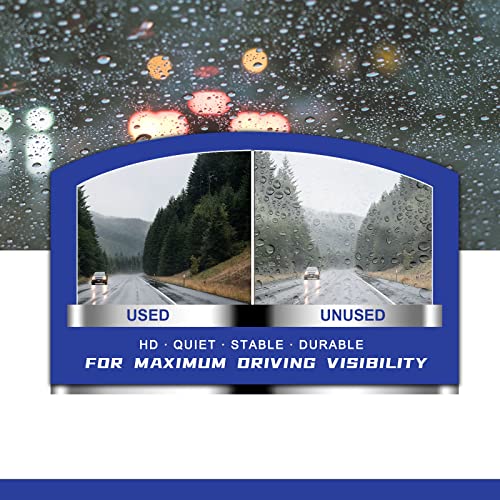
The seller markets these blades for stable and quiet operation.
Several factors can contribute to quieter wiping, including:
- Consistent pressure
- Smooth wiping edge
- Proper blade angle
- Correct windshield contact
- Secure mounting
Actual noise also depends heavily on the condition of the windshield.
Even a good blade can chatter across contaminated glass.
What Causes Wiper Chatter?
Common causes include:
- Dirty windshield
- Wax residue
- Hardened wiping material
- Incorrect blade angle
- Weak wiper-arm pressure
- Bent wiper arm
- Improper installation
If a new blade immediately chatters, clean the windshield thoroughly before assuming the blade is defective.
All-Season Wiper Design
The blades are marketed for year-round operation in conditions including:
- Rain
- Snow
- Summer heat
- Cold weather
- Highway spray
The frameless beam structure can also reduce the number of exposed mechanical joints where winter precipitation can accumulate.
Snow and Ice Performance
Beam blades have fewer exposed pivots than traditional framed wipers.
That can be useful during winter because snow and ice have fewer external frame components around which to accumulate.
However, these blades are not intended to scrape heavy ice from a windshield.
Before operating frozen wipers:
- Defrost the windshield.
- Remove heavy snow.
- Free the blades from the glass.
- Remove major ice buildup.
Do not use the wiper motor as an ice-removal tool.
Easy Hook-Arm Installation
Installation should be straightforward when the vehicle uses a compatible 9x3mm or 9x4mm U/J-hook connection.
The general procedure is:
- Raise the wiper arm away from the windshield.
- Rotate the existing blade.
- Release the old blade from the hook.
- Slide the old blade away from the arm.
- Align the new blade connector with the hook.
- Slide it into position.
- Confirm the connector locks securely.
- Lower the blade carefully onto the glass.
Repeat for the second side.
Always follow the instructions supplied with the blades.
No Bulky Universal Adapter Required
One advantage of a hook-specific blade is installation simplicity.
Instead of configuring multiple adapter pieces, the connection is designed around compatible:
9x3mm / 9x4mm U/J hooks.
That can provide a cleaner installation on vehicles using those traditional arm types.
The tradeoff is narrower compatibility.
If your vehicle does not use a compatible hook arm, choose a blade designed for its actual connection.
Protect the Windshield During Installation
Place a folded towel on the windshield while changing each blade.
After the old blade is removed, the spring-loaded metal wiper arm is exposed.
If it snaps against the windshield, it can chip or crack the glass.
Protecting the windshield takes seconds.
Replacing one because the wiper arm escaped your hand is a considerably more ambitious maintenance project.
Clean the Windshield Before Installing New Blades
New blades perform best against clean glass.
Before installation, remove:
- Road film
- Bugs
- Tree sap
- Wax residue
- Grease
- Dirt
- Silicone buildup
A contaminated windshield can cause:
- Chatter
- Skipping
- Smearing
- Noise
Cleaning the glass also prevents the new wiping edge from immediately collecting old contamination.
Test Both Wipers After Installation
After installation:
- Apply windshield washer fluid.
- Run the blades at low speed.
- Verify smooth operation.
- Check complete windshield contact.
- Increase wiper speed.
- Check for blade interference.
- Confirm both connectors remain secure.
The blades should not contact:
- Each other
- The cowl
- A-pillar trim
- Windshield molding
Signs Your Old Wipers Need Replacement
Common symptoms include:
- Streaking
- Smearing
- Chatter
- Squeaking
- Skipping
- Cracked wiping edges
- Torn material
- Missed windshield areas
Reduced wet-weather visibility is the most important reason to replace worn wipers.
Check the Wiper Arms
New blades cannot compensate for damaged wiper arms.
Inspect the arms for:
- Corrosion
- Bent metal
- Weak spring tension
- Damaged hooks
- Loose mounting hardware
Insufficient arm pressure can cause even a new beam blade to leave unwiped areas.
Inspect the Washer System
While replacing the wipers, also check:
- Washer-fluid level
- Washer pump
- Washer hoses
- Spray nozzles
- Nozzle alignment
Windshield wipers and the washer system are designed to work together.
Beam Wipers vs. Conventional Wipers
Conventional Wipers
Use:
Articulated external frame + multiple pressure points
Advantages can include:
- Lower purchase cost
- Traditional construction
- Broad availability
Beam Wipers
Use:
Flexible internal spring structure
Potential advantages include:
- More uniform pressure
- Lower aerodynamic profile
- Fewer exposed joints
- Better conformity to curved glass
This 26/18 set uses the latter approach.
How Do These Compare With Bosch ICON 26A18A?
Both products target compatible vehicles requiring approximately the same:
26-inch + 18-inch
front-wiper combination and compatible hook-style connections.
The key difference is positioning.
This 26″ + 18″ Beam Wiper Set
Focuses on:
- Value
- Beam construction
- 9x3mm/9x4mm hook compatibility
- Dual spring-steel design
- All-season replacement
Bosch ICON 26A18A
Adds Bosch-specific technologies such as:
- ClearMax 365
- DynamicFit tension spring arcing
- Bosch asymmetric spoiler design
- Bosch application-specific A-series engineering
That gives shoppers a clear choice between a straightforward replacement beam set and a premium branded alternative.
For additional wiper comparisons:
Best Windshield Wiper Blades for Clearer Drives
What Does “OEM Quality” Mean Here?
The supplied product listing describes these blades as:
OEM quality.
That wording should be treated as a seller/manufacturer description rather than proof that the blades are original-equipment components.
These are:
aftermarket replacement wiper blades.
Unless the manufacturer documents a specific OE certification or vehicle-manufacturer supply relationship, they should not be described as genuine OEM parts.
A more defensible description is:
OEM-style replacement beam wiper blades for compatible applications.
One-Year Warranty
The seller advertises a:
one-year warranty
with this package.
Warranty coverage, exclusions and claim procedures should be verified against the seller’s current terms at the time of purchase.
Who Should Buy This 26″ + 18″ Wiper Set?
This set makes sense for drivers whose vehicles specifically require:
26-inch driver + 18-inch passenger wipers
and use compatible:
9x3mm or 9x4mm U/J-hook arms.
It is particularly suited to shoppers looking for:
- Beam-style wipers
- A complete front pair
- Hook-specific installation
- All-season construction
- Value-oriented replacement
- Integrated aerodynamic spoilers
Why Buy These 26″ + 18″ Beam Wipers?
Key features include:
- 26-inch driver-side blade
- 18-inch passenger-side blade
- Two-blade package
- Frameless beam construction
- Dual memory spring-steel structure
- Asymmetric aerodynamic spoiler
- 9x3mm U/J-hook compatibility
- 9x4mm U/J-hook compatibility
- All-season design
- Straightforward hook-arm installation
- Advertised one-year warranty
For a compatible vehicle, this set provides a simple alternative to purchasing individual driver- and passenger-side blades separately.
Important Fitment Warning
Do not purchase this wiper set based solely on the 26-inch and 18-inch blade lengths.
Before ordering, confirm:
Vehicle Type → Year → Make → Model → Wiper Arm
The vehicle must use a compatible:
9x3mm or 9x4mm U/J-hook connection.
Vehicles using pinch-tab, top-lock, side-lock, push-button or other OE-specific connections require different blades.
Related Pro Street Guide
For help comparing beam, conventional, silicone and water-repellent wiper blades:
Best Windshield Wiper Blades for Clearer Drives




There are no reviews yet.