
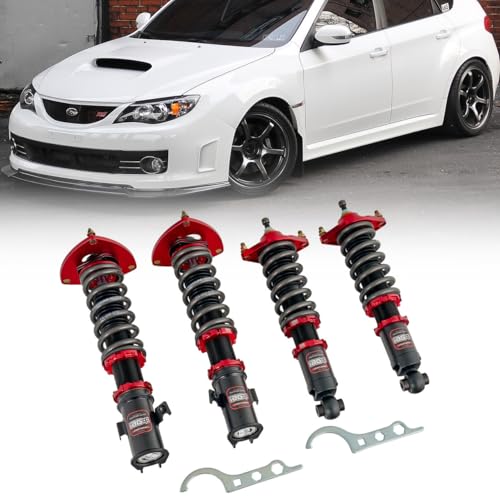
The IAG Spec Difference
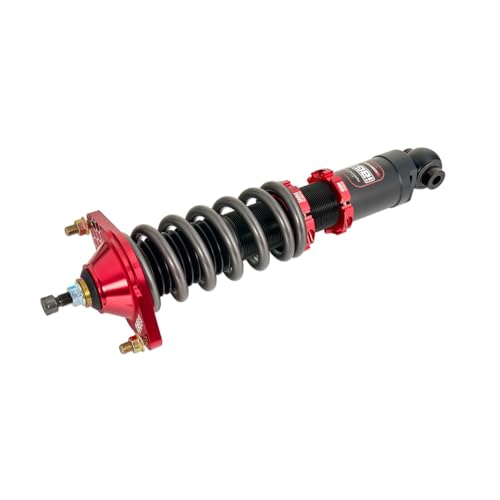
The IAG Spec Street Series begins with Fortune Auto’s respected 500 Series architecture, but it is not merely a renamed standard kit.
IAG revised the package for the 2008–2014 STI with:
- Custom shock valving
- Additional front shock travel
- Softer front spring rate
- Longer front spring
- Extended rear top hats
- STI-specific street and track balance
- Revised travel and preload strategy
Fortune Auto describes its standard 500 Series as a 24-step rebound-adjustable monotube system using High Flow Digressive Piston Technology. The dampers are custom built, dyno tested and designed to be rebuilt or revalved at Fortune Auto’s Virginia facility. fortune-auto.com
IAG takes that foundation and changes the spring, stroke and valving specifications for this particular STI application.
Custom Tuned, Not Pulled From a Shelf
Spring rate alone does not determine whether a coilover rides or handles well.
A successful suspension package must match:
- Spring rate
- Damper valving
- Suspension travel
- Vehicle weight
- Motion ratio
- Tire grip
- Chassis geometry
- Intended road surface
IAG’s custom valving is designed around the supplied 7K front and 8K rear springs. This produces a cohesive system instead of pairing arbitrary springs with generic dampers and hoping enthusiasm handles the rest.
Each damper’s behavior is intended to support the STI’s all-wheel-drive chassis during:
- Braking
- Acceleration
- Corner entry
- Mid-corner load
- Direction changes
- Uneven pavement
- Repeated track use
24-Position Rebound Adjustment
The IAG-SUS-1003 is a single-adjustable coilover system with 24 rebound settings.
The adjustment changes rebound damping—the force controlling how quickly the suspension extends after compression.
It does not independently adjust compression damping.
That distinction matters. Product descriptions sometimes claim “rebound and compression adjustment” because both forces exist inside the damper. A single knob does not suddenly become two knobs through positive thinking.
The 24-position range lets the driver tune suspension response for:
- Daily commuting
- Rough pavement
- Highway travel
- Back-road driving
- Autocross
- Track days
- Different wheel and tire combinations
Suggested Initial Adjustment
Begin at the softer end of the range and make changes in small increments.
A practical setup process is:
- Confirm the manufacturer’s adjustment direction.
- Turn each adjuster gently to the full-soft reference point.
- Set matching left-to-right positions.
- Begin near the middle-to-soft portion of the range.
- Drive the STI over a familiar route.
- Increase rebound two clicks at a time.
- Record the front and rear settings.
- Stop when additional firmness reduces grip or ride control.
More rebound is not automatically faster. Excessive rebound can prevent the suspension from extending quickly enough between bumps, causing it to pack down and lose usable travel.
Extended Front Suspension Travel
The front dampers provide 127 mm of shock stroke, approximately 10 mm more than the comparable standard configuration described by IAG.
That additional movement matters because lowering normally reduces the suspension travel available before the bump stop or damper limit is reached.
The extended front stroke helps:
- Preserve suspension movement
- Reduce harsh bottoming
- Improve contact over uneven pavement
- Increase compliance on rough roads
- Maintain usable travel after lowering
- Improve mechanical grip
A longer stroke does not make bottoming impossible. Ride height, spring preload, bump-stop position and road conditions still affect available travel.
Eight-Inch Front Springs
The front suspension uses an 8-inch spring with a 7 kg/mm rate.
The longer spring contributes to the kit’s travel strategy by providing more working length than a shorter, aggressively packaged spring.
Potential benefits include:
- More usable spring travel
- Reduced coil-bind risk
- Better compliance
- Improved bump absorption
- More progressive chassis movement
- Reduced dependence on excessive preload
The 7K front spring is softer than the rear spring, which is deliberate rather than a typographical rebellion.
Why Use a Softer Front Spring?
The 7K front rate allows controlled weight transfer toward the front tires during braking and corner entry.
That movement can help the front tires generate grip rather than forcing the chassis to skate across imperfect pavement.
A properly damped softer front spring may provide:
- Better braking weight transfer
- Improved front-tire contact
- More compliant turn-in
- Reduced skipping over rough surfaces
- Better street ride quality
Soft does not mean uncontrolled. The custom digressive valving produces low-speed control while allowing higher-speed suspension movement over bumps.
Eight-Kilogram Rear Springs
The rear coilovers use 7-inch springs rated at 8 kg/mm.
The slightly firmer rear rate helps support rotation and balance in the all-wheel-drive STI chassis.
Potential benefits include:
- Reduced rear body movement
- Faster directional response
- Improved rotation
- More balanced cornering behavior
- Better support during acceleration
- Controlled weight transfer
Alignment, sway bars, differential behavior, tires and driver input still influence understeer and oversteer. Installing an 8K spring does not automatically transform every corner into a heroic rally montage.
One-Inch Extended Rear Top Hats
The rear coilovers use one-inch extended top hats.
An extended top hat moves the damper mounting position upward, allowing more of the shock body and piston travel to remain available when the vehicle is lowered.
This helps:
- Preserve rear shock stroke
- Maintain correct preload
- Reduce bottoming risk
- Keep the piston in its intended operating range
- Improve ride quality after lowering
- Protect the dampers from repeated over-compression
This is particularly useful on a street-oriented lowered car, where maintaining travel is more valuable than simply chasing the smallest possible fender gap.
Flow Digressive Piston Technology
The IAG Spec Street Series uses Fortune Auto’s Flow Digressive Piston Technology.
A digressive damper produces relatively strong force during slower shaft movements—the type created by braking, acceleration and steering input. As shaft speed increases over sharper bumps, the force curve becomes less aggressive.
In practical terms, the dampers resist:
- Body roll
- Brake dive
- Acceleration squat
- Slow chassis movement
They remain more compliant during:
- Sharp pavement joints
- Pothole edges
- Broken road surfaces
- Fast suspension impacts
- Rough corner exits
Fortune Auto describes this system as providing strong low-speed control while “blowing off” at higher piston velocities to preserve compliance and mechanical grip. staging.fortune-auto.com
Here, “low speed” and “high speed” refer to damper-shaft velocity—not vehicle speed. The shock absorber remains unaware of your speeding ticket.
High-Pressure Monotube Dampers
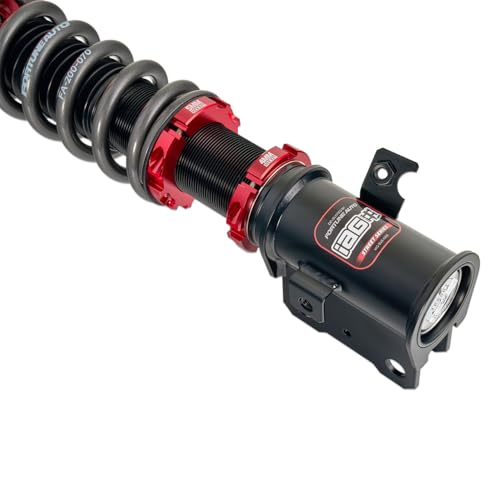
Each coilover uses a high-pressure nitrogen monotube damper.
Monotube construction provides:
- Large piston area
- Consistent hydraulic control
- Effective heat dissipation
- Separation of gas and oil
- Reduced fluid aeration
- Stable response during repeated use
This design is well suited to a dual-purpose STI that sees both street mileage and occasional closed-course use.
T6 6061 Aluminum Components
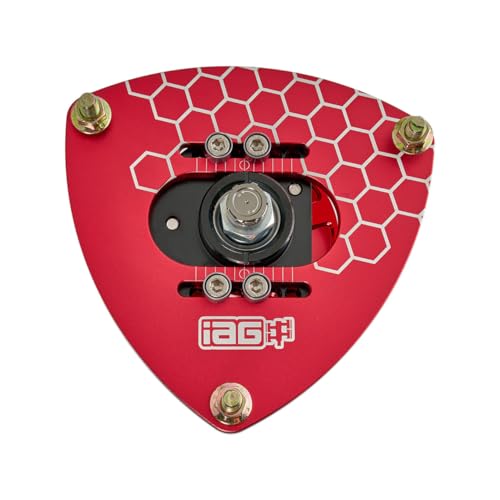
The camber plates and spring perches use T6 6061 aluminum to reduce weight without sacrificing required strength.
Aluminum components also provide corrosion resistance around frequently adjusted areas of the suspension.
The construction includes:
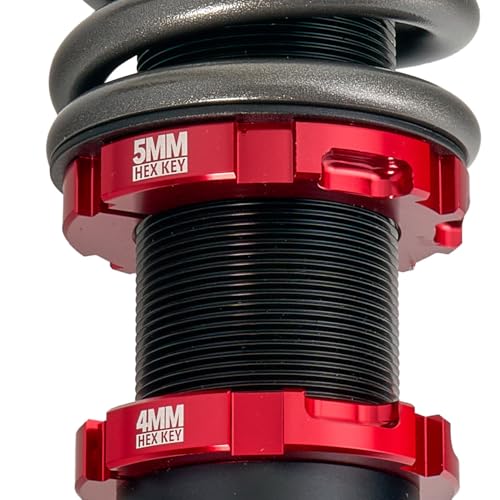
- Machined spring perches
- Lightweight upper-mount components
- Threaded adjustment hardware
- Corrosion-resistant finished surfaces
The hardware should still be cleaned and inspected periodically. Aluminum may resist rust, but road grime remains impressively committed to its craft.
Chrome-Silicon Springs
The coilover springs are made from a premium chrome-silicon alloy.
Chrome-silicon spring steel is commonly used where strength, elasticity and repeated-cycle durability are important.
Potential benefits include:
- Consistent spring response
- Resistance to permanent deformation
- Reduced weight compared with some conventional designs
- Long fatigue life
- Stable performance during repeated compression
Fortune Auto’s current 500 Series documentation identifies premium chrome-silicon springs, along with custom assembly and dyno testing, as standard parts of the platform. staging.fortune-auto.com
Rebuildable and Revalveable
Unlike sealed disposable dampers, the Fortune Auto-based units can be serviced and revalved.
That means they can potentially be:
- Rebuilt after wear
- Resealed
- Recharged
- Revalved for different spring rates
- Updated for a different vehicle purpose
- Upgraded within Fortune Auto’s modular system
Fortune Auto states that its 500 Series dampers are rebuildable and revalveable at its Virginia facility. The platform can also support later two-way or three-way canister upgrades, depending on the exact application and current service options. fortune-auto.com
Verify current service pricing, turnaround time and upgrade compatibility directly with Fortune Auto.
Street Performance
This suspension is designed for drivers who want more body control without accepting the punishment associated with a track-only setup.
On the street, properly configured IAG Spec coilovers should provide:
- More direct steering response
- Reduced body roll
- Controlled brake dive
- More stable acceleration
- Better bump recovery
- Improved road feedback
- Adjustable rebound behavior
- Practical ride compliance
The digressive piston and additional suspension travel are especially important here. Stiff springs alone can make a car feel immediate on smooth pavement but nervous when the road becomes uneven.
For additional street setup guidance, see 7 Best Coilovers for Daily Driving.
Occasional Track and Autocross Use
For track days or autocross, the rebound adjustment lets the driver increase chassis control without changing springs or replacing dampers.
Track-oriented setup should still account for:
- Tire compound
- Tire pressure
- Alignment
- Sway-bar settings
- Brake condition
- Surface quality
- Driver experience
- Aerodynamic changes
- Vehicle weight
Begin below maximum firmness. Increase rebound only when vehicle behavior supports the change.
If the STI skips over curbing or struggles to regain contact after bumps, the dampers may be set too firm.
Adjustable Ride Height
The IAG Spec coilovers allow the STI’s ride height to be lowered for appearance, chassis response and center-of-gravity reduction.
A functional ride height may provide:
- Reduced fender gap
- Lower center of gravity
- Improved response
- Reduced weight transfer
- More aggressive stance
- Better compatibility with performance alignment
The extended stroke and top-hat design help preserve travel, but they do not make every height setting equally effective.
Avoid lowering the car until:
- The tires contact the fenders
- The control arms operate at poor angles
- The exhaust scrapes
- The bump stops become the primary suspension
- The front axles operate at extreme angles
A properly lowered STI should still have suspension movement. Otherwise, you have installed expensive aluminum ride-height spacers with springs attached.
Alignment After Installation
A professional four-wheel alignment is required after installation.
Depending on ride height and vehicle use, alignment should evaluate:
- Front camber
- Rear camber
- Front toe
- Rear toe
- Caster
- Thrust angle
- Steering-wheel position
Complete the major height and preload adjustments before alignment.
For a street-driven STI, avoid aggressive toe settings that increase tire wear and make the car nervous on the highway. Track-oriented camber should be selected based on tire temperatures and wear patterns rather than visual drama.
Read Wheel Alignment 101 for a practical explanation of alignment angles.
Installation Recommendations
Professional installation is recommended.
Before installation, inspect:
- Front ball joints
- Tie-rod ends
- Wheel bearings
- Control-arm bushings
- Sway-bar links
- CV axles and boots
- Brake hoses
- ABS sensor wiring
- Wheels and tires
- Suspension mounting points
The coilovers should be installed according to the supplied IAG and Fortune Auto instructions.
Basic Installation Process
A typical installation includes:
- Record the original ride height.
- Lift and safely support the STI.
- Remove all four wheels.
- Disconnect the necessary sway-bar links and brackets.
- Support the suspension knuckles.
- Remove the original front strut assemblies.
- Install the front coilovers.
- Remove the original rear strut assemblies.
- Install the rear coilovers and extended top hats.
- Reconnect brake-hose and ABS-wire brackets.
- Set initial spring preload.
- Establish matching left-to-right ride heights.
- Tighten all fasteners to factory specifications.
- Reinstall the wheels.
- Lower and settle the vehicle.
- Check tire, axle and suspension clearance.
- Set initial rebound positions.
- Perform a professional four-wheel alignment.
Never support the vehicle with a hydraulic jack alone.
Setting Spring Preload
Fortune Auto states that its coilovers do not arrive with final preload set because shipping compression can damage preloaded assemblies.
The company’s general guidance calls for approximately 1/4 inch of preload on MacPherson-strut applications, but the instructions supplied with the IAG-SUS-1003 kit should take precedence. fortune-auto.com
Excessive preload can create:
- Harsh ride quality
- Reduced droop travel
- Poor mechanical grip
- Unwanted suspension behavior
Insufficient preload can create:
- Loose springs at full extension
- Noise
- Inconsistent spring seating
- Poor suspension feel
Do not use preload as a substitute for correct ride-height adjustment.
Post-Installation Inspection
Reinspect the suspension after approximately 50–100 miles.
Check:
- Upper mounting hardware
- Lower mounting hardware
- Spring seating
- Preload collars
- Height-adjustment collars
- Rebound settings
- Brake-hose brackets
- ABS-wire routing
- Tire clearance
- Fluid leakage
- Alignment
- Unusual noises
Recheck the hardware before any track event.
Frequently Asked Questions
Do these coilovers fit a 2008–2014 Subaru WRX STI?
Yes. Part number IAG-SUS-1003 is designed for 2008–2014 STI models.
Do they fit both STI hatchbacks and sedans?
The fitment covers the GR hatchback and GV sedan STI models within the listed years.
Will they fit a standard WRX?
Do not assume WRX compatibility. The product is specified for the STI, and suspension mounting or calibration may differ.
What are the spring rates?
The front spring rate is 7 kg/mm, and the rear rate is 8 kg/mm.
What is the front shock travel?
The front dampers provide 127 mm of stroke.
What is the rear shock travel?
The rear dampers provide 100 mm of stroke.
What do the extended top hats accomplish?
The one-inch extended top hats help preserve shock travel and piston position after the vehicle is lowered.
Are both compression and rebound adjustable?
No. This is a single-adjustable system with a 24-position external rebound adjustment. Compression behavior is controlled by the internal valving.
Are these coilovers suitable for daily driving?
Yes. They are specifically designed to balance street compliance with increased body control.
Can they be used on track?
Yes. They are suitable for occasional track days and autocross when properly installed and adjusted.
Are the dampers rebuildable?
Yes. Fortune Auto’s 500 Series architecture is designed to be rebuilt and revalved through its Virginia service facility.
Is a wheel alignment required?
Yes. A four-wheel alignment is required after installation or substantial ride-height changes.
Final Thoughts
The IAG Spec Street Series Coilovers by Fortune Auto are a meaningful upgrade over generic height-adjustable suspension.
IAG’s 7K front and 8K rear springs, custom valving, additional front stroke and extended rear top hats address a problem many lowered STIs face: losing the suspension travel required to maintain grip and ride quality.
Fortune Auto’s monotube construction, Flow Digressive piston and 24-position rebound adjustment add the control and serviceability expected from a premium street-and-track suspension system.
For STI owners who want a responsive road car that can handle occasional track work without becoming obnoxious on the drive home, the IAG-SUS-1003 package occupies a very useful middle ground.
For more suspension guidance, visit:
- Lowering Springs vs. Coilovers
- 7 Best Coilovers for Daily Driving
- Car Suspension Upgrades That Transform Your Ride
- How to Upgrade Sway Bars
- Wheel Alignment 101
- Official IAG suspension catalog
- Fortune Auto 500 Series technical information
Product shortcode:





There are no reviews yet.