
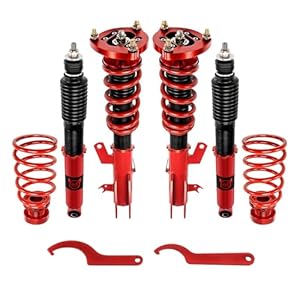
What Does This Suspension Kit Include?
The exact package contents should be verified against the current product listing.
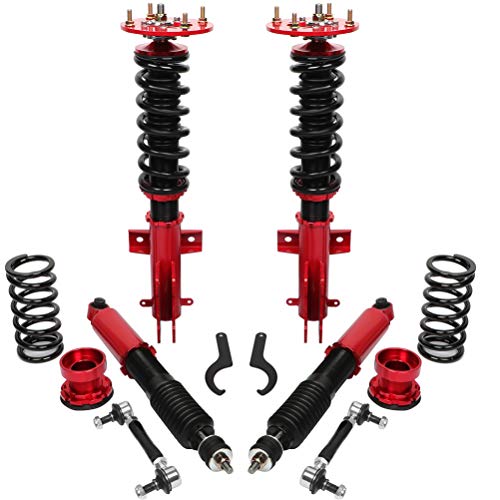
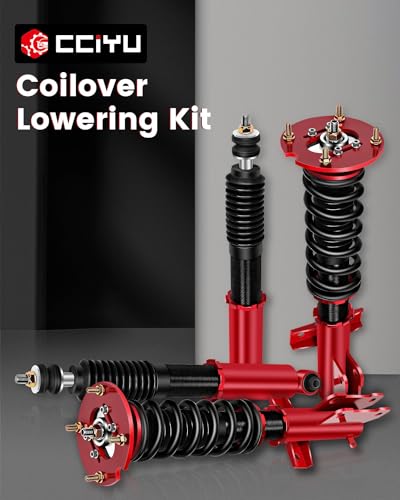
A complete S197 lowering-suspension package may include:
- Two front strut-style coilover assemblies
- Two rear lowering springs
- Two rear shock absorbers
- Rear height-adjustment perches
- Threaded spring collars
- Locking collars
- Adjustment spanner wrenches
- Installation hardware where supplied
The Mustang’s rear springs and dampers are separate from one another in the factory configuration. Unless the kit includes a dedicated rear coilover conversion, describe the rear components as adjustable springs and matched shocks rather than conventional coilovers.
Why Install Coilovers on an S197 Mustang?
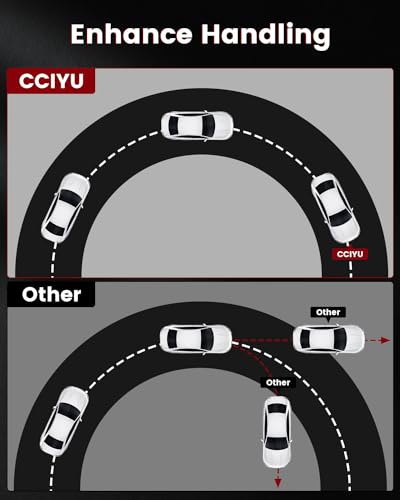
The factory S197 suspension was designed to satisfy a broad range of drivers. It provides acceptable ride comfort, but it also permits body roll, brake dive and rear squat.
Age is another factor. The oldest S197 Mustangs have been on the road since 2004, and even the final 2014 models may now have worn dampers, degraded bushings or sagging springs.
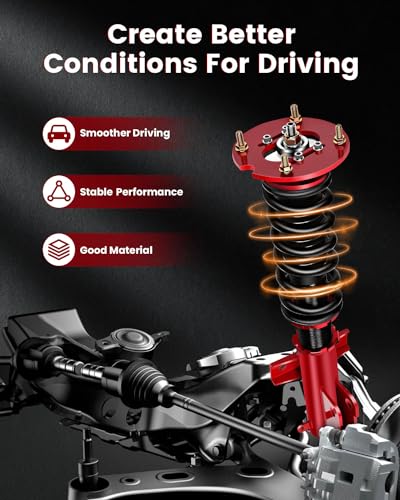
Installing the cciyu suspension kit can provide:
- Adjustable ride height
- Reduced factory wheel gap
- Lower center of gravity
- Firmer chassis response
- Reduced body roll
- Less brake dive
- More controlled acceleration squat
- Improved steering feedback
- Replacement for worn factory dampers
- A more aggressive appearance
The most noticeable changes will depend on ride height, alignment, tire quality and the condition of the remaining suspension components.
Adjustable Ride Height
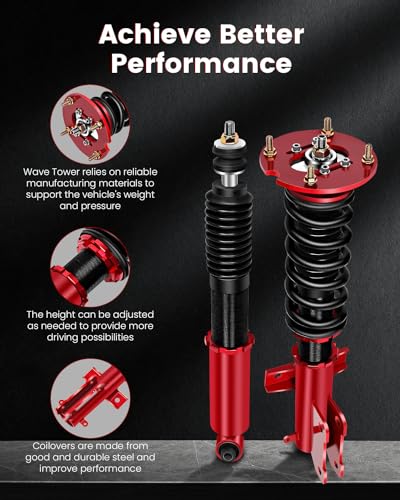
The cciyu kit allows the vehicle’s ride height to be changed through threaded suspension adjusters.
Owners can use this adjustment to:
- Create a mild street drop
- Reduce wheel gap
- Match the stance to larger wheels
- Balance left-to-right ride height
- Improve the Mustang’s visual proportions
- Lower the center of gravity
Before changing the height, determine whether the front assemblies use independently adjustable lower mounts or spring-perch adjustment. These methods affect preload and available suspension travel differently.
At the rear, height is typically adjusted through a threaded spring perch or separate height-adjustment collar.
Follow the instructions supplied with the exact kit rather than assuming every threaded collar performs the same function.
A Lower Stance Without Ruining the Car
A properly selected ride height can give the S197 Mustang a more planted appearance without making it miserable on real roads.
A moderate street drop should preserve:
- Bump travel
- Tire clearance
- Steering movement
- Exhaust clearance
- Driveshaft clearance
- Rear-axle travel
- Brake-hose movement
- Access to driveways and ramps
Excessive lowering can create:
- Tire rubbing
- Reduced suspension travel
- Harsh bottoming
- Incorrect front alignment
- Poor rear-axle geometry
- Bump-steer changes
- Driveshaft-angle problems
- Exhaust contact
- Premature tire wear
The lowest available setting is not automatically the best one. Asphalt does not care how impressive the fitment looked in the parking lot.
For more information, read Lowering Springs vs. Coilovers.
Monotube-Style Damper Design
The product listing describes a single-cylinder or monotube-style damper design.
A monotube shock places the piston, hydraulic oil and pressurized gas inside one main cylinder. Compared with a conventional twin-tube shock, the design can provide:
- Larger piston area
- Direct damping response
- Better heat dissipation
- More consistent operation
- Reduced damping fade
- Improved chassis feedback
Damper construction alone does not determine ride quality. Internal valving, spring rates, suspension travel and tire construction all influence how the Mustang feels.
A monotube sticker cannot negotiate with a pothole. Correct setup remains important.
Is Damping Adjustable?
The supplied information confirms adjustable ride height, but it does not identify a specific number of compression or rebound settings.
Unless the exact kit includes external adjustment knobs and a documented adjustment range, describe the dampers as performance-tuned or fixed-rate, not damping-adjustable.
The confirmed adjustment is vehicle height.
Do not advertise:
- 24-level damping
- 30-way adjustment
- Adjustable rebound
- Adjustable compression
unless those features appear on the exact product being sold.
Are the Spring Rates Adjustable?
Spring rate is determined by the spring’s construction. It cannot be changed using an adjustment collar.
The collars can alter:
- Spring-seat position
- Spring preload
- Vehicle height, depending on the design
They cannot change the actual spring rate.
Different springs would be required to change suspension stiffness substantially. The listing does not supply specific front or rear spring-rate figures, so those numbers should not be invented.
Reduced Body Roll
Lowering the center of gravity and using firmer springs can reduce the amount the Mustang’s body leans during cornering.
Reduced roll may provide:
- More immediate steering response
- Faster transitions
- Improved driver confidence
- Less delay between steering input and chassis movement
- A more planted feeling through corners
Body roll is also influenced by sway bars, bushings, track width, tire grip and suspension geometry.
For additional chassis-control options, see How to Upgrade Sway Bars.
Improved Brake-Dive Control
Firmer front springs and matched dampers can reduce how quickly the front suspension compresses during braking.
This can make the Mustang feel:
- More stable
- More predictable
- Less nose-heavy
- Better controlled during repeated stops
Coilovers do not automatically shorten braking distance. Tires, brake condition, road surface, vehicle speed and ABS performance remain the primary factors.
The accurate benefit is better body control under braking—not a physics cancellation package.
Reduced Rear Squat
The solid-rear-axle Mustang can transfer considerable weight toward the rear during acceleration. Firmer rear springs and properly matched shocks may reduce excessive squat.
Improved squat control can provide:
- More predictable weight transfer
- Reduced rear suspension compression
- Better chassis balance
- Improved response during gear changes
- More consistent rear-axle behavior
Reducing squat does not automatically create traction. Rear tire grip, control-arm geometry, differential condition and road surface still determine how effectively power reaches the pavement.
Street Driving
For a daily-driven Mustang, begin with a moderate ride height and preserve adequate suspension travel.
A sensible street setup should provide:
- Enough ground clearance for driveways
- Tire clearance through full steering travel
- Room for rear-axle movement
- Predictable alignment
- Acceptable ride quality
- Adequate shock travel
- Clearance for passengers and cargo
The suspension will likely feel firmer than stock. Whether that feels sporty or exhausting depends on the road, tire sidewall and owner’s tolerance for learning exactly where every expansion joint is located.
See the 7 Best Coilovers for Daily Driving for additional street-setup considerations.
Spirited Driving and Occasional Track Use
A lowered, firmer Mustang may feel more responsive during spirited road driving or occasional closed-course use.
Before performance driving, inspect:
- Tires and tire pressures
- Brake pads and rotors
- Brake fluid
- Front ball joints
- Tie-rod ends
- Wheel bearings
- Rear control-arm bushings
- Panhard bar
- Sway-bar links
- Coilover mounts
- Locking collars
- Wheel fasteners
- Alignment
This is an affordable street suspension kit, not a substitute for competition dampers, track tires or safety equipment.
S197 Rear-Axle Geometry Matters
The 2005–2014 Mustang uses a live rear axle located laterally by a Panhard bar.
When the car is lowered, the Panhard bar’s angle changes. This may shift the rear axle slightly toward one side of the body.
After lowering, check whether:
- One rear wheel sits closer to the fender
- The axle is centered beneath the vehicle
- Rear tires have equal body clearance
- The Panhard bar clears nearby components
- Control-arm angles remain acceptable
An adjustable Panhard bar may be required to recenter the rear axle after a substantial drop.
More aggressive setups may also benefit from adjustable rear control arms or relocation brackets, depending on ride height and intended use.
Check the Front Strut Mounts
Some front coilover assemblies include upper mounts, while others require reuse of factory mounts or separate aftermarket components.
Confirm whether the kit includes:
- Front upper strut mounts
- Bearings
- Camber-adjustable plates
- Spring isolators
- Dust boots
- Bump stops
If the original mounts must be reused, inspect them for cracked rubber, bearing noise or looseness before installation.
Inspect the Factory Suspension
Before installing the new components, inspect:
- Front lower control-arm bushings
- Front ball joints
- Tie-rod ends
- Sway-bar links
- Wheel bearings
- Rear control arms
- Rear axle bushings
- Panhard-bar bushings
- Driveshaft joints
- Brake hoses
- ABS sensor wiring
- Original suspension mounts
- Wheels and tires
New shocks cannot repair worn control-arm bushings or loose ball joints. They may simply make the existing problem easier to hear.
Installation Overview
Professional installation is recommended.
A typical S197 suspension installation includes:
- Park the Mustang on level ground.
- Measure the original ride height at all four corners.
- Loosen the wheel fasteners.
- Raise and safely support the vehicle.
- Remove the wheels.
- Support the front control arms.
- Remove the factory front struts and springs.
- Compare the front coilovers with the original components.
- Install or transfer the required upper mounts.
- Install the front coilover assemblies.
- Support the rear axle.
- Remove the original rear shocks and springs.
- Install the rear height adjusters and lowering springs.
- Install the matched rear shocks.
- Check brake-line and ABS-wire routing.
- Set equal left-to-right starting heights.
- Tighten the hardware to factory specifications.
- Reinstall the wheels.
- Lower and settle the vehicle.
- Measure and adjust the final ride height.
- Check rear-axle position.
- Perform a four-wheel alignment.
Never work under a vehicle supported only by a hydraulic jack.
Setting the Ride Height
Record the factory ride height before removing any components.
Measure from the center of each wheel to a consistent point on the fender. This method reduces errors caused by different tire diameters or inflation pressures.
After installation:
- Roll the Mustang forward and backward
- Allow the suspension to settle
- Measure all four corners
- Adjust in small increments
- Match left and right sides
- Tighten every locking collar
- Check tire clearance
- Verify suspension travel
- Inspect brake hoses and wiring
- Recheck rear-axle centering
Drive carefully and measure the vehicle again after the suspension has settled.
Wheel Alignment Required
A professional wheel alignment is required after installation.
Lowering an S197 Mustang can change:
- Front camber
- Front caster
- Front toe
- Steering-wheel position
- Straight-line stability
- Tire wear
The solid rear axle does not offer the same conventional camber and toe adjustment as an independent rear suspension. However, thrust angle and axle position should still be checked.
Complete major ride-height changes before the alignment. Read Wheel Alignment 101 for a clear explanation of camber, caster and toe.
Will You Need Caster-Camber Plates?
A mild drop may remain within an acceptable alignment range. A larger drop may require additional front adjustment.
Caster-camber plates can help:
- Correct excessive negative camber
- Increase alignment range
- Improve steering consistency
- Optimize tire contact
- Reduce uneven tire wear
Do not purchase alignment parts based only on appearance. Install the suspension, set the height and measure the alignment first.
Post-Installation Inspection
Reinspect the suspension after approximately 50–100 miles.
Check:
- Upper strut hardware
- Lower strut mounting bolts
- Rear shock mounts
- Spring seating
- Height-adjustment collars
- Locking collars
- Brake hoses
- ABS wiring
- Tire clearance
- Rear-axle position
- Fluid leakage
- Unusual noises
- Alignment
- Wheel fasteners
Stop driving and inspect the suspension if you notice severe pulling, binding, metal contact or a persistent clunk.
Frequently Asked Questions
Do cciyu coilovers fit every 2005–2014 Mustang?
The kit is broadly listed for the S197 Mustang, but exact compatibility may vary by trim, body style and factory performance package. Verify the seller’s fitment data before ordering.
Will they fit a Mustang GT?
Many S197 suspension kits fit V6 and GT models, but compatibility must be confirmed using the exact product number.
Will this kit fit a Shelby GT500?
Do not assume GT500 compatibility. Shelby models may use different suspension specifications and vehicle weights. Check the exact seller listing.
Is this a true four-wheel coilover kit?
The front suspension may use conventional strut-style coilovers. The S197’s rear layout normally uses separate springs and shocks unless the kit includes a dedicated rear conversion.
Is ride height adjustable?
Yes. Height adjustability is the primary confirmed feature.
How much does the kit lower a Mustang?
No specific lowering range was provided. Use only the range published for the exact product number.
Is damping adjustable?
No external damping adjustment has been confirmed. Do not assume the dampers have multiple compression or rebound settings.
Are the spring rates adjustable?
No. Spring preload or spring-seat position may be adjustable, but the spring rate itself is fixed by the spring’s construction.
Can these coilovers be used for daily driving?
Yes, provided the kit is correctly installed, aligned and set to a practical height. Expect a firmer ride than the factory suspension.
Will I need an adjustable Panhard bar?
A substantial drop can shift the solid rear axle laterally. An adjustable Panhard bar may be needed to recenter it.
Do I need caster-camber plates?
Possibly. The need depends on ride height and the resulting front alignment measurements.
Is an alignment required?
Yes. A professional alignment should be performed after installation and after significant ride-height changes.
Final Thoughts
The cciyu height-adjustable suspension kit for the 2005–2014 Ford Mustang offers an affordable way to replace aging S197 suspension components while creating a lower, more aggressive stance.
The kit’s most important confirmed feature is ride-height adjustment. Its single-cylinder damper construction may improve suspension response and heat control, but no specific damping range or spring rates have been supplied.
For the best results, confirm trim-level fitment, preserve usable suspension travel and inspect the rear axle position after lowering. Finish the installation with a professional alignment and a careful post-installation inspection.
The goal is a Mustang that sits lower and drives better—not one that requires a municipal road survey before leaving the garage.
For more suspension guidance, visit:
- Car Suspension Upgrades That Transform Your Ride
- Lowering Springs vs. Coilovers
- 7 Best Coilovers for Daily Driving
- How to Upgrade Sway Bars
- Wheel Alignment 101






There are no reviews yet.