
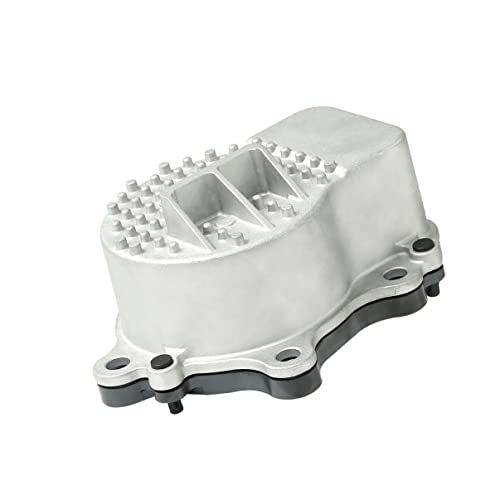
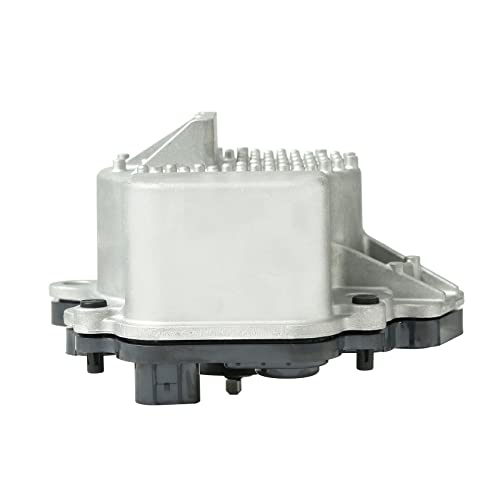
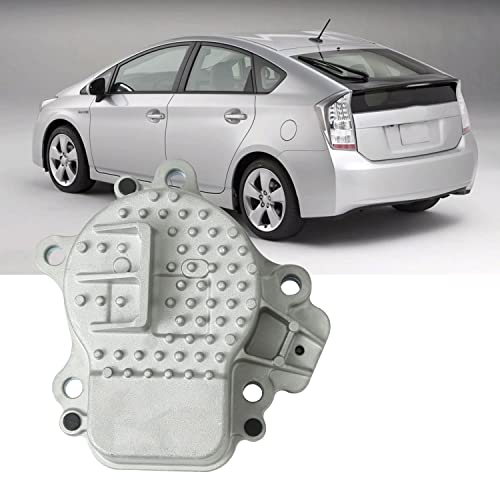
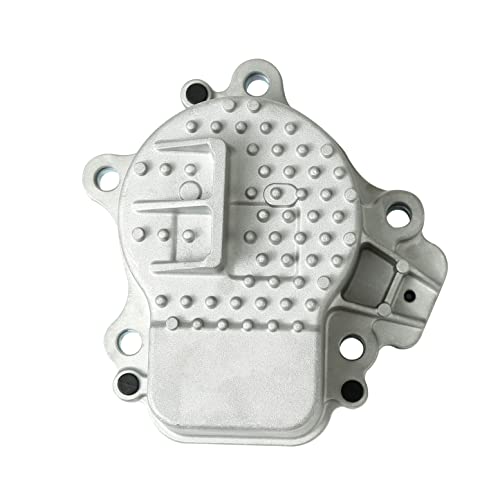
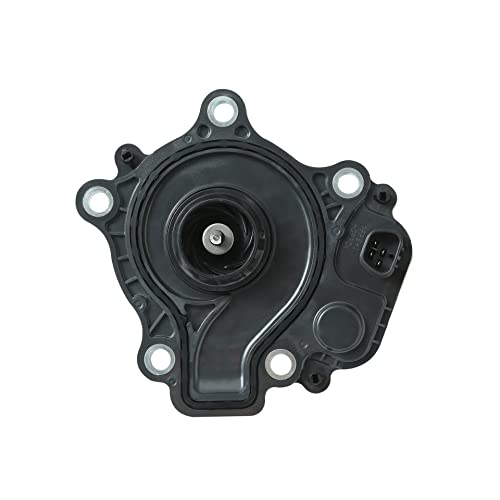
OE and Interchange Numbers
This pump replaces or cross-references:
- 161A0-29015
- 161A029015
- 161A0-39015
- 161A039015
Toyota part number 161A0-29015 supersedes 161A0-39015. A Toyota dealer catalog identifies it as an electric engine water-pump assembly for the Prius, Prius c and Prius v. Another Toyota parts catalog confirms coverage for the 2010–2015 Prius, 2012–2015 Prius Plug-in, 2012–2019 Prius c and 2012–2015 Prius v.
Reference numbers are supplied for fitment comparison. This product is an aftermarket replacement unless the seller specifically identifies it as a genuine Toyota component.
Product Specifications
- Product type: Electric engine coolant pump
- Primary reference number: 161A0-29015
- Superseded number: 161A0-39015
- Drive type: Electric
- Cooling circuit: Gasoline engine
- Vehicle type: Toyota and Lexus hybrid
- Engine compatibility: 1.5L 1NZ-FXE and 1.8L 2ZR-FXE
- Installation type: Vehicle-specific replacement
- Warranty: One-year limited product support
- Quantity: One water-pump assembly
Confirm whether the pictured gasket or O-ring is included before beginning installation.
What Does This Prius Water Pump Do?
The electric engine water pump circulates coolant through the gasoline engine and radiator. Because it is electrically driven, pump operation is not directly tied to engine speed.
The engine-management system can adjust operation according to:
- Coolant temperature
- Engine load
- Hybrid operating mode
- Cabin-heating demand
- Vehicle speed
- Warm-up conditions
- Post-shutdown cooling strategy
This is particularly important in a hybrid because the gasoline engine regularly starts and stops. Coolant still needs to move according to system demand even when the engine is not continuously running.
For a broader explanation of coolant circulation, pressure and heat transfer, start with the Complete Car Cooling System Guide.
Engine Pump vs. Inverter Pump
These Toyota and Lexus hybrids contain separate cooling circuits.
| Pump | What it cools |
|---|---|
| Engine water pump | Gasoline engine, cylinder head and engine radiator circuit |
| Inverter coolant pump | Inverter, converter and related hybrid electronics |
Part numbers 161A0-29015 and 161A0-39015 refer to the engine water-pump application covered here.
Do not order this pump solely because the vehicle displays a general hybrid warning. Read the diagnostic codes and determine which cooling circuit has failed.
Common Failure Symptoms
A failing electric engine pump may cause:
- Engine overheating
- Rapidly rising coolant temperature
- P261B or related pump-control code
- Coolant leakage
- Warning lights
- Reduced engine performance
- Poor or inconsistent cabin heat
- Unusual pump noise
- Intermittent coolant circulation
- Temperature fluctuation
- Pump that fails to operate during an active test
Start with our guide explaining why a car overheats before assuming every temperature problem requires a new pump.
If overheating happens primarily at road speed or under sustained load, follow Why Does My Car Overheat While Driving? to check coolant level, radiator restriction, airflow and engine condition.
What Does Code P261B Mean?
P261B generally indicates a performance problem involving the electric coolant pump control circuit. On applicable Toyota and Lexus hybrids, it may appear when the engine computer commands pump operation but does not detect the expected response.
Possible causes include:
- Failed engine water pump
- Restricted or seized impeller
- Open power circuit
- Poor ground
- Damaged electrical connector
- Corroded terminals
- Harness damage
- Low system voltage
- Pump-control circuit fault
- Engine-control module fault in rare cases
P261B does not automatically prove that the pump motor is defective. Test its power, ground, wiring and commanded operation before replacing it.
Diagnose Before Replacing the Pump
A proper diagnosis should include:
- Scan all engine and hybrid-control modules.
- Record stored, pending and history codes.
- Inspect coolant level with the system cold.
- Check the pump and hoses for leakage.
- Inspect the electrical connector.
- Verify pump power and ground.
- Command pump operation with a capable scan tool.
- Check for vibration or coolant movement.
- Inspect the radiator and cooling fans.
- Rule out thermostat and temperature-sensor faults.
- Check for trapped air.
- Verify normal temperature after repair.
A temperature-sensor circuit problem can make the control module react to incorrect data. Our P0115 coolant-temperature sensor guide covers circuit testing before cooling parts are replaced unnecessarily.
If the sensor signal changes unexpectedly during warm-up, use the P0116 coolant-temperature performance guide.
Check for Coolant Leaks
Look for coolant around the:
- Pump housing
- Pump electrical connector
- Hose connections
- Radiator
- Thermostat housing
- Expansion tank
- Engine coolant passages
- Underbody panels
Coolant can collect on the splash shield and appear far from its source. Follow our coolant-leak diagnostic guide and pressure-test the cold system before ordering parts.
Never remove the radiator or reservoir cap while the cooling system is hot or pressurized.
Water Pump or Thermostat?
A failed pump and faulty thermostat can produce similar symptoms.
| Symptom | More likely cause |
|---|---|
| P261B with failed active pump test | Pump or electrical circuit |
| No visible coolant movement | Pump, wiring or trapped air |
| Engine warms too slowly | Thermostat stuck open |
| P0128 without overheating | Thermostat or temperature sensor |
| Rapid overheating with poor circulation | Water pump or thermostat stuck closed |
| Leak directly from pump housing | Pump or pump seal |
| Temperature becomes unstable after service | Trapped air or low coolant |
Our bad thermostat versus bad water pump guide helps separate these common cooling-system failures.
A P0128 thermostat code usually indicates that the engine is taking too long to reach normal temperature. That is different from P261B, which concerns electric pump operation.
When Overheating Is Combined With Cold Cabin Air
If the engine overheats while the heater blows cold, the system may have:
- Low coolant
- Trapped air
- Failed pump circulation
- Restricted heater core
- Thermostat problem
- Incorrect hose routing
- Internal engine leak
Use our guide to an engine that overheats while the heater blows cold before continuing to drive.
A reservoir filled to the line does not prove the engine cooling passages are full. It proves that particular plastic container is having a successful afternoon.
Installation Overview
Professional installation is recommended if the technician is unfamiliar with high-voltage hybrid vehicles.
A general replacement procedure includes:
- Park the vehicle and allow it to cool completely.
- Disable the vehicle according to Toyota service instructions.
- Disconnect the 12-volt battery when specified.
- Keep clear of orange high-voltage wiring and components.
- Drain the engine coolant into an approved container.
- Disconnect the pump electrical connector.
- Remove the engine-cooling hoses.
- Remove the pump mounting fasteners.
- Compare the replacement and original pumps.
- Install a new gasket or seal.
- Reconnect the hoses and electrical connector.
- Refill with the correct Toyota-approved coolant.
- Bleed the engine cooling circuit.
- Clear diagnostic codes.
- Confirm pump operation with a scan tool.
- Check for leaks after a complete heat cycle.
The engine cooling circuit and inverter cooling circuit should not be treated as one shared system. Drain, fill and bleed the circuit specified by the repair procedure.
Use the Correct Coolant
Use the coolant specification required by Toyota or Lexus for the specific vehicle. Do not select coolant by color alone, since similar colors can contain different additive packages.
If the existing coolant is contaminated or its history is unknown, review our guide to flushing a cooling system safely.
A flush cannot repair a failed pump, cracked radiator or active internal leak. It can, however, turn one repair into three if aggressive chemicals or excessive pressure are used carelessly.
Bleed the System Completely
Air trapped after pump replacement can cause:
- Poor circulation
- Temperature spikes
- Weak cabin heat
- Pump cavitation
- Incorrect coolant level
- Recurring warning lights
- Premature pump damage
Use the Toyota-specified filling and bleeding procedure. A capable scan tool may be needed to command pump operation and verify actual performance.
If coolant-temperature readings remain intermittent after repair, inspect the sensor connector and wiring using our P0119 intermittent temperature-sensor guide.
When to Stop Driving
Stop the vehicle when:
- A red temperature warning appears
- Steam is visible
- Coolant is pouring out
- The engine loses power
- The heater suddenly turns cold
- The temperature continues rising
- Severe knocking or mechanical noise develops
Continuing to drive can damage the head gasket, cylinder head or complete engine. Review When Should You Stop Driving Your Car? for other warning signs that require immediate attention.
Features and Benefits
- Direct replacement for compatible applications
- Fits 1.5L and 1.8L Toyota hybrid engines
- Electronically controlled coolant flow
- No belt or conventional pump pulley
- OE-style mounting and electrical connection
- Constructed with heat-resistant materials
- Designed to restore engine coolant circulation
- Supports repair of applicable P261B faults
- One-year limited product support
“OE replacement” describes intended fit and operation. It does not mean the pump is manufactured by Toyota, Lexus or their original supplier.
Frequently Asked Questions
What years and models use this pump?
It fits the 2010–2015 Toyota Prius, 2012–2015 Prius Plug-in, 2012–2019 Prius c, 2012–2017 Prius v and 2011–2017 Lexus CT 200h when equipped with the matching pump configuration.
Does it fit a standard 2016–2019 Toyota Prius?
Do not assume that it does. The standard fourth-generation Prius uses a different application. The 2019 fitment listed here applies specifically to the Prius c.
Does this pump fit both 1.5L and 1.8L engines?
Yes, catalogs associate 161A0-29015 with compatible 1.5L Prius c and 1.8L Prius, Prius v, Prius Plug-in and CT 200h applications.
Is this the inverter coolant pump?
No. This is the electric engine water pump. The inverter cooling system uses separate components and part numbers.
Can this pump repair code P261B?
It may repair P261B when testing confirms that the pump has failed. Wiring, connector, power and ground problems can produce similar faults.
Does 161A0-29015 replace 161A0-39015?
Yes. Toyota parts catalogs identify 161A0-29015 as the replacement for the earlier 161A0-39015 number.
Does the cooling system need to be bled?
Yes. The engine cooling circuit must be filled and bled according to the Toyota procedure after the pump is replaced.
Can I drive with P261B?
Driving is not recommended if the pump is inoperative, the temperature is rising or an overheating warning is displayed. Loss of circulation can quickly damage the engine.
Is this a genuine Toyota water pump?
Not unless the listing explicitly identifies it as genuine Toyota. Reference numbers alone do not establish the product’s manufacturer.
Final Verdict
This 161A0-29015 electric engine water pump is compatible with several Toyota and Lexus hybrid applications built from 2010 through 2019. Correct fitment depends on the specific Prius variant, engine and original part number—not simply the word “Prius.”
Verify that the failed component is the engine pump rather than the inverter pump, diagnose P261B before ordering and bleed the correct cooling circuit after installation. Hybrid cooling systems are efficient, reliable and impressively capable of making the wrong pump look almost correct.






There are no reviews yet.