
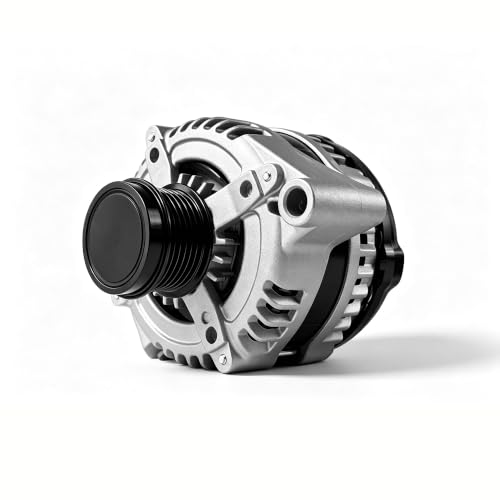


Dodge Grand Caravan 3.6L Alternator Replacement: 2011–2020
The Dodge Grand Caravan is one of the biggest applications for the 11570N.
Equipped with the 3.6L Pentastar V6, these minivans rely on a properly functioning charging system to support engine electronics, cooling fans, climate control, lighting and numerous convenience features.
A Grand Caravan with a failing alternator may start normally after a jump but eventually discharge its battery while driving.
That doesn’t automatically prove the alternator is defective. A loose charging cable, weak battery or damaged accessory belt can produce similar symptoms.
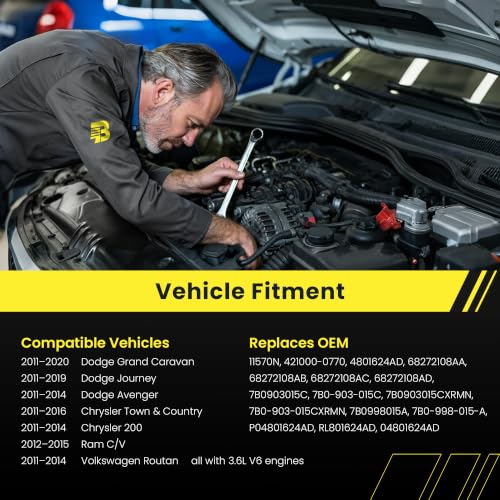
The 11570N is advertised for 2011 through 2020 Dodge Grand Caravan 3.6L V6 models, provided the original charging-system configuration matches.
Chrysler Town & Country Alternator Replacement: 2011–2016
The Chrysler Town & Country shares much of its mechanical architecture with the Grand Caravan, making it another important application.
Higher-trim minivans may feature power sliding doors, multiple climate-control systems and additional electrical accessories.
The 11570N is advertised for 2011–2016 Chrysler Town & Country models equipped with the 3.6L V6.
Check the original alternator’s output rating and OE identification before ordering.
Dodge Journey 3.6L Alternator Replacement: 2011–2019
The seller lists 2011–2019 Dodge Journey 3.6L V6 applications.
A Journey that displays a battery warning light, develops electrical problems or repeatedly needs a jump-start should receive a charging-system diagnosis.
Do not assume that the alternator used on a four-cylinder Journey is interchangeable with the 3.6L V6 version.
Chrysler 200 and Dodge Avenger Alternator Replacement
The seller also lists:
- 2011–2014 Chrysler 200, 3.6L V6
- 2011–2014 Dodge Avenger, 3.6L V6
These vehicles were available with different engines, so identifying the correct powertrain is essential.
Ram C/V and Volkswagen Routan Alternator Replacement
The advertised applications also include the 2012–2015 Ram C/V 3.6L V6 and 2011–2014 Volkswagen Routan 3.6L V6.
Because commercial-use vehicles may experience extended operating hours and substantial electrical demand, verify the complete charging system before replacing a failed alternator.
11570N Alternator OEM and Interchange Part Numbers
One of the strongest ways to narrow down alternator compatibility is to compare the original part number with the replacement’s advertised interchange references.
| Part number | Reference |
|---|---|
| 11570 | Aftermarket interchange |
| 11570N | New aftermarket alternator |
| 04801624AD | Mopar OE reference |
| 4801624AD | Mopar OE reference |
| 68272108AA | Mopar OE reference |
| 68272108AB | Mopar OE reference |
| 68272108AC | Mopar OE reference |
| 68272108AD | Mopar OE reference |
| P04801624AD | Service reference |
| RL801624AD | Service reference |
| 421000-0770 | Alternator manufacturer reference |
| 421000-0771 | Alternator manufacturer reference |
| 7B0903015C | Volkswagen reference |
| 7B0903015CXRMN | Volkswagen reference |
| 7B0998015A | Volkswagen reference |
These numbers come from the seller’s interchange list. They are not proof that every listed OE revision is interchangeable across all model years.
For the most accurate match, compare the original alternator label and confirm the replacement through the vehicle’s VIN.
What Does a 160-Amp Alternator Actually Produce?
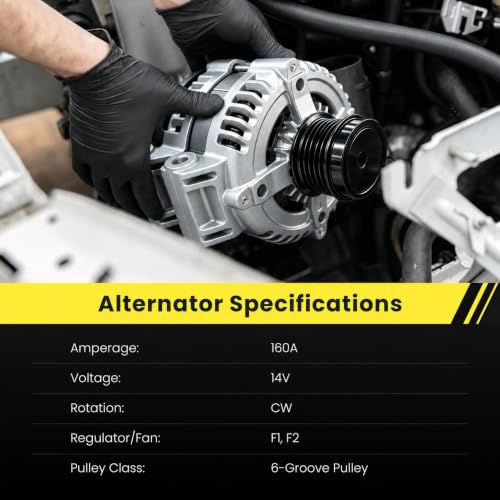
The 11570N is advertised with a maximum rated output of 160 amps.
At an illustrative charging voltage of 14 volts:
160 amps × 14 volts = 2,240 watts
That works out to approximately 2.24 kilowatts of theoretical electrical output at rated current.
However, that doesn’t mean the alternator continuously produces 2,240 watts.
Actual output depends on engine speed, alternator speed, temperature, electrical demand and charging-system controls.
The alternator must supply current to vehicle electrical systems while replenishing the battery after engine starting.
For a minivan equipped with climate control, rear-window defrost, power accessories and other electrical loads, adequate charging capacity is essential.
But bigger isn’t automatically better. A 160-amp alternator should be installed only when it is mechanically and electrically compatible with the vehicle.
Why Choose a New 11570N Alternator Instead of a Remanufactured Unit?
The seller emphasizes that this 11570N alternator is new rather than rebuilt.
A remanufactured alternator generally starts with a previously used core that is inspected, repaired and tested. A new alternator is manufactured using new components.
Neither construction method guarantees reliability by itself.
The quality of the components, manufacturing process, testing and warranty support all matter.
Copper Windings
The seller advertises high-purity copper windings.
Copper is commonly used in alternators because of its electrical conductivity. However, the supplied product description does not include independently measured efficiency or durability comparisons.
Aluminum Housing
The alternator features an advertised corrosion-resistant aluminum housing.
Aluminum provides a useful combination of relatively low weight and thermal conductivity, helping dissipate heat generated during operation.
Quality-Control Claims
The manufacturer states that the alternator is produced in an IATF 16949-certified facility.
IATF 16949 is an automotive quality-management standard. Facility certification, however, does not independently prove the output, reliability or fitment of a particular alternator.
12-Month Limited Replacement Warranty
The 11570N includes a seller-advertised 12-month limited replacement warranty.
Before purchasing, review the actual warranty terms, including coverage exclusions, shipping responsibilities and whether labor costs are covered.
Seven Signs Your 3.6L Pentastar Alternator Is Failing
1. Battery Warning Light Comes On
The battery warning light is one of the most recognizable charging-system symptoms.
Despite its name, the warning doesn’t automatically mean the battery itself has failed.
A defective alternator, loose belt, damaged charging cable or charging-control fault may be responsible.
Read our guide to why your battery light is on for a complete diagnostic approach.
2. Battery Keeps Dying
If your Grand Caravan or Town & Country repeatedly needs a jump-start, the alternator may not be recharging the battery.
However, a deteriorated battery or parasitic electrical draw can cause similar symptoms.
Our guide to diagnosing a battery that keeps dying explains how to distinguish these problems.
3. Headlights Dim or Flicker
Inconsistent electrical voltage can cause lighting brightness to fluctuate.
This may become more noticeable when the blower motor, rear-window defroster or other electrical accessories are operating.
4. Whining or Grinding Noise
Worn alternator bearings or pulley problems can produce unusual sounds.
Before replacing the alternator, inspect the serpentine belt, tensioner and idler pulleys.
5. Electrical Accessories Malfunction
Low system voltage can contribute to intermittent electronic problems, warning messages and slow accessories.
These symptoms can also result from poor battery connections or wiring faults.
6. Burning Smell
Overheated wiring, a failing alternator or a slipping belt may produce a burning odor.
If you notice smoke or melting insulation, stop operating the vehicle safely and investigate.
7. Engine Stalls or Won’t Restart
When the alternator stops supplying adequate power, the battery temporarily carries the vehicle’s electrical load.
Eventually, battery voltage may drop enough to interfere with engine operation or prevent restarting.
How to Test a Dodge or Chrysler Alternator Before Replacing It
Replacing an alternator without testing the charging system can turn a relatively straightforward repair into an expensive guessing game.
A digital multimeter is a useful starting point.
Step 1: Measure Battery Voltage
With the engine off and the battery rested, measure voltage directly across the battery posts.
A fully charged conventional 12-volt lead-acid battery typically reads approximately 12.6 volts.
A substantially lower reading may indicate a discharged battery.
Step 2: Start the Engine
Measure battery voltage again while the engine is running.
Many conventional charging systems operate around 13.5–14.8 volts during active charging.
However, computer-controlled Chrysler charging systems can vary voltage according to operating conditions.
Don’t condemn the alternator based on one reading alone.
Step 3: Add Electrical Load
Turn on the headlights, cabin blower and rear-window defroster.
Observe how the charging system responds to increased demand.
A charging system that cannot support normal electrical loads deserves further investigation.
Step 4: Inspect the Serpentine Belt
A damaged belt or defective tensioner can reduce alternator output even when the alternator itself is functional.
Look for cracks, glazing, contamination and abnormal pulley movement.
Step 5: Check the Charging Cables
Excessive resistance in the positive charging cable or ground path can prevent charging current from reaching the battery efficiently.
Our automotive voltage-drop testing guide explains how to identify hidden resistance under electrical load.
For a complete testing walkthrough, see How to Test Alternator Output With a Multimeter.
Safety warning: Never disconnect the battery while the engine is running to test alternator operation. This outdated method can create voltage spikes and damage sensitive electronics.
How to Replace the 11570N Alternator
The exact replacement procedure depends on the vehicle, model year and engine compartment layout.
Always follow the appropriate factory service manual.
General Alternator Replacement Procedure
- Park the vehicle safely, turn off the engine and allow it to cool.
- Disconnect the negative battery terminal.
- Locate the alternator and identify the accessory-belt routing.
- Remove any components required for safe access.
- Release belt tension using the manufacturer-specified procedure.
- Remove the belt from the alternator pulley.
- Disconnect the alternator electrical connector and main charging cable.
- Remove the alternator mounting fasteners.
- Carefully remove the original alternator.
- Compare the original unit with the new 11570N.
- Confirm the 160-amp rating, six-groove pulley, mounting points and electrical connector.
- Install the replacement using the correct factory torque specifications.
- Reinstall the serpentine belt and verify pulley alignment.
- Reconnect the battery.
- Start the engine and confirm proper charging-system operation.
Professional installation is recommended if you are unfamiliar with accessory-drive systems or automotive electrical repairs.
Five Common Mistakes When Replacing a 3.6L Pentastar Alternator
1. Buying Based on Engine Size Alone
Not every vehicle with a 3.6L V6 uses the same alternator.
Verify the original OE number and charging-system configuration.
2. Ignoring the Pulley
The 11570N uses an advertised six-groove pulley.
Confirm pulley design, diameter and offset against the original.
3. Overlooking the Electrical Connector
An alternator can physically fit the engine while using an incompatible regulator or connector arrangement.
4. Replacing the Alternator Without Testing the Battery
A deteriorated battery may continue causing starting problems after the alternator is replaced.
5. Ignoring Wiring and Ground Problems
Corroded cables and poor grounds can make a healthy alternator appear defective.
11570N Aftermarket Alternator vs. OEM Mopar Alternator
| Feature | 11570N Alternator | OEM Mopar Replacement |
|---|---|---|
| Product type | Aftermarket replacement | Original equipment/service replacement |
| Condition | Advertised as new | Depends on specific part |
| Output | 160 amps | Depends on VIN and equipment |
| Voltage | 12V | Vehicle-specific |
| Pulley | Six-groove | Vehicle-specific |
| Manufacturing | IATF 16949 facility, seller claimed | Manufacturer-specific |
| Warranty | 12-month limited replacement | Depends on part and seller |
| Price | Varies | Varies |
The 11570N may be worth considering when its specifications match the original alternator and the seller’s warranty and return terms meet your needs.
However, the supplied listing does not provide independent long-term reliability data, verified output curves or detailed regulator specifications.
Those factors are worth checking before choosing it over an OEM replacement.
Frequently Asked Questions
What vehicles does the 11570N alternator fit?
The seller lists selected Dodge Grand Caravan, Journey and Avenger; Chrysler Town & Country and 200; Ram C/V; and Volkswagen Routan models equipped with the 3.6L V6.
Does the 11570N fit a 2015 Dodge Grand Caravan?
The seller advertises compatibility with 2011–2020 Dodge Grand Caravan 3.6L V6 models. Verify the original alternator number.
Does it fit a 2016 Chrysler Town & Country?
The 2016 Chrysler Town & Country 3.6L V6 is included in the advertised fitment range.
Does it fit a 2018 Dodge Journey?
The seller lists 2011–2019 Dodge Journey 3.6L V6 applications. Confirm the original charging-system configuration.
Does it fit a 2013 Chrysler 200?
The seller advertises compatibility with 2011–2014 Chrysler 200 models equipped with the 3.6L V6.
Does it fit a Volkswagen Routan?
The seller lists 2011–2014 Volkswagen Routan 3.6L V6 applications.
How many amps is the 11570N alternator?
It is advertised as a 160-amp alternator.
Is the 11570N a 12-volt alternator?
Yes. The seller specifies a 12-volt electrical system.
What pulley does the 11570N use?
The listing specifies an S6 six-groove pulley.
Is 4801624AD an interchange number for 11570N?
Yes. The seller lists both 04801624AD and 4801624AD among its advertised references.
Is 68272108AA compatible with the 11570N?
The seller lists 68272108AA as an interchange reference. Verify the original unit and vehicle VIN before ordering.
Is the 11570N remanufactured?
No. The seller advertises it as a new alternator rather than a rebuilt or remanufactured unit.
What warranty comes with the 11570N?
The seller advertises a 12-month limited replacement warranty.
Can a bad alternator cause repeated dead batteries?
Yes. An alternator that fails to recharge the battery can eventually leave it discharged.
Final Verdict: Is the 11570N 160-Amp Alternator Worth Buying?
The 11570N 160-amp alternator is a new aftermarket replacement advertised for selected Chrysler, Dodge, Ram and Volkswagen vehicles equipped with the 3.6L V6 engine.
Its 160-amp output, six-groove pulley, seller-advertised new construction and 12-month limited warranty make it a potential replacement option for a compatible vehicle with a confirmed alternator failure.
However, the correct replacement depends on more than model year and engine displacement.
Before ordering, verify the original OE number, 160-amp requirement, electrical connector, pulley configuration, mounting arrangement and vehicle VIN.
And before replacing anything, test the battery, inspect the belt and check the charging cables.
Because installing a new alternator only to discover that the original problem was a loose battery connection is an expensive way to ruin a perfectly good weekend.



There are no reviews yet.