
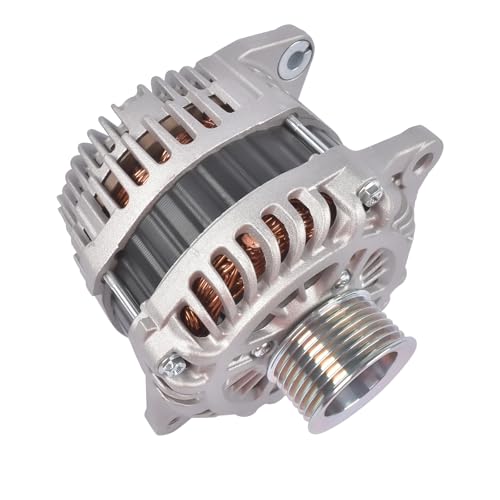
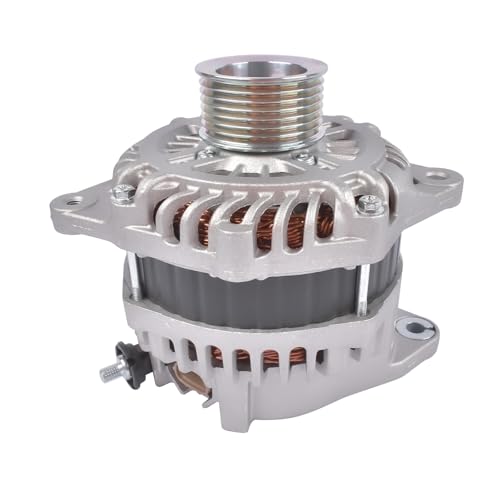
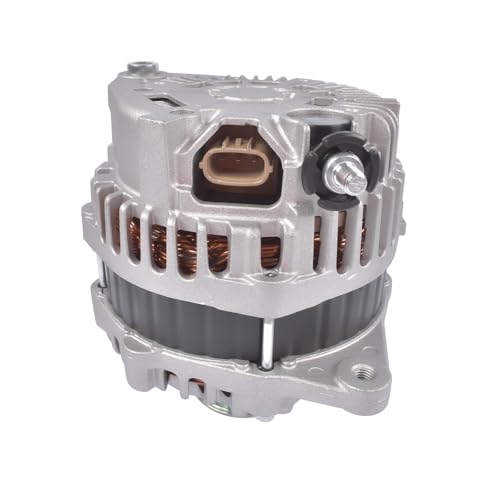

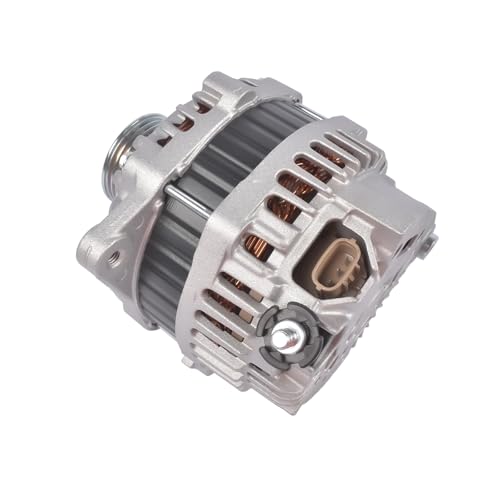
11341N Alternator Specifications
| Specification | Details |
|---|---|
| Product | Aftermarket replacement alternator |
| Primary part number | 11341N |
| Additional aftermarket references | A5409S, 0986CR6027 |
| Vehicle manufacturer | Nissan |
| Engine application | Select 3.5L V6 models |
| Vehicle years advertised | 2006–2016, selected applications |
| Nissan OE references | 23100-JA11A, 23100-JA11B, 23100-1AA1A, 23100-1AA1B, 23100-3JA1A |
| Alternator manufacturer references | A3TJ1791 series, A3TJ3691 series, A3TJ3991 |
| Rated amperage | Not specified in supplied listing |
| Pulley configuration | Verify against original alternator |
| Electrical connector | Verify against original alternator |
| Voltage regulator | Confirm exact application |
| Warranty | Not specified in supplied listing |
Unlike some replacement alternator listings, this product description does not provide enough technical information to establish a universal output rating.
Do not assume the 11341N is a specific amperage simply because another alternator with a similar part number carries that rating.
What Vehicles Does the 11341N Alternator Fit?
According to the seller, the 11341N alternator is compatible with selected Nissan vehicles equipped with the 3.5L V6.
Complete 11341N Alternator Vehicle Fitment Chart
| Years | Make | Model | Engine | Fitment notes |
|---|---|---|---|---|
| 2006–2009 | Nissan | Altima | 3.5L V6 | Verify original OE number |
| 2011–2016 | Nissan | Altima | 3.5L V6 | 2010 not included in seller listing |
| 2006–2014 | Nissan | Murano | 3.5L V6 | Verify model year and configuration |
| 2013 | Nissan | Pathfinder | 3.5L V6 | Verify charging-system equipment |
| 2011–2016 | Nissan | Maxima | 3.5L V6 | Verify OE number |
| 2011–2016 | Nissan | Quest | 3.5L V6 | Verify OE number |
Important: These are seller-advertised applications, not guaranteed fitments. Some of the year ranges require additional scrutiny because Nissan used different generations and electrical-system configurations during this period.
Before ordering, compare the original alternator part number, electrical connector, mounting arrangement, pulley design, and VIN-based catalog information.
2006–2009 Nissan Altima 3.5L Alternator
The seller lists the 11341N for 2006–2009 Nissan Altima models equipped with the 3.5L V6.
The Altima underwent a generation change during this period, making verification especially important.
Even when two vehicles share the VQ35 engine family, the alternator’s mounting configuration, electrical connections, and charging requirements may differ.
Check the factory part number before ordering.
2011–2016 Nissan Altima 3.5L Alternator
The seller also lists the 2011–2016 Nissan Altima 3.5L V6.
The 2010 Altima is not included in the supplied compatibility list.
That omission does not establish that the alternator cannot fit a 2010 model, but it does mean compatibility has not been claimed by this seller.
The 2013 Altima also introduced a new generation, so a broad 2011–2016 fitment claim should be confirmed using the vehicle’s VIN and original alternator number.
2006–2014 Nissan Murano 3.5L Alternator
The Nissan Murano is another advertised application.
The seller lists 2006–2014 Murano models equipped with the 3.5L V6.
However, the Murano changed generations during this range, and different alternator part numbers may apply.
Confirm the original charging-system configuration rather than relying exclusively on engine displacement.
2013 Nissan Pathfinder 3.5L Alternator
The 2013 Nissan Pathfinder 3.5L V6 appears in the seller’s compatibility list.
This model year is especially important to verify because the Pathfinder transitioned to a different vehicle platform.
Check the original alternator part number and electrical connector before purchasing.
2011–2016 Nissan Maxima 3.5L Alternator
The 11341N is advertised for 2011–2016 Nissan Maxima models equipped with the 3.5L V6.
The Maxima underwent a generation change for the 2016 model year.
Consequently, confirm the alternator’s OEM number and physical configuration for the specific vehicle.
2011–2016 Nissan Quest 3.5L Alternator
The seller also advertises compatibility with 2011–2016 Nissan Quest 3.5L V6 models.
The Quest’s electrical system supports numerous accessories, including climate control, lighting, entertainment equipment, and power-operated features depending on trim.
A correctly functioning alternator is essential for maintaining stable system voltage under these loads.
Verify the factory alternator number before ordering.
11341N Alternator OEM and Aftermarket Cross-Reference Numbers
One of the most useful features of the 11341N listing is its extensive collection of OEM and aftermarket interchange numbers.
These numbers can help buyers compare a replacement alternator against the original unit.
Nissan OEM Part Numbers
| Nissan part number | Unhyphenated listing reference |
|---|---|
| 23100-1AA1A | 231001AA1A |
| 23100-1AA1B | 231001AA1B |
| 23100-3JA1A | 231003JA1A |
| 23100-JA11A | 23100JA11A |
| 23100-JA11AR | 23100JA11AR |
| 23100-JA11B | 23100JA11B |
| 23100-JA11BR | 23100JA11BR |
| 23100-JA11BRE | 23100JA11BRE |
| 2310M-JA11BRW | 2310MJA11BRW |
Additional Aftermarket References
- 11341N
- A5409S
- 0986CR6027
- ALM0068BS
- ALM0068GB
- ALM0068LP
- ALM0068RN
- ALM0068UX
- ALM0068ZD
- ALM0068RB
- ALM0068WA
- ALM9068BS
- ALM9068MQ
Alternator Manufacturer References
- A003TJ1791
- A003TJ1791A
- A003TJ1791B
- A003TJ1791ZC
- A3TJ1791
- A3TJ1791A
- A3TJ1791B
- A3TJ1791ZC
- A3TJ3691
- A3TJ3691ZC
- A3TJ3991
These references come from the seller’s interchange list.
An advertised cross-reference is not proof that every listed part is physically or electrically interchangeable in every vehicle.
Use the original alternator part number and a vehicle-specific parts catalog to confirm compatibility.
Seven Signs Your Nissan Alternator Is Failing
Alternator problems often develop gradually.
A weak charging system may continue operating for some time before the vehicle becomes difficult to start or stalls.
Here are seven warning signs worth investigating.
1. Battery Warning Light Comes On
The battery-shaped warning light on the dashboard can indicate that the charging system is not functioning correctly.
Possible causes include:
- Alternator failure
- Faulty charging-system wiring
- Loose electrical connections
- Accessory-belt problems
- Battery or charging-control faults
The warning light does not automatically mean the battery itself is defective.
For more information, read our guide to why your battery light is on.
2. Your Nissan Keeps Needing Jump-Starts
If your Altima, Maxima, or Murano repeatedly needs a jump-start, the alternator may not be replenishing the battery properly.
However, a failing battery, parasitic electrical draw, or corroded terminal can create the same symptoms.
Test the battery and charging system before purchasing replacement parts.
3. Headlights Dim or Flicker
Changes in headlight brightness can indicate unstable electrical-system voltage.
This may become more noticeable when the blower motor, rear defroster, or other accessories are operating.
Poor electrical grounds and wiring problems can also cause similar symptoms.
4. Whining or Grinding Noise
Worn alternator bearings can produce whining, grinding, or rattling noises that change with engine speed.
But don’t automatically blame the alternator.
A failing belt tensioner, idler pulley, or another accessory-drive component can produce similar sounds.
5. Electrical Accessories Behave Strangely
Low system voltage can contribute to unusual electrical behavior.
Possible symptoms include intermittent warning lights, malfunctioning accessories, or inconsistent electronic operation.
These symptoms require diagnosis because many unrelated faults can produce similar complaints.
6. Burning Smell Near the Engine
A slipping belt, overheated charging cable, or internal alternator failure may create an unusual burning smell.
If you notice smoke or melting insulation, stop operating the vehicle and investigate the cause.
7. Engine Stalls or Won’t Restart
If the alternator stops supplying electrical power, the vehicle may temporarily continue running on stored battery energy.
Once voltage drops too low, essential engine electronics may stop functioning.
A confirmed charging-system failure should be repaired before the vehicle is driven again.
How to Test a Nissan Alternator Before Replacing It
Replacing an alternator without testing the charging system is an expensive way to discover that the actual problem was a loose battery cable.
A digital multimeter provides a useful starting point.
For a detailed walkthrough, see our guide to testing alternator output with a multimeter.
Step 1: Measure Battery Voltage With the Engine Off
With the engine off and the battery rested, measure voltage across the battery terminals.
A fully charged conventional 12-volt lead-acid battery typically measures approximately 12.6 volts.
A substantially lower reading may indicate a discharged or deteriorating battery.
Charge and test the battery before drawing conclusions about alternator performance.
Step 2: Measure Voltage With the Engine Running
Start the engine and measure battery voltage again.
Many conventional charging systems operate around 13.5–14.8 volts during active charging.
However, some Nissan vehicles use charging-control strategies that vary alternator output according to operating conditions.
A single voltage reading should not be treated as definitive proof of alternator failure.
Use the appropriate Nissan service specifications.
Step 3: Apply Electrical Load
Turn on the headlights, cabin blower, and rear-window defroster.
Observe how charging voltage responds.
An inability to maintain appropriate charging performance under load may justify additional testing.
Step 4: Inspect the Accessory Belt
Check the accessory belt for cracking, glazing, contamination, and unusual wear.
Also inspect the belt tensioner and related pulleys.
A slipping belt can prevent a functioning alternator from producing the expected output.
Step 5: Perform a Voltage-Drop Test
A damaged charging cable or poor ground connection can make a functioning alternator appear defective.
A voltage-drop test measures electrical losses while the circuit operates under load.
Our automotive voltage-drop testing guide explains how to identify excessive resistance in the charging cable and ground circuit.
Safety warning: Never disconnect the battery while the engine is running to test alternator output. Voltage spikes can damage sensitive vehicle electronics.
Why Alternator Compatibility Matters on Nissan VQ35 Engines
Nissan’s VQ35 engine family has been used across multiple vehicle platforms and generations.
Although these vehicles share a similar engine displacement, their accessory-drive layouts and charging-system configurations are not necessarily identical.
Before ordering the 11341N, compare the following.
Original Equipment Part Number
The factory alternator number is one of the most useful fitment references.
If the original unit carries a number included in the seller’s interchange list, that provides a useful starting point.
However, confirm the application through a vehicle-specific catalog.
Electrical Connector
Different alternators may use different regulator connectors or terminal configurations.
An alternator that bolts into place but has the wrong connector is not a correct replacement.
Pulley Configuration
Verify the pulley groove count, diameter, offset, and design.
The supplied listing does not specify the 11341N pulley configuration, so this must be checked before ordering.
Mounting Arrangement
Compare the mounting ears, bracket locations, and fastener arrangement.
An incorrect housing configuration can prevent installation or cause belt misalignment.
Charging-System Requirements
Some Nissan applications use electronic charging-control strategies.
Correct regulator compatibility is essential to avoid charging faults and warning lights.
Vehicle Production Date
Model-year transitions can introduce alternator changes.
For vehicles near a generation change, confirm the VIN and production date.
How to Replace the Alternator on a Nissan 3.5L V6
Alternator replacement procedures vary significantly among the Altima, Maxima, Murano, Quest, and Pathfinder.
Some applications require additional access through the wheel-well area or removal of surrounding components.
Use the factory service manual for the specific vehicle.
General Alternator Replacement Procedure
- Park the vehicle on level ground and allow the engine to cool.
- Switch off the ignition and disconnect the negative battery terminal.
- Locate the alternator and identify the accessory-belt routing.
- Remove components required for safe access according to the service manual.
- Release belt tension using the correct procedure.
- Remove the accessory belt from the alternator pulley.
- Disconnect the alternator electrical connector and main charging cable.
- Remove the alternator mounting fasteners.
- Carefully remove the original alternator.
- Compare the replacement with the original unit.
- Install the replacement using factory mounting procedures and torque specifications.
- Reinstall the accessory belt and verify pulley alignment.
- Reconnect the battery.
- Start the engine and confirm charging-system operation.
Do not guess at mounting-bolt torque values or belt-routing procedures.
Use the service information for your exact model and engine.
Common Nissan Alternator Replacement Mistakes
Ordering by Engine Size Alone
A 3.5L V6 engine designation does not guarantee identical alternator hardware across every Nissan model.
Verify the OE number and physical configuration.
Ignoring Model-Year Changes
The advertised fitment range includes several Nissan generation transitions.
The 2013 Altima, 2013 Pathfinder, and 2016 Maxima deserve particular attention.
Forgetting to Test the Battery
A deteriorating battery may continue causing starting problems after the alternator is replaced.
Test both components.
Overlooking Charging Cables and Grounds
High resistance in the charging cable or ground circuit can prevent proper battery charging.
Inspect connections and perform voltage-drop testing when necessary.
Reusing a Damaged Accessory Belt
A worn or slipping belt can compromise charging performance even when the alternator itself is working correctly.
Inspect the belt and tensioner during replacement.
Is the 11341N Alternator Worth Buying?
The 11341N is worth considering for owners of compatible Nissan 3.5L V6 vehicles who need to replace a failed alternator.
Potential Advantages
- Advertised compatibility with multiple Nissan 3.5L V6 applications
- Extensive Nissan OEM cross-reference list
- Coverage of Altima, Maxima, Murano, Quest, and Pathfinder models
- Multiple alternator manufacturer interchange references
- Aftermarket replacement option for aging Nissan charging systems
Important Considerations
The supplied product description does not establish:
- Exact amperage rating
- Pulley groove count
- Regulator configuration
- Warranty duration
- Current selling price
- Independent durability testing
- Confirmed fitment for every listed model year
These details should be verified before purchasing.
Buyers should compare the actual seller’s price, warranty, return policy, and confirmed compatibility against genuine Nissan and other aftermarket alternatives.
Frequently Asked Questions
Does the 11341N alternator fit a 2007 Nissan Altima 3.5L?
The seller advertises compatibility with 2006–2009 Nissan Altima 3.5L models. Verify the original alternator number before purchasing.
Does the 11341N fit a 2010 Nissan Altima?
The 2010 Altima is not included in the supplied seller fitment list. Compatibility has not been established by this listing.
Will the 11341N fit a 2015 Nissan Altima 3.5L?
The seller advertises compatibility with 2011–2016 Altima 3.5L applications, including 2015. Verify the OE number and connector before ordering.
Does this alternator fit a Nissan Altima 2.5L?
Compatibility with the 2.5L four-cylinder engine is not established by the supplied listing.
Does the 11341N fit a 2012 Nissan Murano?
The seller advertises compatibility with 2006–2014 Nissan Murano 3.5L models. Confirm the original alternator part number.
Does the 11341N fit a 2013 Nissan Pathfinder?
The 2013 Pathfinder 3.5L appears in the advertised compatibility list. Verify the VIN and charging-system configuration.
Does the 11341N fit a 2016 Nissan Maxima?
The seller advertises compatibility with 2011–2016 Maxima 3.5L models. Because 2016 introduced a new Maxima generation, verify the original alternator number carefully.
Does this alternator fit a 2014 Nissan Quest?
The seller lists 2011–2016 Nissan Quest 3.5L applications, including 2014.
What is Nissan part number 23100-JA11A?
23100-JA11A is a Nissan alternator OE reference included in the seller’s advertised interchange list.
Is 23100-1AA1A interchangeable with 11341N?
The seller lists 23100-1AA1A as an interchange reference. Confirm the specific vehicle application and alternator configuration before ordering.
What is the amperage of the 11341N alternator?
The supplied listing does not specify the alternator’s rated amperage. Confirm the output specification with the seller or manufacturer.
Can a bad alternator cause a Nissan to stall?
Yes. If the alternator stops charging and battery voltage falls too low, essential engine electronics may stop functioning.
Final Verdict: 11341N Alternator for Nissan 3.5L V6
The 11341N replacement alternator is advertised for selected Nissan Altima, Maxima, Murano, Quest, and Pathfinder models equipped with the 3.5L V6.
Its extensive list of Nissan OE and aftermarket interchange numbers makes it a potential replacement option when the original alternator fails.
However, the broad advertised model-year coverage includes multiple vehicle generations, and the supplied product information does not specify several important technical details.
The best way to determine whether the 11341N is right for your Nissan is to match the original alternator part number and confirm the electrical connector, pulley, mounting configuration, and charging-system requirements.
Test the battery, inspect the accessory belt, and check the charging cables before replacing the alternator.
Because buying the wrong alternator is frustrating enough. Installing it before discovering that the real problem was a loose battery cable is even worse.






There are no reviews yet.