


What Vehicles Does the 11099 Alternator Fit?
According to the supplied manufacturer listing, the 11099 alternator is compatible with select Honda and Acura vehicles equipped with 3.2L, 3.5L, or 3.7L V6 engines.
Complete 11099 Alternator Vehicle Fitment Chart
| Years | Make | Model | Engine | Important notes |
|---|---|---|---|---|
| 2005–2007 | Honda | Odyssey | 3.5L V6 | 2007: Without VCM only |
| 2005–2008 | Honda | Pilot | 3.5L V6 | 2007–2008: Without VCM only |
| 2006–2008 | Honda | Ridgeline | 3.5L V6 | Verify original alternator |
| 2003–2006 | Acura | MDX | 3.5L V6 | Verify OE number |
| 2007–2009 | Acura | MDX | 3.7L V6 | Verify OE number |
| 2005–2008 | Acura | RL | 3.5L V6 | Verify OE number |
| 2006–2008 | Acura | TL | 3.2L V6 | Verify OE number |
| 2007–2008 | Acura | TL | 3.5L V6 | Verify OE number |
Important: These are seller-advertised applications, not guaranteed fitments for every trim, production date, or alternator configuration.
Before ordering, verify the original alternator part number, electrical connector, mounting points, pulley configuration, and engine equipment.
2005–2007 Honda Odyssey 3.5L Alternator
The Honda Odyssey is one of the primary applications advertised for the 11099.
The listing covers 2005–2007 Odyssey models equipped with the 3.5L V6.
However, the seller specifically states that 2007 Odyssey models equipped with Variable Cylinder Management are not compatible.
Because VCM availability can vary by trim and model year, confirm the engine configuration before ordering.
2005–2008 Honda Pilot 3.5L Alternator
The 11099 is also advertised for 2005–2008 Honda Pilot 3.5L V6 models.
For 2007–2008 applications, the seller specifies non-VCM engines only.
If your Pilot is equipped with Variable Cylinder Management, do not assume this alternator will fit.
Use the VIN and original alternator part number to confirm compatibility.
2006–2008 Honda Ridgeline 3.5L Alternator
The manufacturer lists the 2006–2008 Honda Ridgeline 3.5L V6.
The Ridgeline’s electrical system supports accessories such as headlights, cooling fans, climate control, and battery charging.
Correct alternator output and regulator compatibility are essential for reliable operation.
2003–2006 Acura MDX 3.5L Alternator
The 11099 is advertised for 2003–2006 Acura MDX models equipped with the 3.5L V6.
Confirm the original alternator number and mounting configuration before purchasing.
2007–2009 Acura MDX 3.7L Alternator
The seller also lists 2007–2009 Acura MDX models equipped with the 3.7L V6.
Because this generation uses a different engine configuration from earlier MDX models, OE number verification is especially important.
2005–2008 Acura RL 3.5L Alternator
The 11099 is advertised for the 2005–2008 Acura RL 3.5L V6.
Confirm the original alternator number and electrical connector before ordering.
2006–2008 Acura TL 3.2L and 3.5L Alternator
The seller lists 2006–2008 Acura TL 3.2L V6 models and 2007–2008 Acura TL 3.5L V6 models.
Because the TL was offered with different V6 engines, verify the original alternator part number rather than relying on model year alone.
What Is Variable Cylinder Management (VCM), and Why Does It Matter?
One of the most important fitment details in this listing is the restriction involving Honda’s Variable Cylinder Management (VCM) system.
VCM is a Honda engine-management technology that can deactivate selected cylinders under certain driving conditions to reduce fuel consumption.
The system is used on specific Honda V6 applications.
However, VCM-equipped and non-VCM engines may use different alternator configurations, mounting arrangements, or accessory-drive components.
The seller explicitly excludes:
- 2007 Honda Odyssey 3.5L with VCM
- 2007 Honda Pilot 3.5L with VCM
- 2008 Honda Pilot 3.5L with VCM
These exclusions should not be ignored.
A vehicle that shares the same engine displacement and model year may still require a different alternator.
How to Check Whether Your Honda Has VCM
The most reliable approach is to:
- Identify the vehicle VIN.
- Confirm the exact engine configuration through Honda service information or a VIN-based parts catalog.
- Compare the original alternator part number with the seller’s interchange list.
- Verify the pulley, mounting points, and electrical connector.
Do not rely solely on the presence or absence of a dashboard indicator.
11099 Alternator OEM and Aftermarket Cross-Reference Numbers
The manufacturer provides an extensive list of replacement and interchange numbers.
These references can help buyers compare the 11099 against the original alternator installed in their vehicle.
| Part number | Reference type |
|---|---|
| 11099 | Primary aftermarket number |
| 11151N | Additional aftermarket reference |
| 11151 | Additional aftermarket reference |
| 104210-3100 | Alternator manufacturer reference |
| 104210-4290 | Alternator manufacturer reference |
| 104210-4300 | Alternator manufacturer reference |
| 104210-4301 | Alternator manufacturer reference |
| 31100-RDJ-A01 | Honda/Acura OE reference |
| 31100-RGL-A01 | Honda/Acura OE reference |
| 31100-RGM-A01 | Honda/Acura OE reference |
| 31100-RJA-A01 | Honda/Acura OE reference |
| 31100-RJA-A02 | Honda/Acura OE reference |
| 31100-RYP-A01 | Honda/Acura OE reference |
| 400-52163 | Aftermarket interchange |
| 400-52252R | Aftermarket interchange |
| CSD69 | Aftermarket interchange |
| CSC10 | Aftermarket interchange |
| CSD29 | Aftermarket interchange |
| AND0339 | Aftermarket interchange |
| VND0339 | Aftermarket interchange |
| LRA04171 | Aftermarket interchange |
These are seller-advertised interchange numbers.
An advertised interchange does not independently establish that every listed alternator is physically or electrically interchangeable in every vehicle.
Confirm the original equipment number and exact application before ordering.
Why a Reliable 130-Amp Alternator Matters
The alternator supplies electrical power while the engine runs and replenishes energy removed from the battery during starting.
On compatible Honda and Acura V6 vehicles, the charging system supports components including:
- Engine control module
- Fuel injection and ignition systems
- Headlights and exterior lighting
- Electric cooling fans
- Climate-control blower motors
- Rear-window defroster
- Audio and navigation equipment
- Interior electronics
- Battery charging
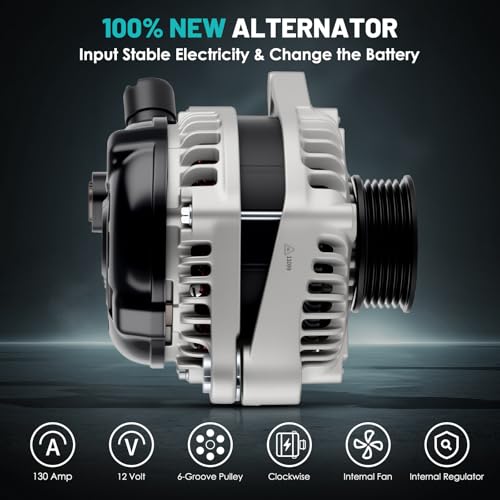
The 11099’s advertised 130-amp output is intended to support compatible factory charging systems.
However, the alternator does not continuously deliver 130 amps.
Its output changes with rotational speed, temperature, battery condition, and electrical demand.
Owners with high-powered aftermarket audio systems, auxiliary lighting, or additional electrical accessories should evaluate total current requirements rather than assuming a factory-style replacement provides extra capacity.
Seven Signs Your Honda or Acura Alternator Is Failing
Alternator problems often develop gradually.
Sometimes the first symptom is a warning light. Other times, the battery simply stops holding enough charge to restart the engine.
1. Battery Warning Light Comes On
The battery-shaped dashboard warning light can indicate a charging-system problem.
Possible causes include alternator failure, damaged wiring, poor electrical connections, or accessory-belt issues.
For more information, read our guide explaining why your battery light is on.
2. Battery Keeps Dying
If your Odyssey, Pilot, or MDX repeatedly needs jump-starting, the alternator may not be replenishing the battery correctly.
However, a deteriorating battery, parasitic electrical draw, or corroded battery terminal can produce similar symptoms.
Test the battery and charging system before purchasing replacement parts.
3. Headlights Dim or Flicker
Unusual changes in headlight brightness may indicate unstable charging voltage.
The symptoms can become more noticeable when the blower motor, rear defroster, or other electrical accessories are operating.
Poor electrical grounds and wiring problems can also cause similar symptoms.
4. Whining or Grinding Noise
Worn alternator bearings may produce whining, grinding, or rattling noises that change with engine speed.
A failing belt tensioner, idler pulley, or another accessory-drive component can create similar noises.
Inspect the complete accessory-drive system before replacing the alternator.
5. Electrical Accessories Malfunction
Low or unstable system voltage can contribute to unusual electrical behavior.
Possible symptoms include intermittent warning lights, slow accessories, or electronic malfunctions.
These symptoms are not exclusive to alternator failure.
6. Burning Smell Near the Alternator
A slipping belt, overheated wiring connection, or internal alternator failure may produce an unusual burning smell.
If you notice smoke or melting insulation, shut the engine off safely and investigate before operating the vehicle again.
7. Engine Stalls or Won’t Restart
If the alternator stops charging, the vehicle may temporarily continue operating using stored battery energy.
Once battery voltage drops too low, essential engine electronics may stop functioning.
A confirmed charging-system failure should be repaired before the vehicle is driven again.
How to Test the Alternator Before Replacing It
Replacing an alternator without confirming the diagnosis can waste money and leave the original problem unresolved.
A digital multimeter provides a useful starting point.
For a detailed walkthrough, see our guide to testing alternator output with a multimeter.
Step 1: Check Battery Voltage
With the engine off and the battery rested, measure voltage across the battery terminals.
A fully charged conventional 12-volt lead-acid battery typically measures approximately 12.6 volts.
A significantly lower reading may indicate a discharged or deteriorating battery.
Step 2: Start the Engine
Measure battery voltage again with the engine running.
Many conventional charging systems operate around 13.5–14.8 volts during active charging.
However, electronically controlled charging systems can vary output according to operating conditions.
Compare readings with the appropriate Honda or Acura service specifications.
Step 3: Apply Electrical Load
Turn on the headlights, cabin blower, and rear-window defroster.
Observe how charging voltage responds.
An inability to maintain appropriate charging performance under load may justify additional testing.
Step 4: Inspect the Serpentine Belt
Check the accessory belt for cracks, glazing, contamination, or unusual wear.
Also inspect the belt tensioner and related pulleys.
A slipping belt can prevent a functioning alternator from producing the expected electrical output.
Step 5: Perform a Voltage-Drop Test
A damaged charging cable or poor ground connection can make a functioning alternator appear defective.
A voltage-drop test measures electrical losses while the circuit operates under load.
Our automotive voltage-drop testing guide explains how to identify excessive resistance in the positive charging cable and ground circuit.
Safety warning: Never disconnect the battery while the engine is running to test alternator output. Voltage spikes can damage sensitive vehicle electronics.
11099 Alternator Construction and Features
The manufacturer advertises several features intended to support charging performance and durability.
New Replacement Construction
The 11099 is advertised as a new alternator rather than a remanufactured assembly.
New construction may appeal to buyers who prefer a replacement unit that has not been rebuilt from a used core.
However, new construction alone does not establish superior durability or performance.
Internal Voltage Regulator
The alternator uses an internally regulated configuration.
The regulator helps control charging output according to the electrical system’s requirements.
Correct regulator and connector compatibility are essential.
Internal Cooling Fan
The internal cooling fan helps move air through the alternator housing.
Heat management matters because excessive temperatures can shorten the service life of bearings, rectifiers, and electrical components.
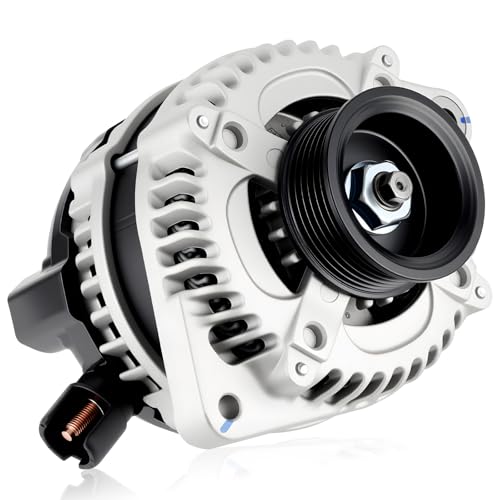
Six-Groove Serpentine Pulley
The 11099 features an advertised six-groove pulley.
Correct pulley configuration and alignment are essential for proper belt operation.
Before installation, compare the replacement pulley with the original alternator, including groove count, diameter, offset, and pulley design.
Clockwise Rotation
The alternator is advertised for clockwise rotation.
Rotation direction is part of the component’s mechanical specification and should match the intended application.
Die-Cast Aluminum Housing and Copper Windings
The seller advertises die-cast aluminum construction and copper windings.
These are common materials in automotive alternator design.
However, the supplied listing does not provide independent testing that establishes superior durability or efficiency compared with competing units.
How to Replace the Alternator on a Honda Odyssey or Pilot 3.5L
Alternator replacement on Honda and Acura V6 vehicles requires attention to electrical safety, accessory-belt routing, and component access.
The exact procedure varies by model, engine, and production date.
The following steps provide a general overview rather than a substitute for factory repair instructions.
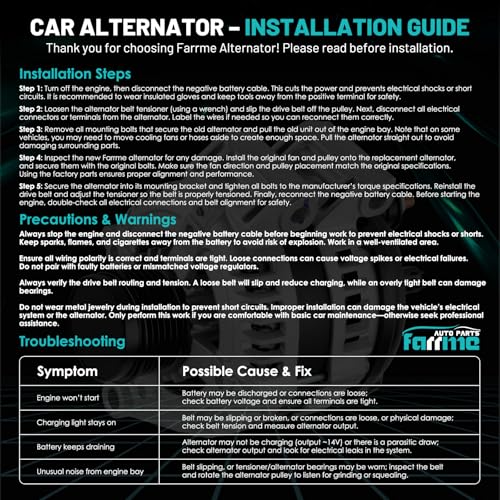
General Replacement Procedure
- Park the vehicle on level ground, switch off the ignition, and allow the engine to cool.
- Disconnect the negative battery terminal.
- Locate the alternator and identify the accessory-belt routing.
- Remove components necessary for safe access according to the service manual.
- Release belt tension using the specified procedure.
- Remove the accessory belt from the alternator pulley.
- Disconnect the alternator electrical connector and main charging cable.
- Remove the alternator mounting fasteners.
- Carefully remove the original alternator.
- Compare the original and replacement assemblies, including mounting points, connector, pulley, and OE number.
- Install the replacement using the correct mounting procedure and factory torque specifications.
- Reinstall the accessory belt and verify pulley alignment.
- Reconnect the battery.
- Start the engine and confirm charging-system operation.
Always consult the appropriate service information for your specific vehicle.
Common 11099 Alternator Installation Mistakes
Ignoring VCM Compatibility
The seller excludes 2007 Odyssey and 2007–2008 Pilot models equipped with Variable Cylinder Management.
Verify the engine configuration before ordering.
Ordering by Model Year Alone
Honda and Acura used multiple V6 engines and alternator configurations during the advertised years.
Match the original OE number.
Incorrect Pulley Configuration
The listing specifies a six-groove pulley.
Verify that it matches the original alternator.
Loose Charging Cable
Poor electrical connections can create resistance, heat, and charging problems.
Ignoring Belt Wear
A worn or slipping belt can prevent a functioning alternator from charging correctly.
Skipping Battery Testing
A damaged battery may continue causing starting problems after the alternator is replaced.
Is the 11099 130A Alternator Worth Buying?
The 11099 is worth considering for owners of compatible Honda and Acura V6 vehicles who need to replace a failed charging-system component.
Potential Advantages
- Advertised compatibility with multiple Honda and Acura V6 applications
- 130-amp rated output
- 12-volt electrical configuration
- New replacement construction
- Six-groove pulley
- Internal voltage regulator
- Internal cooling fan
- Multiple Honda/Acura OE cross-reference numbers
- Die-cast aluminum housing, as advertised
- Copper windings, as advertised
Things to Consider
The supplied product information does not establish a current selling price, warranty duration, independent long-term durability results, or verified comparative testing against genuine Honda or Acura equipment.
Buyers should compare the actual purchase price, seller warranty, return policy, and confirmed fitment against OEM and other aftermarket alternatives.
Most importantly, confirm VCM compatibility before ordering.
Frequently Asked Questions
Does the 11099 alternator fit a 2006 Honda Odyssey?
The seller advertises compatibility with 2005–2007 Honda Odyssey 3.5L models. Verify the original alternator number and engine configuration.
Does the 11099 fit a 2007 Honda Odyssey with VCM?
No. The supplied listing specifically excludes 2007 Honda Odyssey models equipped with Variable Cylinder Management.
Will this alternator fit a 2008 Honda Pilot?
The seller advertises compatibility with 2005–2008 Honda Pilot 3.5L models. For 2008, the listing specifies non-VCM engines only.
Does the 11099 fit a 2007 Honda Ridgeline?
The seller advertises compatibility with 2006–2008 Honda Ridgeline 3.5L models.
Does this alternator fit a 2005 Acura MDX?
The seller advertises compatibility with 2003–2006 Acura MDX 3.5L models.
Will the 11099 fit a 2008 Acura MDX 3.7L?
The 2008 Acura MDX 3.7L is included in the seller’s advertised fitment range.
Does the 11099 fit a 2007 Acura TL?
The seller lists select 2007 Acura TL 3.2L and 3.5L V6 applications. Verify the original alternator number.
Is the 11099 a 130-amp alternator?
Yes. The supplied listing specifies a 130-amp rated output and 12-volt electrical configuration.
What is Honda part number 31100-RJA-A01?
31100-RJA-A01 is a Honda/Acura alternator OE reference included in the seller’s advertised interchange list.
Is 104210-4290 interchangeable with 11099?
The seller lists 104210-4290 as an alternator reference. Confirm the original alternator’s mounting, connector, and pulley specifications before ordering.
Can a bad alternator cause a Honda Odyssey to stall?
Yes. If the charging system stops working and battery voltage falls too low, essential engine electronics may stop functioning.
Final Verdict: 11099 130A Alternator for Honda and Acura V6
The 11099 / 11151N 130-amp replacement alternator offers an aftermarket option for select Honda Odyssey, Pilot, Ridgeline, Acura MDX, RL, and TL models equipped with 3.2L, 3.5L, or 3.7L V6 engines.
Its advertised 130-amp output, six-groove pulley, internal voltage regulator, and extensive OE cross-reference list make it worth evaluating when the original alternator fails.
However, VCM compatibility is a critical restriction.
Before ordering, confirm the original alternator number, engine configuration, electrical connector, pulley, and vehicle VIN.
Test the battery, inspect the accessory belt, and check the charging cables before replacing the alternator.
Because buying the wrong alternator is frustrating enough. Installing it before discovering that the real problem was a loose battery cable is even worse.



There are no reviews yet.