
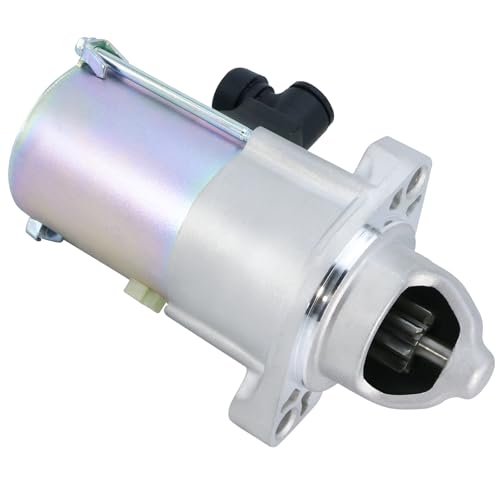



Replacement and Interchange Numbers
The starter replaces or cross-references:
1091410914N31200-5A2-A51312005A2A5131200-5A2-A52312005A2A52SM74009SM740-09SM-74009
The Honda numbers with and without hyphens identify the same numbering formats. Match the complete suffix—particularly A51 or A52—when comparing the original unit.
Fitment Verification
Before purchasing, confirm:
- Vehicle year
- Honda Accord or CR-V model
- 2.4-liter four-cylinder engine
- Transmission type
- Original starter number
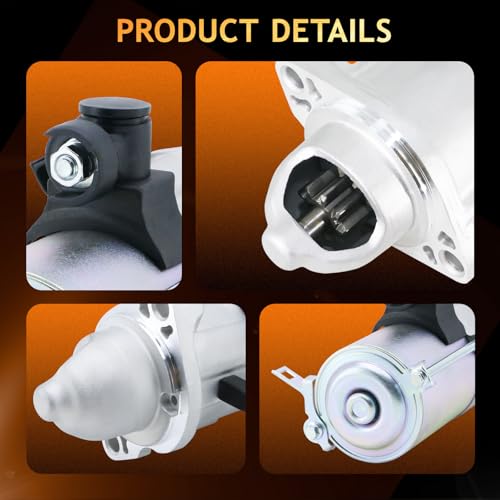
- Mounting-flange shape
- Bolt-hole spacing
- Solenoid location
- Electrical-terminal arrangement
- Starter nose length
- Pinion tooth count and position
The NHTSA VIN decoder can help identify basic vehicle information, but the original starter should still be inspected.
New Replacement Construction
The listing identifies this as a new starter rather than a remanufactured unit. The manufacturer claims its components meet or exceed original-equipment standards.
Potential benefits of a new starter include:
- New brushes and bearings
- New solenoid components
- No reused internal wear surfaces
- Fresh electrical connections
- Consistent housing condition
“Meets or exceeds OE standards” should remain identified as a manufacturer claim unless independent test results or certification documents are available.
Diagnosing a Starter Problem
Common symptoms of a failing starter include:
- A single click without cranking
- Intermittent no-crank
- Slow cranking with a tested battery
- Starter spinning without engaging
- Grinding during startup
- Starting only after repeated attempts
- Electrical burning odor
- Abnormal starter noise
The same symptoms may result from:
- Weak battery
- Corroded battery terminals
- Damaged positive battery cable
- Poor engine ground
- Faulty starter relay
- Ignition-switch problem
- Park/Neutral safety-switch fault
- Clutch-interlock fault
- Immobilizer problem
- Damaged flywheel or flexplate teeth
- Internal engine damage
Test the battery and starting circuit before replacing the starter. A new starter cannot fix electricity that never arrives.
Honda No-Crank Considerations
Before condemning the starter, inspect:
- Battery state of charge
- Battery load-test result
- Positive-cable voltage drop
- Negative-cable voltage drop
- Starter trigger voltage
- Engine-to-chassis ground
- Starter-cut relay
- Transmission range switch
- Clutch switch on manual models
- Immobilizer indicator
If the engine cranks normally but does not start, the starter is doing its job. Diagnosis should move to fuel, ignition, compression or engine-management systems.
Installation Preparation
Before removing the original starter:
- Confirm the 2.4L engine.
- Record the original starter number.
- Verify transmission compatibility.
- Disconnect the negative battery terminal.
- Photograph the wire locations.
- Compare the replacement and original starters.
- Obtain the correct torque specifications.
- Confirm whether mounting hardware is included.
The supplied listing does not say that mounting hardware is included. Retain the original bolts unless inspection or Honda service information requires replacement.
Installation Overview
A typical replacement involves:
- Disconnecting the negative battery cable.
- Removing intake components that obstruct access.
- Labeling the electrical connections.
- Disconnecting the main starter cable and trigger wire.
- Supporting the starter.
- Removing the mounting bolts.
- Comparing both starter assemblies.
- Inspecting visible ring-gear teeth.
- Installing the replacement starter.
- Tightening the mounting bolts to specification.
- Reconnecting the electrical terminals.
- Reinstalling all removed intake components.
- Reconnecting the battery.
- Testing starter engagement and disengagement.
Access can vary between the Accord and CR-V. Consult the appropriate service procedure rather than assuming both engine bays were arranged by someone fond of human hands.
Post-Installation Checks
After installation, verify:
- Strong and consistent cranking
- Immediate pinion engagement
- Immediate starter disengagement
- No grinding
- No loose electrical connections
- No warning indicators
- Proper charging-system voltage
- Normal engine starting
Stop testing if the starter grinds or remains engaged after the engine starts.
Packaging and Shipping Claims
The seller emphasizes reinforced packaging intended to protect the starter during shipping. Inspect the product immediately for:
- Cracked housing
- Bent terminals
- Broken electrical connectors
- Damaged mounting ears
- Loose components
- Impact damage
Do not install a starter with visible shipping damage.
One-Year Warranty
The listing advertises a one-year warranty covering product-quality issues.
Before purchasing, confirm:
- Warranty start date
- Proof-of-purchase requirements
- Labor reimbursement
- Return-shipping responsibility
- Diagnostic documentation
- Commercial-use exclusions
- Replacement-processing time
“Buyer-centric service” describes the seller’s customer-service policy; it is not a technical product specification.
Frequently Asked Questions
What vehicles does the 10914 starter fit?
It is advertised for 2013–2017 Honda Accord and 2015–2016 Honda CR-V models equipped with the 2.4L four-cylinder engine.
Does it fit an Accord V6?
No confirmed 3.5L V6 compatibility is provided.
Does it fit the Accord Hybrid?
No. Hybrid fitment should not be assumed.
Does it fit an Accord Coupe?
Potentially, if it has the 2.4L engine and matching OE starter number. Confirm using the original part.
Does it fit a 2014 CR-V?
No. The supplied CR-V application begins with 2015.
Does it fit a 2017 CR-V?
No. The supplied CR-V fitment ends with 2016.
Does it fit both FWD and AWD CR-V models?
That is not explicitly stated. Confirm the original starter number before ordering.
Which Honda number should I match?
Look for 31200-5A2-A51 or 31200-5A2-A52.
Is the starter new?
Yes. It is advertised as a new replacement starter.
Does it have a warranty?
The seller advertises one-year coverage for product-quality issues.
Final Verdict
The 10914 replacement starter offers a new starting-system option for select 2013–2017 Honda Accord and 2015–2016 CR-V models with the 2.4-liter four-cylinder engine.
Fitment is narrow enough to verify properly: match the model year, engine, transmission and original Honda number. Exclude Accord V6 and Hybrid models, along with CR-V applications outside the listed 2015–2016 range.
Visit My Pro Street for additional Honda starting-system diagnostics, electrical testing and replacement guides.



There are no reviews yet.