

Why the D34/78 Is Different
The D34/78 is not simply a starting battery with extra reserve capacity.
It is a true:
dual-purpose battery
That means it is designed to handle:
- High-current engine starting
- Repeated charging and discharging
- Engine-off accessory loads
- High-demand electrical systems
This makes it particularly useful for modified vehicles where a conventional starting battery may be repeatedly pulled below a normal state of charge.
750 Cold Cranking Amps
The D34/78 delivers:
750 CCA
Cold Cranking Amps measure how much current a battery can provide under standardized cold-weather conditions while maintaining usable voltage.
That gives the D34/78 substantial cranking capability for compatible applications.
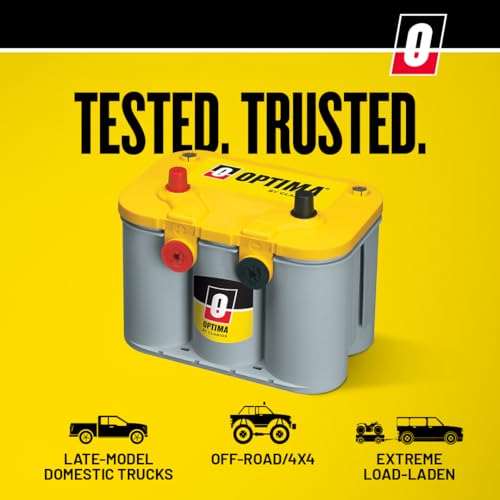
It can be a strong choice for:
- V8-powered cars
- Trucks
- SUVs
- Off-road vehicles
- Performance builds
- High-compression engines
Always compare its CCA rating with the vehicle manufacturer’s minimum requirement.
55Ah Capacity
The D34/78 provides:
55 amp-hours
That additional stored energy becomes useful when the vehicle operates electrical equipment with the engine off.
Common loads include:
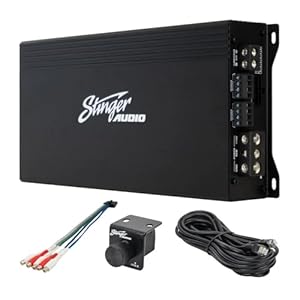
- Audio amplifiers
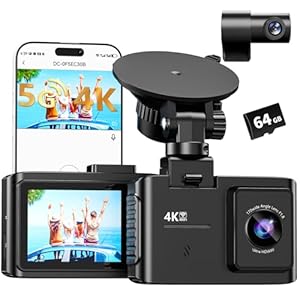
- Dash cameras
- Winches
- Auxiliary lighting
- Air compressors
- Air-suspension systems
- Pumps
- Communication equipment
- Inverters
Unlike a starting-only battery, the YELLOWTOP is designed to tolerate this repeated cycling more effectively.
120-Minute Reserve Capacity
The D34/78 is rated at:
120 minutes of reserve capacity
That is one of the strongest reasons to choose it over a conventional starting battery.
Reserve capacity represents how long a fully charged battery can support a standardized electrical load before reaching the specified cutoff voltage.
More reserve can be useful when:
- Accessories run with the engine off
- Winching
- Audio systems operate while parked
- Alternator output is temporarily insufficient
- The charging system fails
The D34/78’s combination of 55Ah capacity and 120RC makes it well suited to accessory-heavy vehicles.
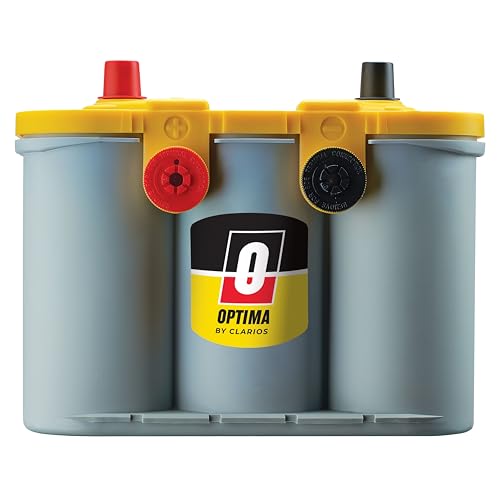
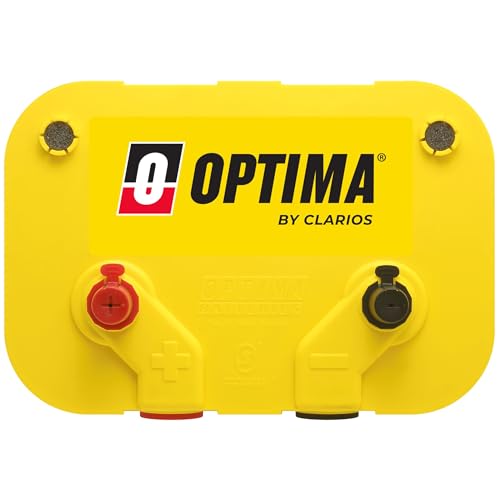
Dual SAE and GM Side Terminals
The D34/78 includes both:
SAE top terminals
and:
GM side terminals
This is a major advantage in custom and older vehicle applications.
Dual terminals can simplify installations involving:
- Factory GM side-post wiring
- Auxiliary power cables
- Custom accessory distribution
- Winch wiring
- Audio-system wiring
However, the battery should not be treated as a four-port electrical distribution block.
High-current accessories still need:
- Proper cable sizing
- Correct fusing
- Secure connections
- Proper distribution hardware
Our Car Audio System Guide explains why cable size, grounding and circuit protection matter just as much as battery capacity.
Excellent for High-Powered Car Audio
The D34/78 YELLOWTOP is particularly well suited to vehicles with substantial aftermarket audio systems.
A large amplifier can draw enormous current during musical peaks.
If the alternator cannot supply the entire load instantly, the battery helps stabilize system voltage.
The YELLOWTOP’s deep-cycle capability also makes it better suited to situations where the stereo is played with the engine off.
If your amplifier runs hot or shuts down under load, our Why Is My Amp Overheating? guide covers electrical and installation problems that can contribute to amplifier overheating.
A Bigger Battery Does Not Replace the Alternator
This is worth emphasizing.
A 55Ah battery can store more energy.
It cannot increase alternator output.
If your vehicle has:
- Multiple amplifiers
- Electric fans
- Fuel pumps
- Auxiliary lighting
- Air compressors
- Winches
you still need an alternator capable of supporting the total electrical load.
A larger battery can buffer demand.
It cannot manufacture current once its stored energy is depleted.
Strong Choice for Winch Vehicles
Winches can draw hundreds of amps under heavy load.
That can rapidly discharge a conventional starting battery.
The D34/78 YELLOWTOP is better suited to winch-equipped vehicles because it can tolerate repeated cycling more effectively.
For best results:
- Keep the engine running while winching when possible
- Use properly sized cables
- Keep connections clean
- Use proper circuit protection
- Allow the battery to recharge afterward
Extended winching can overwhelm almost any single battery if the alternator cannot keep up.
SPIRALCELL TECHNOLOGY
The D34/78 uses OPTIMA’s traditional:
SPIRALCELL TECHNOLOGY
Instead of conventional flat plates, OPTIMA uses tightly wound spiral cells.
The construction uses highly pure lead and is designed to provide:
- Strong current delivery
- Low internal resistance
- High vibration resistance
- Fast recharge capability
- Consistent starting output
The cylindrical-cell design is one of the defining characteristics of traditional OPTIMA REDTOP and YELLOWTOP batteries.
AGM Construction
AGM stands for:
Absorbent Glass Mat
The electrolyte is held within fiberglass separators rather than freely moving inside the case.
Benefits include:
- Maintenance-free operation
- Spill-resistant design
- Improved vibration resistance
- Strong charge acceptance
- Better cycling performance
- Greater mounting flexibility
That makes AGM technology well suited to modified, performance and off-road vehicles.
Up to 15 Times More Vibration Resistant
OPTIMA advertises its YELLOWTOP batteries as significantly more resistant to vibration than conventional flooded batteries.
That matters in:
- Off-road vehicles
- Trucks
- Stiffly sprung performance cars
- Rough-road applications
Repeated vibration can damage conventional battery internals over time.
The D34/78 is built to handle more physical abuse.
It still needs to be securely mounted.
Up to Three Times Longer Life
OPTIMA advertises up to:
3x longer service life compared with conventional flooded batteries
under suitable conditions.
Actual life depends heavily on:
- Depth of discharge
- Charging voltage
- Temperature
- Parasitic draw
- Alternator condition
- Storage
- Driving frequency
Even a premium AGM battery will fail early if it spends its life partially discharged.
Faster Recharge Capability
The D34/78 is designed with strong charge acceptance.
That helps it recover after:
- Winching
- Audio use
- Accessory operation
- Repeated engine starts
Recharge time still depends on:
- Alternator output
- Charging voltage
- Battery temperature
- State of charge
If your alternator is weak, the battery will still recharge slowly—or not at all.
YELLOWTOP vs. REDTOP
The difference is straightforward.
Choose REDTOP when:
- Starting is the main job
- Electrical system is mostly stock
- Engine-off loads are minimal
- Battery rarely gets deeply discharged
Choose YELLOWTOP when:
- Vehicle has high electrical demand
- Accessories operate with the engine off
- Audio system draws substantial current
- Vehicle uses a winch
- Battery is frequently cycled
The D34/78 is specifically designed for the second group.
Battery Light On?
If the battery warning lamp stays illuminated while the engine is running, replacing the battery may not solve the problem.
The warning usually points toward the charging system.
Potential causes include:
- Alternator failure
- Voltage regulator failure
- Broken drive belt
- Charging cable damage
- Main fuse failure
- Fusible-link failure
- Poor ground
Our Why Is My Battery Light On? guide explains how to diagnose the system before replacing parts.
Check High-Current Fuses and Fusible Links
The alternator and battery are connected by a high-current charging circuit.
Depending on the vehicle, that circuit may use:
- Fusible links
- Mega fuses
- Strip fuses
- Battery-terminal fuse blocks
Our What Is a Fusible Link? Fusible Link vs. Fuse Explained guide explains how these protective circuits work.
A brand-new YELLOWTOP will still go dead if the charging circuit is open.
Rapid Clicking When Starting
Rapid starter clicking often means battery voltage is collapsing under load.
Possible causes include:
- Low battery charge
- Loose terminal
- Corroded cable
- Weak ground
- Starter failure
- Charging-system problem
Our Rapid Clicking When Starting a Car guide explains how to diagnose the starting circuit.
Car Has Power but Won’t Start
Interior electronics require far less current than a starter motor.
That means a vehicle can still have:
- Lights
- Radio
- Dash power
- Door locks
while being unable to crank.
Our Car Has Power but Won’t Start diagnostic guide explains how to separate battery, starter, wiring and control-system faults.
Diagnose Before Replacing Parts
Battery problems are often blamed for faults caused by:
- Alternators
- Starters
- Corroded cables
- Grounds
- Parasitic drains
- Blown charging fuses
Our Diagnose the Car Before Replacing Parts guide is a good place to start before launching the parts cannon.
A premium battery does not fix a bad connection.
It just makes the bad connection more expensive.
Battery Registration on Modern Vehicles
Some newer vehicles track battery age and charging behavior through a battery-management system.
After replacement, they may require:
- Battery registration
- Adaptation
- Coding
Our What Is Battery Registration, and Does Your Car Need It? guide explains why modern battery replacement sometimes requires more than tightening two terminals.
Always follow the manufacturer’s procedure for your exact vehicle.
Maintenance-Free
The D34/78 is maintenance-free under normal operation.
You do not need to routinely:
- Add distilled water
- Open battery caps
- Check electrolyte level
You should still inspect:
- Terminals
- Cable condition
- Grounds
- Hold-down hardware
- Charging voltage
Maintenance-free is not the same thing as inspection-free.
Flexible Mounting
The AGM construction provides greater mounting flexibility than a conventional flooded battery.
That can be useful for:
- Battery relocations
- Hot rods
- Off-road builds
- Custom trucks
- Performance cars
Always maintain adequate clearance around both sets of terminals.
The positive terminal must never be allowed to contact grounded bodywork.
Who Should Buy the OPTIMA D34/78 YELLOWTOP?
The D34/78 makes the most sense for compatible vehicles with:
- High electrical loads
- Aftermarket audio
- Winches
- Auxiliary lighting
- Air suspension
- Electronic accessories
- Repeated engine-off use
- GM-style side-post wiring
- Custom dual-terminal requirements
It is particularly attractive when you need both:
strong starting capability
and:
real cyclic/deep-cycle performance
Why Buy the OPTIMA D34/78 YELLOWTOP?
Key features include:
- 750 Cold Cranking Amps
- 55Ah C20 capacity
- 120-minute reserve capacity
- True dual-purpose starting/deep-cycle design
- Dual SAE and GM terminals
- SPIRALCELL TECHNOLOGY
- High-purity lead construction
- AGM design
- Strong vibration resistance
- Faster recharge capability
- Maintenance-free operation
- High electrical-load capability
For accessory-heavy trucks, performance cars, off-road vehicles and custom builds, the OPTIMA D34/78 YELLOWTOP AGM Battery offers considerably more versatility than a traditional starting-only battery.
Specifications at a Glance
Brand: OPTIMA Batteries
Series: YELLOWTOP
Model: D34/78
Battery Type: Dual-Purpose AGM
Voltage: 12V
Cold Cranking Amps: 750 CCA
C20 Capacity: 55Ah
Reserve Capacity: 120 minutes
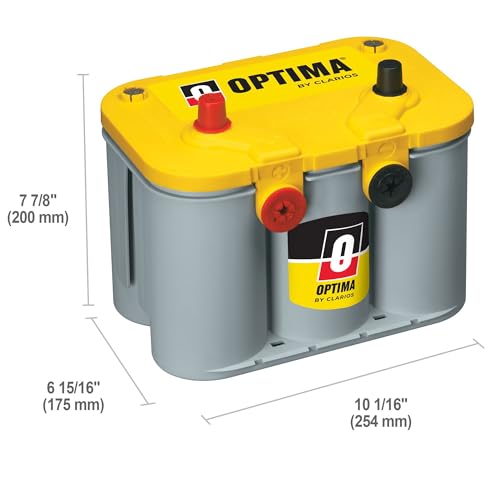
Length: 10 inches
Width: 6 7/8 inches
Height: 7 13/16 inches
Weight: 43.5 lb
Terminals: Dual SAE top + GM side terminals
Technology: SPIRALCELL
Primary Use: Starting + deep-cycle/high-accessory applications
Maintenance: Maintenance-free
Before ordering, verify battery dimensions, terminal arrangement, hold-down compatibility and required starting capacity.






There are no reviews yet.