
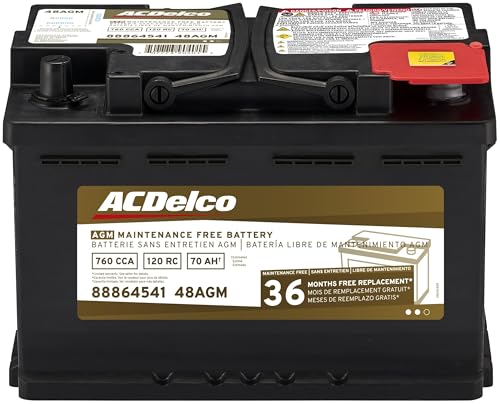
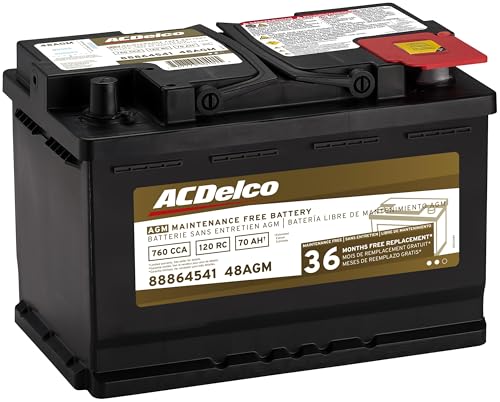
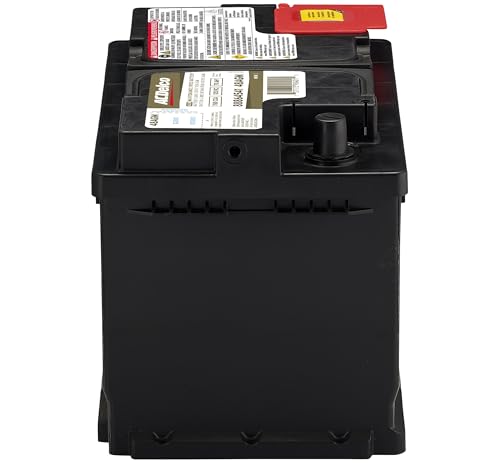
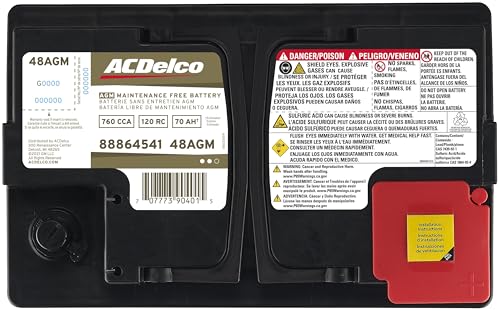
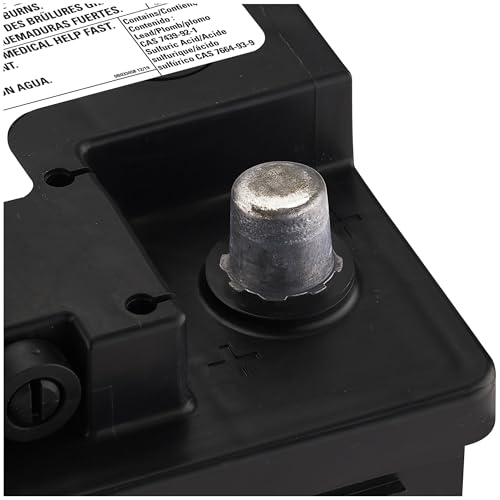
Built for start-stop systems and electrical loads
Vehicles equipped with automatic start-stop technology repeatedly shut down and restart the engine in traffic. That cycle places greater demands on a battery than the traditional arrangement in which the engine starts once and continues running.
The ACDelco 48AGM is designed to tolerate frequent charge-and-discharge cycles while maintaining enough starting power for the next restart. AGM construction also offers strong charge acceptance, making it appropriate for vehicles originally engineered around this battery technology.
That does not mean every vehicle with start-stop requires this particular battery. The physical size, terminal orientation, capacity, venting arrangement and manufacturer-specified battery technology must all match.
A battery is not considered compatible simply because persistence and a large hammer can make it occupy the tray.
AGM construction explained
Inside a conventional flooded battery, liquid electrolyte moves around the plates. An AGM battery instead suspends the electrolyte in absorbent glass-mat separators.
This construction provides several advantages:
- Sealed, maintenance-free operation
- Strong resistance to vibration
- Improved cycling capability
- High charge acceptance
- Reduced water loss through oxygen recombination
- Better spill resistance than a conventional flooded battery
- Stable power delivery for modern electrical systems
“Maintenance-free” means owners do not add water to the cells. It does not mean the terminals, cables, alternator and battery-management system have entered a permanent state of mechanical enlightenment.
Internal construction
ACDelco identifies several internal features intended to improve service life and electrical performance:
- High-density negative paste intended to improve battery life
- Silver-calcium stamped alloy designed to resist corrosion
- Calcium-lead positive grids for good conductivity and low internal resistance
- Puncture-resistant envelope separators that help prevent internal shorts
- Separator design that promotes acid circulation and temperature control
- Vent caps designed to resist acid leakage
- Plate pressure intended to reduce the loss of active material during cycling
These features do not make the battery immune to heat, chronic undercharging or a failing charging system. Battery chemistry remains stubbornly unwilling to negotiate with poor maintenance.
Check fitment before ordering
Confirm all of the following before installing the ACDelco Gold 48AGM:
- The vehicle specifies Group 48, H6 or LN3
- AGM technology is approved or required
- The 10.9-by-6.9-by-7.5-inch case fits the tray
- The positive and negative terminals are in the correct positions
- The hold-down system matches the battery case
- The original vent hose can be connected when required
- The CCA and reserve-capacity ratings meet the manufacturer’s requirements
- Battery registration or adaptation can be completed if required
Some vehicles monitor battery age, technology and capacity through an energy-management module. Installing the battery without registering it can cause incorrect charging behavior, warning messages or shorter battery life.
Our guide to battery registration explains which vehicles may require this additional step.
Battery installation precautions
A 12-volt automotive battery can deliver enough current to melt tools, damage control modules and turn an ordinary installation mistake into an expensive electrical seminar.
Before installation:
- Confirm the correct replacement procedure for the vehicle.
- Switch off the ignition and all electrical accessories.
- Use eye protection and insulated tools.
- Preserve vehicle memory when the manufacturer requires it.
- Disconnect and reconnect the cables in the manufacturer’s specified order.
- Secure the battery using the proper hold-down.
- Reconnect the battery vent hose when fitted.
- Register or program the replacement battery when required.
Do not install a flooded battery in a vehicle engineered specifically for AGM technology unless the manufacturer approves the substitution.
Battery and charging-system maintenance
Check the battery during routine vehicle maintenance. Keep the terminals tight and remove corrosion using an appropriate terminal-cleaning brush.
The charging system should also be tested. An alternator that chronically overcharges or undercharges the battery can shorten its life considerably. A dashboard battery warning normally indicates a charging-system problem—not automatic proof that the battery itself has failed.
Read Why Is My Battery Light On? before ordering a battery solely because an illuminated battery symbol has begun making demands.
Additional maintenance practices include:
- Avoid prolonged exposure to extreme heat
- Turn off unnecessary accessories when the engine is not running
- Keep the case clean and dry
- Verify that the hold-down remains tight
- Recharge the battery promptly after a deep discharge
- Use an AGM-compatible charger during extended storage
- Test for parasitic draw if the battery repeatedly goes dead
Never disconnect a battery cable while the engine is running to “test” the alternator. That old shortcut can produce voltage spikes capable of damaging modern electronics.
When to test before replacing
Slow cranking, rapid clicking and repeated discharging do not automatically prove that a battery is defective. Loose terminals, corroded cables, excessive resistance, an alternator problem or a parasitic drain can create similar symptoms.
Useful diagnostic resources include:
- Rapid Clicking When Starting a Car
- How to Perform an Automotive Voltage-Drop Test
- Engine Cranks but Won’t Start
- Fusible Link vs. Fuse
Load-test the battery and check charging voltage before firing the parts cannon. Automotive electrical systems already contain enough expensive components without replacing the innocent ones.
California Proposition 65 warning
Battery posts, terminals and related accessories contain lead and lead compounds known to the State of California to cause cancer, birth defects or other reproductive harm. Wash your hands after handling the battery and follow applicable disposal requirements.
Used lead-acid batteries should be returned to an automotive retailer or authorized recycling facility. Do not place them in household trash.









There are no reviews yet.