
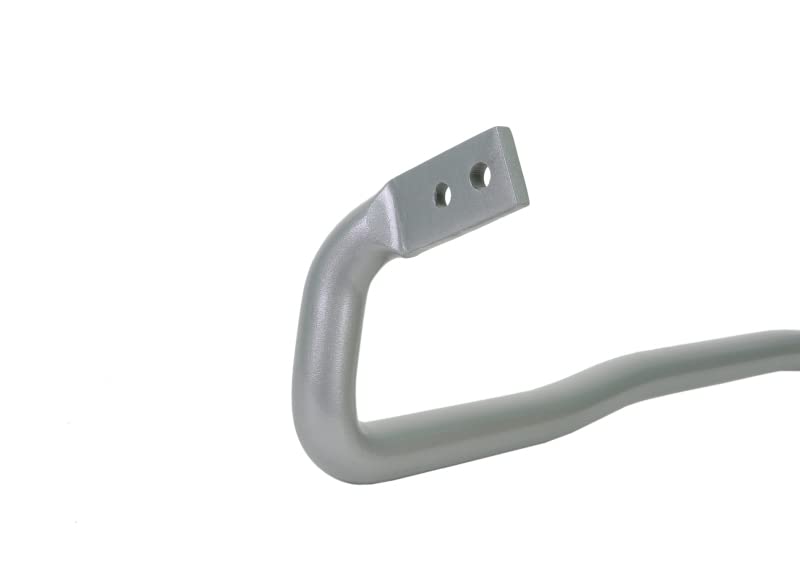
How Does a Rear Sway Bar Work?
When a vehicle enters a corner, weight transfers toward the outside tires and the body rolls relative to the suspension.
The stabilizer bar connects the suspension movement on opposite sides of the vehicle.
As one wheel moves relative to the other, the bar twists.
A stiffer bar provides greater resistance to that independent movement.
The result is reduced body roll and a change in how cornering load is distributed between the front and rear tires.
Why Upgrade the Rear Sway Bar on a Civic?
Most production front-wheel-drive cars are engineered to understeer when pushed beyond their available grip.
That’s intentional.
Understeer is generally predictable for average drivers.
Enthusiasts, however, often want a chassis that rotates more willingly.
Increasing rear roll stiffness can shift the vehicle’s handling balance away from excessive front-end push.
That can produce:
- Faster initial response
- Reduced understeer
- More neutral cornering behavior
- Improved rotation
- Better chassis balance
It doesn’t magically create more total tire grip.
Instead, you’re changing how the available grip is distributed and used.
That’s an important distinction.
22mm Rear Sway Bar
Diameter matters substantially with sway bars because torsional stiffness changes dramatically as bar diameter increases.
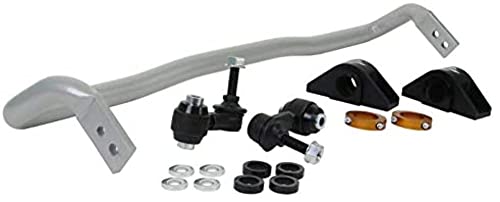
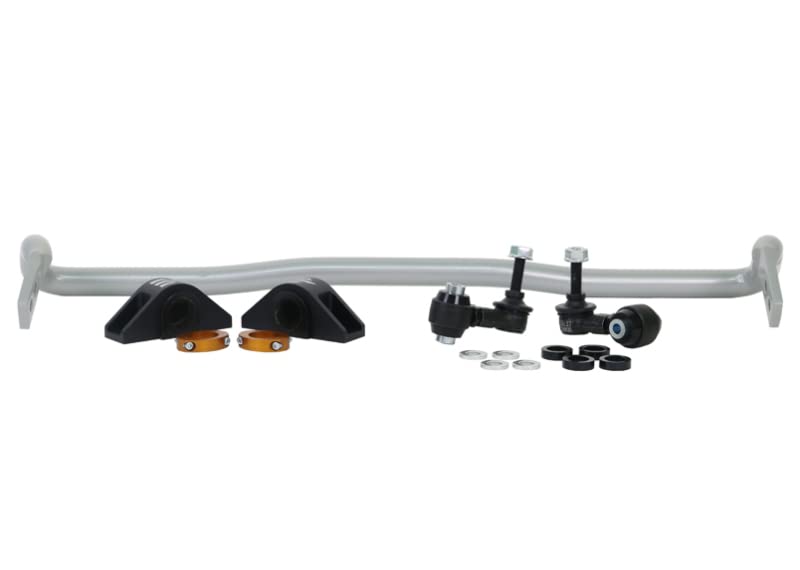
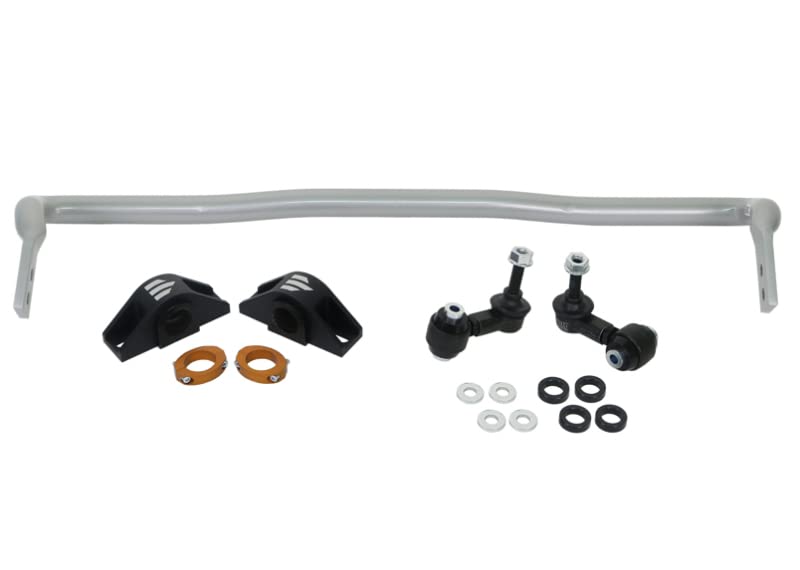
The BHR97XXZ uses a 22mm bar.
But diameter alone doesn’t tell the entire story.
Bar geometry, material, lever-arm length and mounting position also affect effective stiffness.
That’s why comparing sway bars based only on millimeter diameter can be misleading.
The more useful specification here is that Whiteline designed the BHR97XXZ specifically as a performance rear stabilizer bar for compatible Honda/Acura chassis.
Adjustable Sway Bar Positions
One of the biggest advantages of the BHR97XXZ is adjustability.
Multiple end-link mounting positions change the effective lever arm of the sway bar.
Generally:
Longer effective arm = softer setting
Shorter effective arm = stiffer setting
This allows drivers to tune rear roll stiffness according to the rest of the suspension setup.
Softer Setting
A softer rear setting generally provides:
- More conservative handling balance
- Less aggressive rotation
- Greater tolerance for poor road conditions
- Good performance for daily driving
Stiffer Setting
A stiffer setting can provide:
- Faster chassis response
- Greater resistance to rear body roll
- More willingness to rotate
- Reduced front-end understeer
For a daily-driven Civic or Integra, starting with the less aggressive setting is usually sensible.
Drive the car.
Learn what changed.
Then adjust.
Suspension tuning works better when you change one variable at a time instead of turning every adjustment to maximum and declaring yourself chief engineer of Honda Racing Corporation.
Does a Rear Sway Bar Reduce Understeer?
It can.
Increasing rear roll stiffness changes how lateral load transfer is distributed across the vehicle.
On a front-wheel-drive car that exhibits substantial understeer, a properly selected rear stabilizer bar can help create a more neutral balance.
That’s one reason rear sway bars are popular upgrades for:
- Honda Civic
- Civic Si
- Civic Type R
- Acura Integra
- Integra performance builds
- Accord street builds
But more rear stiffness isn’t infinitely better.
An excessively stiff rear setup can make the car more prone to oversteer, especially during abrupt throttle lift, trail braking or low-grip conditions.
Balance matters.
Can a Sway Bar Improve Turn-In?
Yes, indirectly.
Reducing chassis roll and changing rear roll stiffness can make the vehicle respond more quickly when steering input is introduced.
The driver may perceive:
- Sharper turn-in
- Less delay during transitions
- More immediate chassis response
- Better mid-corner balance
Combine that with good tires and proper alignment and the difference can be substantial.
Does the Whiteline Rear Sway Bar Ruin Ride Quality?
One advantage of sway-bar tuning is that it can increase roll stiffness without requiring dramatically stiffer springs.
When both rear wheels move together over a relatively uniform bump, the stabilizer bar has comparatively little influence because both sides of the suspension move in the same direction.
When the wheels move differently—as happens during cornering or when one wheel hits a bump—the bar becomes more active.
This means a sway-bar upgrade can improve handling while retaining considerably more everyday comfort than simply installing extremely stiff springs.
Synthetic Elastomer Bushings
Whiteline uses synthetic elastomer mounting bushings engineered for suspension applications.
Features include:
- Internal bore knurling
- Grease-retention lips
- Lubrication management
- Reduced unwanted compliance
- Long-term suspension performance
Proper lubrication is important because the sway bar rotates slightly inside its mounting bushings as the suspension moves.
The grease-retention features help keep lubricant where it’s useful rather than distributing it across the underside of the car like an enthusiastic but deeply confused automatic lubrication system.
Pairing BHR97XXZ With Other Suspension Upgrades
The rear sway bar works especially well as part of a balanced suspension package.
Logical complementary upgrades include:
- Performance tires
- Lowering springs
- Performance dampers
- Coilovers
- Front control-arm bushings
- Alignment components
- Upgraded sway-bar end links
Pro Street’s Complete Guide to Lowering Springs explains how spring rates and reduced ride height influence handling.
The Daily Driver Suspension Setup That Actually Works is also useful for enthusiasts who want better handling without building a Civic that requires a dental appointment after every pothole.
Pair It With Whiteline KCA467
The Whiteline KCA467 front control-arm anti-lift kit you just added is an especially interesting complementary modification.
The two components address different parts of the chassis:
KCA467: front geometry, caster, traction and turn-in.
BHR97XXZ: rear roll stiffness, rotation and overall handling balance.
Together, they create a much more comprehensive handling package than simply installing one extremely stiff component at either end.
Installation Considerations
Installing a rear sway bar is generally straightforward compared with replacing springs or control-arm bushings.
Typical installation involves:
- Safely raise and support the vehicle.
- Disconnect the factory sway-bar end links.
- Remove the factory sway-bar mounting brackets.
- Remove the original stabilizer bar.
- Lubricate and install the Whiteline bushings.
- Position the BHR97XXZ.
- Reinstall brackets and end links.
- Select the desired adjustment position.
- Torque all hardware correctly.
- Inspect clearance throughout suspension travel.
Always follow Whiteline’s supplied instructions and vehicle-specific torque specifications.
Do You Need an Alignment After Installing a Rear Sway Bar?
A sway-bar replacement doesn’t normally change static alignment settings the way control arms, camber components or tie rods can.
Therefore, an alignment isn’t automatically required solely because a rear sway bar was installed.
However, if the vehicle is simultaneously receiving:
- Lowering springs
- Coilovers
- Adjustable control arms
- Camber components
- Caster modifications
- Other geometry changes
then an alignment becomes strongly recommended.
Is a Rear Sway Bar Worth It for a Daily Driver?
For many enthusiasts, yes.
A properly engineered rear sway bar can produce a noticeable handling improvement without dramatically changing everyday comfort.
That’s what makes products such as the BHR97XXZ attractive for street builds.
You can improve:
Turn-in
Body control
Chassis balance
Cornering response
without automatically committing to race-car spring rates.
Is the Whiteline BHR97XXZ Worth It?
For the correct Civic, Accord or Integra application, the Whiteline BHR97XXZ 22mm Adjustable Rear Stabilizer Bar provides one of the more straightforward ways to change handling balance.
The combination of:
22mm bar diameter
Adjustable stiffness
Performance bushings
Reduced body roll
Improved chassis response
makes it particularly attractive for enthusiasts who want a more responsive front-wheel-drive chassis.
And unlike horsepower modifications, it doesn’t require premium fuel, ECU tuning or explaining to your significant other why another box containing turbocharger parts appeared on the porch.
Shop Honda, Acura and performance suspension components through Pro Street Online.



There are no reviews yet.