
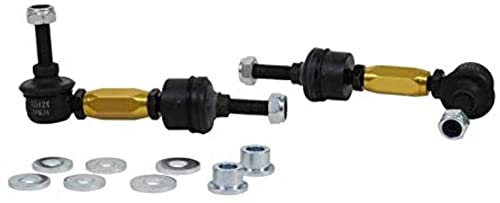
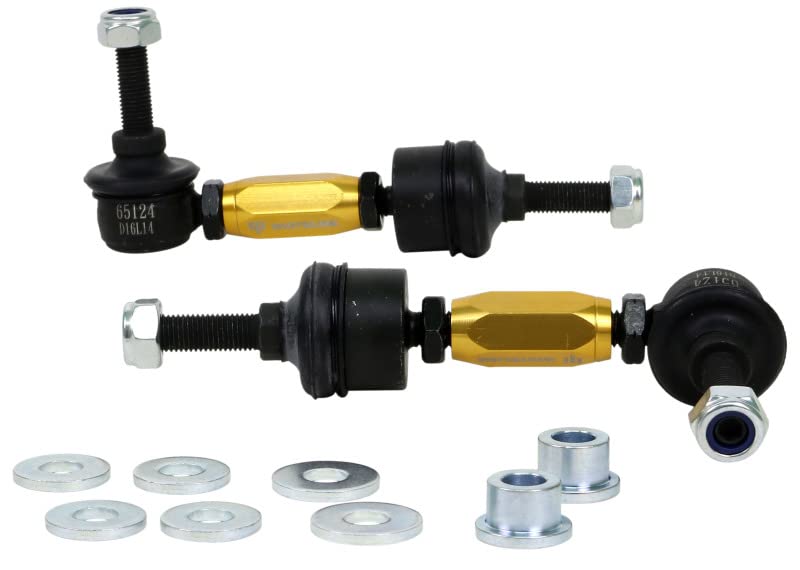
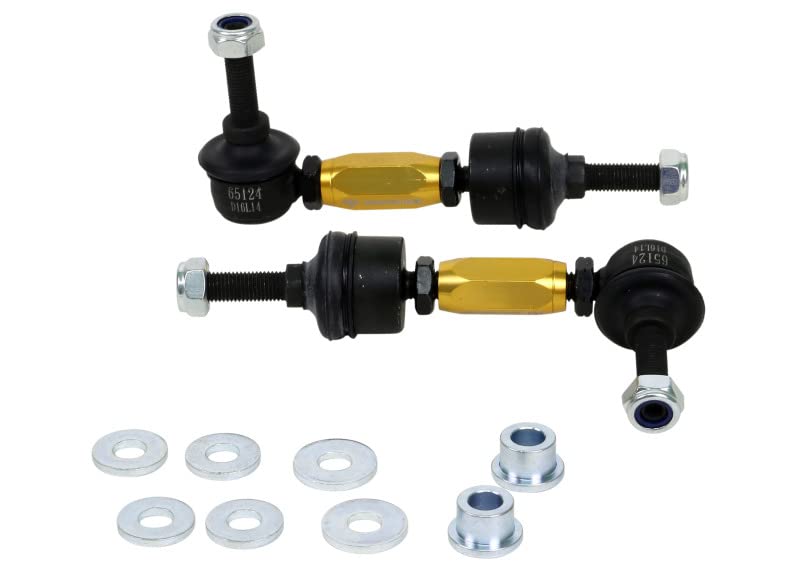


What Vehicles Fit Whiteline KLC195?
The Whiteline KLC195 is advertised for compatible 2013–2018 Ford Focus applications.
| Year | Make | Model |
|---|---|---|
| 2013 | Ford | Focus |
| 2014 | Ford | Focus |
| 2015 | Ford | Focus |
| 2016 | Ford | Focus |
| 2017 | Ford | Focus |
| 2018 | Ford | Focus |
Focus ST and Focus RS Fitment
Be careful about automatically applying generic Focus fitment to the Focus ST or Focus RS.
These performance variants use suspension components and configurations that can differ from standard Focus models.
For a Pro Street vehicle-fitment database, the safest primary listing is:
2013–2018 Ford Focus — verify trim and rear sway-bar end-link configuration before ordering.
Focus ST and RS applications should be separately confirmed before being added to the vehicle database.
What Does a Rear Sway Bar End Link Do?
The sway-bar end link connects the stabilizer bar to the suspension.
When one side of the suspension compresses relative to the other, that movement travels through the end link and into the sway bar.
The sway bar twists and resists that difference in suspension movement.
The basic load path is:
Suspension → End Link → Sway Bar → Opposite Suspension
If the end link flexes, moves excessively or contains a worn joint, some suspension movement occurs before the stabilizer bar can effectively respond.
That’s why end links matter more than their relatively small size suggests.
Why Upgrade Ford Focus Rear Sway Bar Links?
Factory end links are designed around factory:
- Ride height
- Suspension geometry
- Sway-bar stiffness
- Spring rates
- Handling requirements
That works perfectly well for a stock vehicle.
Problems can arise once you start modifying things.
Lowering springs, coilovers and larger sway bars can change the relationship between the sway bar and suspension.
The factory fixed-length links don’t provide a way to compensate.
The adjustable KLC195 does.
What Is Sway Bar Preload?
Sway-bar preload occurs when the stabilizer bar is already being twisted while the vehicle is sitting at normal ride height.
Ideally, on level ground, the bar should be relatively neutral.
But ride-height differences or suspension modifications can cause one side of the bar to require force before the end link can be connected.
Once installed, that force remains in the bar.
That’s preload.
Potential consequences include:
- Different behavior in left and right corners
- Uneven initial suspension response
- Inconsistent handling
- Unwanted chassis imbalance
An adjustable end link allows you to alter the link length so the sway bar can be connected without forcing it into position.
Up to 25mm of Adjustment
The KLC195 provides up to 25mm of center-to-center adjustment.
That adjustment can be particularly valuable on vehicles equipped with:
- Lowering springs
- Height-adjustable coilovers
- Performance sway bars
- Modified suspension geometry
Instead of forcing the sway bar to accommodate the modified ride height, you can adjust the links to better match the new suspension position.
Why Adjust End Links at Ride Height?
This is important.
Final end-link adjustment should be performed with the suspension at its normal operating ride height.
If you adjust the links while the wheels are hanging at full droop, you’re setting the stabilizer system for a suspension position the vehicle doesn’t normally occupy.
The suspension should ideally be loaded using:
- Alignment rack
- Four-post lift
- Drive-on ramps
- Appropriate suspension-loading equipment
With the vehicle level and suspension loaded, adjust the links until they attach without forcing the sway bar.
That’s how you minimize preload.
Heavy-Duty Steel Ball Joints
Whiteline equips the KLC195 with heavy-duty steel ball-joint ends.
The end-link joints must articulate as the suspension moves while simultaneously transmitting stabilizer-bar forces.
A quality joint therefore needs:
- Strength
- Controlled articulation
- Low play
- Durability
- Consistent movement
Worn factory joints can develop free play.
That means suspension movement occurs before the sway bar starts reacting.
Replacing those worn components with rigid performance links can make sway-bar response feel more immediate.
High-Quality Alloy Construction
Whiteline uses lightweight alloy construction for the link body.
The objective is to reduce unwanted flex while maintaining strength.
That’s particularly important when the vehicle uses an upgraded rear sway bar.
A stiffer stabilizer bar can generate substantially greater forces through its end links.
If the links flex excessively, you’re sacrificing some of the performance you paid for when you upgraded the bar.
Reduced End-Link Flex
Think about the stabilizer system as a chain.
You can install a larger sway bar.
But if its connection to the suspension remains excessively flexible, some of the initial suspension movement gets absorbed before the bar begins resisting roll.
Reducing link compliance provides a more direct connection.
That can improve:
- Initial sway-bar response
- Transitional handling
- Steering response
- Chassis consistency
- Suspension feedback
KLC195 and the Whiteline BMR93Z Rear Sway Bar
The KLC195 makes particular sense alongside a performance rear sway bar such as the Whiteline BMR93Z 24mm adjustable rear stabilizer bar.
The sway bar increases rear roll stiffness.
The KLC195 helps provide a more rigid and adjustable connection between that bar and the suspension.
Together, the two components address different parts of the system:
BMR93Z: changes rear roll stiffness.
KLC195: improves sway-bar connection and allows preload adjustment.
That’s a much more complete approach than simply installing the largest bar available and calling the suspension finished.
Adjustable Links on a Lowered Focus
Lowering a Focus changes more than appearance.
Ride-height changes alter the operating position of suspension components.
Depending on the amount of lowering, that can affect:
- Control-arm position
- End-link angle
- Sway-bar position
- Suspension travel
- Overall geometry
Adjustable end links provide one method of optimizing the sway bar around that modified ride height.
For more information about what happens when you lower a vehicle, read Pro Street’s Complete Guide to Lowering Springs.
KLC195 With Focus Lowering Springs
Moderate lowering springs are one of the most popular modifications for the Focus.
They can provide:
- Lower center of gravity
- Improved appearance
- Increased spring rate
- Better body control
Pairing lowering springs with adjustable end links allows the stabilizer system to be set around the new ride height.
That’s especially useful when the car also receives a larger rear sway bar.
KLC195 With Coilovers
Adjustable end links become even more valuable with height-adjustable coilovers.
Once individual ride heights can be changed, small left-to-right differences can potentially introduce stabilizer-bar preload.
A proper performance setup might involve:
Set ride height
→ Corner balance
→ Adjust sway-bar links
→ Perform alignment
→ Road or track test
That gives the suspension a much better starting point.
Can KLC195 Improve Handling?
The links themselves don’t increase sway-bar diameter or dramatically change roll stiffness.
Their job is different.
They help the sway bar operate more consistently.
Potential improvements include:
- More immediate sway-bar response
- Reduced unwanted flex
- More predictable chassis behavior
- Better left-to-right consistency
- Proper preload adjustment
The difference is particularly relevant when factory links are worn or the vehicle has significant suspension modifications.
Symptoms of Worn Rear End Links
You may already need replacement links if your Focus has:
- Rear suspension clunking
- Knocking over bumps
- Loose end-link joints
- Torn ball-joint boots
- Excessive movement
- Delayed sway-bar response
- Rattling from the rear suspension
Don’t assume every rear suspension noise is an end link.
Rear sway-bar bushings, shock mounts, control-arm bushings and other components can produce similar symptoms.
Inspect before replacing.
The parts cannon remains undefeated at spending money.
Inspect the Rear Sway Bar Bushings
While you’re underneath the car, inspect the chassis-mounted sway-bar bushings.
Look for:
- Cracking
- Deformation
- Excessive clearance
- Contamination
- Bar movement
- Damaged brackets
The stabilizer system depends on both the end links and chassis bushings.
A brand-new adjustable end link can’t compensate for a sway bar rattling around inside completely destroyed mounting bushings.
Protective Plating
Whiteline uses protective plating on the KLC195’s metal components to help resist corrosion.
That’s particularly important for suspension hardware because it lives underneath the vehicle where it’s constantly exposed to:
- Water
- Road debris
- Dirt
- Temperature changes
- Road salt
- Contamination
The protective finish acts as a durable barrier intended to extend service life.
Street Driving Benefits
You don’t need a dedicated track car to benefit from correctly adjusted sway-bar links.
On a modified street Focus, a properly functioning stabilizer system can improve:
- Lane-change response
- Cornering consistency
- Chassis feel
- Transitional response
These differences become especially noticeable when the car already has performance tires and suspension modifications.
Autocross Benefits
Autocross places heavy emphasis on quick transitions.
A typical course repeatedly asks the chassis to move from one direction to another through:
- Slaloms
- Tight corners
- Rapid transitions
- Heavy braking zones
Removing unnecessary sway-bar compliance can help the chassis respond more consistently.
Adjustability also allows preload to be eliminated after ride-height or corner-balance changes.
Track-Day Benefits
Track driving adds sustained lateral load and higher suspension forces.
On a properly developed Focus track car, adjustable end links can be part of a complete chassis setup involving:
- Performance tires
- Alignment
- Coilovers
- Adjustable sway bars
- Performance bushings
- End links
The objective isn’t simply stiffness.
It’s consistency.
A suspension that behaves predictably gives the driver confidence.
Does Installing KLC195 Require an Alignment?
Installing rear sway-bar end links by themselves generally doesn’t change:
- Camber
- Caster
- Toe
Therefore, an alignment isn’t normally required solely because the KLC195 was installed.
However, if you’re installing them as part of a larger suspension package involving lowering springs, coilovers or adjustable control arms, have the vehicle professionally aligned.
Installation
General installation involves:
- Safely raise and support the vehicle.
- Remove the factory rear sway-bar end links.
- Inspect sway-bar and suspension mounting points.
- Install the Whiteline KLC195 links.
- Set an initial link length.
- Position the vehicle at normal operating ride height.
- Adjust the links to remove unwanted sway-bar preload.
- Verify proper ball-joint articulation.
- Tighten the adjustment hardware.
- Torque mounting hardware to specification.
- Check clearance through suspension travel.
- Road-test the vehicle carefully.
Follow Whiteline’s installation instructions and the appropriate Ford service specifications.
Building a Complete Ford Focus Suspension
For a street-performance Focus, consider the suspension as an entire system.
A balanced setup might include:
- Performance tires
- Lowering springs or coilovers
- Quality dampers
- Adjustable rear sway bar
- KLC195 adjustable links
- Fresh suspension bushings
- Proper alignment
Pro Street’s Daily Driver Suspension Setup That Actually Works explains why maintaining suspension compliance and usable travel can produce better real-world handling than simply making every component stiffer.
Who Should Buy Whiteline KLC195?
The KLC195 makes the most sense for Focus owners who:
Have worn factory rear end links
Have lowered the vehicle
Use height-adjustable coilovers
Have installed an aftermarket rear sway bar
Want to eliminate sway-bar preload
Want a more rigid stabilizer-bar connection
For a completely stock Focus with healthy factory links, they may not be the first suspension modification you need.
For a modified Focus, they become considerably more useful.
Is the Whiteline KLC195 Worth It?
For a compatible 2013–2018 Ford Focus, the Whiteline KLC195 Adjustable Rear Sway Bar Link Kit addresses an often-overlooked part of suspension tuning.
Its combination of:
25mm adjustment range
Heavy-duty steel ball-joint ends
High-quality alloy construction
Reduced link flex
Sway-bar preload adjustment
Corrosion-resistant protective plating
makes it a useful complement to lowering springs, coilovers and upgraded rear sway bars.
The performance sway bar may get all the attention because it’s bigger, shinier and easier to brag about.
But without properly functioning end links, it’s still trying to do its job through the suspension equivalent of a bad Wi-Fi connection.
Shop Ford Focus suspension and performance components through Pro Street Online.





There are no reviews yet.