

What Vehicles Fit Whiteline KLC163?
Unlike many Whiteline components, the KLC163 isn’t designed around one specific vehicle.
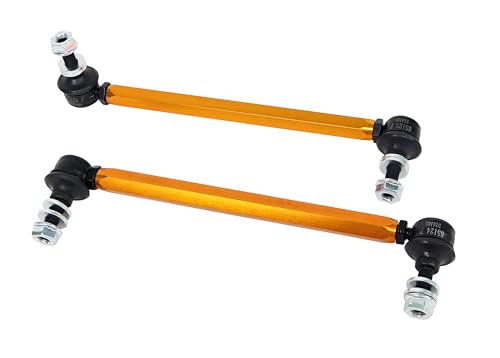
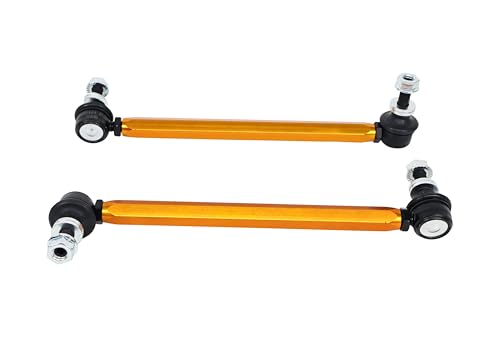
It’s a multi-application adjustable end-link assembly.
Published applications include vehicles from BMW, Mitsubishi, Chrysler, Dodge, Jeep, Toyota, Lexus and other manufacturers.
Examples of documented applications include:
- 1999–2006 BMW 3 Series E46, depending on model
- 2001–2006 BMW M3 E46
- 2009–2015 Mitsubishi Lancer Ralliart
- 2011–2017 Chrysler 200
- 2008–2014 Dodge Avenger
- 2008–2012 Dodge Caliber
- 2009–2017 Dodge Journey
- 2007–2017 Jeep Compass
- 2007–2016 Jeep Patriot
- 1997–2011 Toyota Camry
- 1997–2003 Lexus ES300
- 2011–2017 Mitsubishi Outlander Sport
- 2007–2017 Mitsubishi Outlander
- 2008–2010 Saturn Vue
Additional international Whiteline applications include Audi A1/S1 and other vehicles using compatible end-link geometry. Fitment varies substantially by model, suspension package and market.
Important Fitment Note
Do not market KLC163 as universally fitting any vehicle simply because its original link falls somewhere around 270mm.
Correct fitment also depends on:
- Mounting style
- Ball-stud diameter
- Link orientation
- Suspension geometry
- Available clearance
- Sway-bar mounting configuration
For Pro Street’s catalog, individual verified year/make/model applications should be assigned rather than labeling KLC163 as a universal sway-bar link.
Why Upgrade Sway Bar End Links?
The sway bar controls body roll by transferring suspension movement from one side of the vehicle to the other.
The basic load path is:
Suspension → End Link → Sway Bar → Opposite Suspension
That means the end link is directly involved every time the sway bar responds.
If an end link has excessive compliance, worn joints or incorrect geometry, some suspension movement can occur before the stabilizer bar effectively responds.
Replacing worn or inadequate links can provide:
- More direct sway-bar response
- Reduced unwanted flex
- Improved transitional response
- Better handling consistency
- Greater durability
- Proper sway-bar preload adjustment
What Is Sway Bar Preload?
Sway-bar preload occurs when the stabilizer bar is already being twisted while the vehicle is sitting at normal ride height.
Ideally, with the vehicle sitting level, the bar should be relatively neutral.
But modified ride height or left-to-right suspension differences can make a fixed-length end link effectively too long or too short.
The installer then has to force the sway bar into position to connect it.
That introduces preload.
Potential consequences include:
- Different behavior turning left versus right
- Uneven suspension response
- Unwanted handling imbalance
- Inconsistent sway-bar engagement
The KLC163’s adjustable design provides a way to correct this.
270–295mm Adjustable Length
The KLC163 provides a 25mm adjustment window, ranging from approximately 270mm to 295mm.
That adjustment can be particularly useful on vehicles equipped with:
- Lowering springs
- Coilovers
- Adjustable ride height
- Performance sway bars
- Modified suspension geometry
Rather than forcing a fixed-length link to work with the vehicle’s new suspension position, the link can be adjusted appropriately.
Why Adjustable Links Matter on Lowered Cars
Lowering a vehicle changes more than fender gap.
It alters the operating position of suspension components.
Depending on the suspension design, lowering can change:
- Control-arm angles
- Sway-bar position
- End-link angle
- Suspension travel
- Roll-center geometry
Adjustable sway-bar links provide one tool for optimizing the stabilizer system around those changes.
For a deeper explanation, read Pro Street’s Complete Guide to Lowering Springs.
Heavy-Duty Ball-Joint Ends
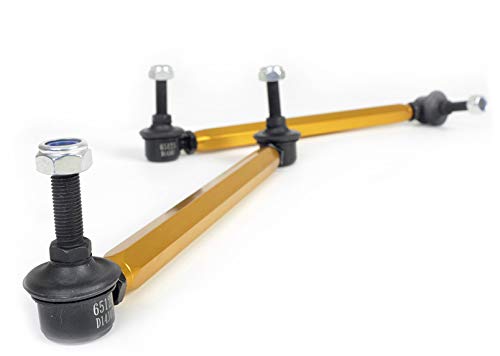
The KLC163 uses heavy-duty steel ball-joint ends.
These joints must articulate as the suspension moves while simultaneously transmitting load into the sway bar.
Whiteline’s design allows the joints to rotate through different angular positions to improve installation and alignment.
That provides both strength and flexibility where they’re needed.
Why Ball-Joint Articulation Matters
Suspension components don’t simply move vertically.
As the wheel travels, suspension geometry causes mounting points to move through arcs.
The sway-bar end link therefore needs enough articulation to follow that movement without binding.
A properly positioned ball-joint end can:
- Reduce binding
- Maintain consistent load transfer
- Accommodate suspension movement
- Improve installation alignment
That’s particularly useful when ride height has been modified.
High-Strength Alloy Construction
Whiteline manufactures the KLC163 link bodies from high-quality alloy.
The objective is straightforward:
Reduce unwanted flex without adding unnecessary weight.
This becomes increasingly important when the vehicle is equipped with a larger aftermarket sway bar.
A stiffer bar generates greater loads through the links.
A stronger link helps transmit those loads more directly.
Anodized Corrosion Protection
Whiteline uses anodized alloy materials to provide a protective barrier against corrosion and wear.
That’s useful because end links operate in one of the vehicle’s least hospitable environments.
They’re exposed to:
- Water
- Road debris
- Dirt
- Temperature changes
- Road salt
- Brake dust
Durability matters just as much as stiffness on a component living underneath a daily-driven vehicle.
Symptoms of Worn Sway Bar End Links
Common symptoms can include:
- Clunking over bumps
- Knocking during low-speed driving
- Loose handling
- Play in the ball joints
- Torn joint boots
- Rattling from the suspension
- Reduced initial sway-bar response
However, don’t automatically blame every suspension noise on the end links.
Similar noises can come from:
- Sway-bar bushings
- Control-arm bushings
- Ball joints
- Strut mounts
- Shock mounts
- Loose hardware
Inspect the suspension before ordering parts.
Otherwise we’re diagnosing with the traditional “replace things until the noise becomes someone else’s problem” method.
KLC163 With an Aftermarket Sway Bar
The KLC163 becomes particularly attractive when paired with an upgraded sway bar.
A performance bar may increase roll stiffness substantially.
That additional stiffness also means greater loads can be transmitted through the end links.
A high-strength adjustable link helps create a more direct connection between the suspension and performance sway bar.
Think of the two components as serving separate functions:
Performance sway bar: changes roll stiffness.
KLC163 links: improve the connection and allow preload adjustment.
KLC163 With Coilovers
Height-adjustable coilovers make adjustable sway-bar links especially useful.
Changing ride height can alter sway-bar position.
Additionally, vehicles that have been corner-balanced may have small left-to-right ride-height differences.
A properly developed suspension setup can therefore involve:
Set ride height
→ Corner balance
→ Adjust end links
→ Align vehicle
→ Test handling
This allows the sway bar to begin from a neutral position rather than becoming an unintended spring in the suspension before the vehicle even reaches the first corner.
How to Set Adjustable Sway Bar End Links
Final adjustment should generally be performed with the suspension at normal operating ride height.
That means the vehicle should be supported using an appropriate method such as:
- Alignment rack
- Four-post lift
- Drive-on ramps
- Proper suspension-loading equipment
With the car level and suspension loaded, adjust the link length so the sway bar can be connected without having to force it into position.
The objective is minimizing static preload.
Always follow Whiteline’s application-specific installation instructions.
Does KLC163 Increase Sway Bar Stiffness?
Not directly.
The KLC163 doesn’t change the diameter or fundamental torsional stiffness of the stabilizer bar.
Instead, it helps the existing bar operate more consistently by reducing link compliance and unwanted preload.
That’s an important distinction.
If you want substantially more roll stiffness, consider a performance sway bar.
If you want to improve the connection between that bar and suspension, adjustable end links become relevant.
Street Performance Benefits
For a modified street car, correctly adjusted sway-bar links can contribute to:
- Cleaner transitional response
- More consistent cornering behavior
- Better initial turn response
- More predictable sway-bar operation
These benefits become more noticeable as other suspension components are upgraded.
Pro Street’s Daily Driver Suspension Setup That Actually Works explains why the best street suspension combines rigidity where necessary with sufficient compliance and suspension travel.
Autocross and Track Use
Autocross and track driving place considerably greater loads through the stabilizer system.
During rapid direction changes, the sway bar repeatedly loads and unloads.
Reducing unwanted end-link movement can improve the consistency of that response.
For a properly developed track suspension, adjustable links also allow the stabilizer system to be neutralized after:
- Ride-height changes
- Corner balancing
- Spring changes
- Sway-bar adjustments
Do You Need an Alignment?
Whiteline lists a front-wheel alignment as recommended for KLC163 installations.
That’s particularly sensible when the links are being installed alongside other suspension modifications.
If you’ve simultaneously changed ride height, control arms, camber hardware or coilover settings, have the vehicle professionally aligned.
Installation
General installation involves:
- Safely raise and support the vehicle.
- Remove the existing sway-bar links.
- Compare the original link length with the KLC163 adjustment range.
- Inspect the sway-bar and suspension mounting points.
- Install the KLC163 links.
- Establish an initial length.
- Load the suspension to normal ride height.
- Fine-tune link length to minimize preload.
- Verify ball-joint articulation and clearance.
- Tighten the locking hardware.
- Torque mounting fasteners correctly.
- Verify clearance throughout suspension movement.
Whiteline estimates approximately one hour for installation on applicable vehicles.
Is the Whiteline KLC163 Worth It?
The Whiteline KLC163 Adjustable Heavy-Duty Sway Bar Link Kit makes the most sense for vehicles with:
Worn factory end links
Modified ride height
Performance sway bars
Coilovers
Suspension setups requiring preload adjustment
With a 270–295mm adjustment range, heavy-duty ball joints and high-strength alloy construction, KLC163 gives enthusiasts considerably more control over sway-bar setup than a conventional fixed-length replacement link.
It’s a relatively small suspension component, but that’s no reason to ignore it.
A $1,000 suspension package connected through worn-out end links is basically performance engineering followed by “eh, that’ll probably hold.”
Shop suspension, handling and chassis components through Pro Street Online.





There are no reviews yet.