


Why Sway Bar End Links Matter
The stabilizer bar needs a mechanical connection to the suspension.
The basic load path is:
Suspension → End Link → Sway Bar → Opposite Suspension
As the vehicle corners, the outside suspension compresses while the inside suspension unloads.
The sway bar twists and resists this difference in movement.
That resistance increases roll stiffness and helps control body movement.
The end links are what transmit those forces.
What Happens When End Links Wear?
Factory sway-bar links use joints and bushings that deteriorate over time.
Common symptoms include:
- Clunking over bumps
- Knocking from the suspension
- Rattling
- Excessive joint movement
- Reduced sway-bar response
- Torn joint boots
- Inconsistent handling
Older Subarus can be particularly susceptible when corrosion is added to the equation.
Apparently road salt has yet to receive the memo about Subaru resale values.
Why Upgrade Instead of Installing OE Links?
If you’re simply restoring a completely stock daily driver, OE-style links may be perfectly adequate.
Performance links become more relevant when the vehicle has:
An upgraded sway bar
Lowering springs
Coilovers
Track-oriented suspension
Modified ride height
A stiffer sway bar can transmit greater loads through the links.
Reducing unwanted flex at that connection helps the sway bar respond more directly.
Adjustable End Links and Lowered Cars
Lowering changes the static position of the suspension.
That can change the relationship between:
- Sway bar
- Control arms
- Struts
- End links
- Chassis
Factory links were designed around factory ride height.
Once ride height changes significantly, an adjustable link can allow the sway bar to be repositioned more appropriately.
What Is Sway Bar Preload?
Preload occurs when the sway bar is already being twisted while the car is sitting stationary at normal ride height.
Ideally, with the vehicle level and loaded normally, the sway bar shouldn’t require significant force to connect to its end links.
Adjustable links can be used to change effective link length until the bar connects in a neutral position.
This is especially useful after:
- Installing coilovers
- Changing ride height
- Corner balancing
- Installing aftermarket sway bars
Why Preload Matters
Unwanted sway-bar preload can influence suspension behavior before the car even enters a corner.
That can potentially contribute to different left-versus-right handling characteristics.
On a normal street car, the effect may be relatively subtle.
On an autocross or track car where suspension setup is carefully controlled, eliminating unnecessary variables becomes considerably more important.
KLC110 With an Upgraded Sway Bar
This is one of the strongest reasons to consider upgraded links.
A larger-diameter sway bar can dramatically increase roll stiffness.
The increased forces are transmitted through:
Sway Bar → End Links → Suspension
Performance end links help provide a strong connection between those components.
They don’t make the sway bar itself stiffer.
They help the bar you already installed work through a more controlled connection.
Will KLC110 Reduce Body Roll?
Not substantially by itself.
A sway-bar end link doesn’t dramatically change the torsional stiffness of the bar.
Instead:
Sway bar = creates roll resistance
End link = transfers suspension movement into the sway bar
Installing KLC110 with the factory sway bar can improve connection quality, particularly if the original links are worn.
But don’t expect two end links to magically turn a stock suspension into a time-attack car.
Better Steering and Handling Response
Reducing compliance within the sway-bar system can contribute to more immediate suspension response during transitions.
That can become noticeable during:
- Turn-in
- Lane changes
- Slaloms
- Quick transitions
- Corner entry
The objective isn’t simply making the suspension harder.
It’s making suspension movement more predictable.
KLC110 for Street Cars
Performance sway-bar links can work well on street vehicles, particularly when supporting other suspension modifications.
A balanced street setup might combine:
Quality dampers
Moderate springs
Upgraded sway bars
Performance end links
Proper alignment
Good tires
That generally produces a much better car than installing the stiffest component available in every category.
Explore additional suspension and handling information through My Pro Street.
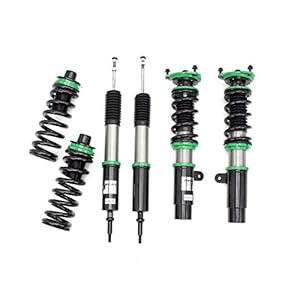
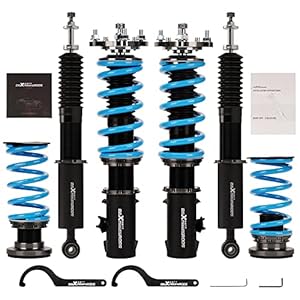
KLC110 With Coilovers
Coilovers make adjustable end links particularly useful.
After installing coilovers, ride height should first be established.
Then:
Set ride height
→ Corner balance if required
→ Load suspension
→ Adjust end links
→ Verify sway-bar position
→ Perform alignment
This ensures the sway-bar setup reflects the vehicle’s final operating ride height.
Autocross Applications
Autocross puts significant emphasis on rapid weight transfer.
Cars repeatedly encounter:
- Slaloms
- Tight turns
- Sweepers
- Rapid left-right transitions
A properly functioning sway-bar system helps maintain predictable chassis behavior during those transitions.
Performance links ensure that worn factory hardware isn’t introducing unnecessary movement.
Track Applications
Track cars experience sustained lateral loads.
When running:
- Sticky tires
- Stiff sway bars
- Performance springs
- Coilovers
- Aggressive alignment
the forces transmitted through suspension hardware can become substantially greater than those encountered during normal commuting.
Heavy-duty end links make sense as part of the supporting hardware package.
Inspect the Sway Bar Bushings
Don’t stop your inspection at the end links.
Check the sway-bar mounting bushings for:
- Cracks
- Excessive clearance
- Deformation
- Contamination
- Movement
A perfectly good set of performance links can’t compensate for destroyed chassis-mounted sway-bar bushings.
Check the Mounting Hardware
Inspect:
- Sway-bar brackets
- Suspension mounting points
- End-link studs
- Nuts
- Washers
- Chassis mounting areas
Any corrosion or deformation should be addressed before installing performance components.
Installation
General installation involves:
- Safely raise and support the vehicle.
- Remove the original sway-bar links.
- Inspect the sway bar and mounting points.
- Compare the KLC110 links with the original components.
- Establish an appropriate initial link length.
- Install the new links.
- Load the suspension to normal ride height.
- Adjust the links as required.
- Verify sway-bar position.
- Check joint articulation and clearance.
- Torque mounting hardware correctly.
- Road-test and reinspect.
For adjustable links, final setup should ideally occur with the suspension loaded rather than hanging at full droop.
Does KLC110 Require an Alignment?
Replacing sway-bar end links alone generally does not change:
- Camber
- Caster
- Toe
Therefore, an alignment isn’t normally required solely because KLC110 was installed.
However, if you’re installing the links as part of a larger suspension upgrade involving springs, coilovers or control arms, alignment may absolutely be necessary.
Who Should Buy Whiteline KLC110?
KLC110 makes the most sense for owners who:
Have worn factory sway-bar links
Have installed an upgraded sway bar
Have lowered their vehicle
Run coilovers
Want to eliminate sway-bar preload
Autocross or track their vehicle
Want a stronger stabilizer-bar connection
For a modified suspension, they’re a supporting component that helps the rest of the system operate correctly.
Is Whiteline KLC110 Worth It?
The Whiteline KLC110 Sway Bar Link Kit isn’t the kind of modification that’s going to add horsepower or radically transform a completely stock suspension.
Its value is more specific.
It improves the mechanical connection between the suspension and sway bar while providing the ability to better accommodate modified suspension geometry.
That’s particularly useful on lowered vehicles and cars equipped with performance sway bars.
Suspension performance is ultimately a system.
Buying an expensive sway bar and connecting it through worn-out links is roughly equivalent to installing gigabit fiber and keeping the router you found behind the couch in 2009.
Shop suspension and chassis components through Pro Street Online.



There are no reviews yet.