



Replacement Part Numbers
This assembly cross-references several GM and aftermarket numbers, including:
927-100
10257316
10257317
10284146
10287717
10287944
10404184
10413385
25861193
25861194
25861195
25861196
20766790
Matching the original part number is one of the best ways to confirm fitment.
What’s Included?
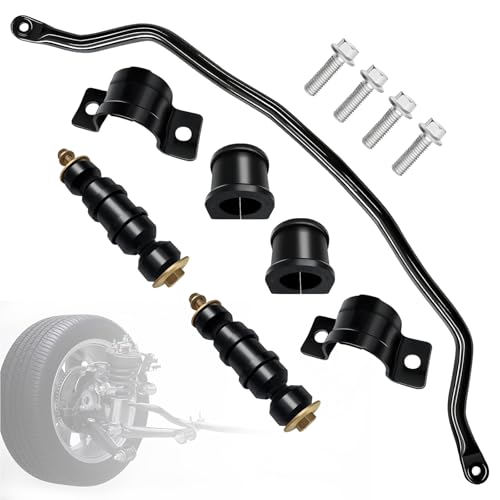
The kit includes:
- 1 × 33mm front sway bar
- 2 × Front sway bar mounting bushings
- 2 × Bushing mounting brackets
- 4 × Mounting screws
- Front sway bar end link kit
This provides a more comprehensive suspension repair than replacing only a noisy end link or worn bushing.
What Does the Front Sway Bar Do?
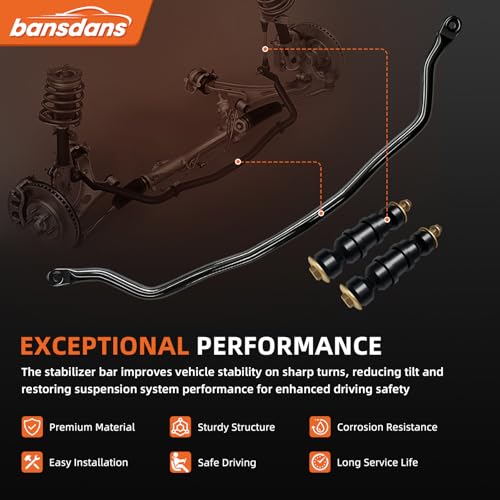
The front sway bar—or stabilizer bar—connects the left and right sides of the front suspension.
During cornering, the outside suspension compresses while the inside suspension unloads.
That difference twists the sway bar.
The bar resists the twisting motion, helping control excessive body roll.
A properly functioning stabilizer system can improve:
- Cornering stability
- Steering response
- Highway stability
- Lane-change behavior
- Transitional handling
Symptoms of a Worn Sway Bar System
Potential symptoms include:
- Clunking over bumps
- Knocking from the front suspension
- Excessive body roll
- Loose handling
- Poor transitional response
- Damaged sway bar bushings
- Loose end links
- Corroded sway bar
- Broken stabilizer bar
On older GM vehicles, bushing and end-link deterioration is particularly common simply because these cars have now accumulated considerable age and mileage.
Why Replace the Complete Assembly?
Sometimes replacing only the bushings makes sense.
Sometimes replacing only an end link makes sense.
But if the original sway bar is badly corroded or damaged and the surrounding components are equally worn, replacing the entire assembly can be more efficient.
With this kit, you’re addressing the:
Bar + Bushings + Brackets + Links
rather than installing a new component beside three others that have been contemplating retirement since the Bush administration.
33mm Heavy-Duty Steel Bar
The replacement bar uses reinforced steel construction with a nominal 33mm diameter.
The surface is treated to resist corrosion from:
- Water
- Road grime
- Salt
- Sand
- General environmental exposure
Because the sway bar operates underneath the vehicle, corrosion protection is especially important in areas where road salt is common.
Chevrolet Impala Fitment
One of the largest applications for 927-100 is the Chevrolet Impala.
Fitment includes:
2000–2013 Chevrolet Impala FWD
and:
2014–2016 Chevrolet Impala Limited FWD
Important Impala Limited distinction
The 2014–2016 Impala Limited continued using the previous-generation Impala platform for fleet applications.
Do not automatically assume this sway bar fits the redesigned 2014+ retail Chevrolet Impala.
The word Limited matters here.
GM parts catalogs occasionally like to test whether you’re paying attention.
Chevrolet Monte Carlo Fitment
The kit fits:
2001–2007 Chevrolet Monte Carlo FWD
These cars share considerable suspension architecture with contemporary Impala applications.
Buick Century and Regal Fitment
Compatible Buick applications include:
1997–2005 Buick Century FWD
1997–2004 Buick Regal FWD
This makes the kit useful for suspension restoration on aging W-body Buick models.
Pontiac Grand Prix Fitment
Listed applications include:
1997–2003 Pontiac Grand Prix FWD
and:
2006–2008 Pontiac Grand Prix FWD
Because there is an application gap, do not automatically catalog 2004–2005 Grand Prix models without verifying the exact sway bar configuration.
GM Minivan Applications
The 927-100 also supports several GM front-wheel-drive minivan applications:
- 1997–2005 Chevrolet Venture
- 1997–1998 Pontiac Trans Sport
- 1999–2005 Pontiac Montana applications
- 1997–2004 Oldsmobile Silhouette
Again, verify the stabilizer-bar diameter before installation.
Pontiac Aztek and Buick Rendezvous
Crossover applications include:
2001–2005 Pontiac Aztek FWD
2002–2007 Buick Rendezvous FWD
These vehicles use related GM front-drive architecture and are included in the stated fitment.
Installation
General installation involves:
- Safely raise and support the vehicle.
- Remove components obstructing sway-bar access.
- Disconnect the front sway bar end links.
- Support the existing sway bar.
- Remove the sway bar mounting brackets.
- Remove the original stabilizer bar.
- Compare the original bar with the replacement.
- Verify bar diameter and shape.
- Install the new mounting bushings.
- Position the replacement bar.
- Install the supplied brackets.
- Connect the new end links.
- Torque all hardware to specification.
- Verify steering and suspension clearance.
- Road-test the vehicle.
- Reinspect all hardware.
Installation difficulty varies significantly by vehicle.
I would not promise a universal 1–2 hour DIY installation, since access and corrosion can turn a supposedly easy suspension job into a colorful vocabulary-building exercise.
Does Replacement Require an Alignment?
Normally, replacing a sway bar and end links doesn’t directly alter:
- Camber
- Caster
- Toe
Therefore, a wheel alignment generally isn’t required solely because the sway bar was replaced.
However, if other suspension components are serviced at the same time, an alignment may be appropriate.
Inspect the Rest of the Suspension
While replacing the stabilizer bar, inspect:
- Lower control arm bushings
- Ball joints
- Tie-rod ends
- Wheel bearings
- Struts
- Strut mounts
- Springs
- Steering components
Many vehicles compatible with 927-100 are now 15–30 years old.
At that age, assuming only one suspension component is worn can be optimistic.
927-100 Fitment Summary
Chevrolet:
2000–2013 Impala FWD
2014–2016 Impala Limited FWD
2001–2007 Monte Carlo FWD
1997–2005 Venture FWD
Buick:
1997–2005 Century FWD
1997–2004 Regal FWD
2002–2007 Rendezvous FWD
Pontiac:
1997–2003 Grand Prix FWD
2006–2008 Grand Prix FWD
1997–1998 Trans Sport FWD
1999–2005 Montana applications
2001–2005 Aztek FWD
Oldsmobile:
1998–2002 Intrigue FWD
1997–2004 Silhouette FWD






There are no reviews yet.