
What’s Included?
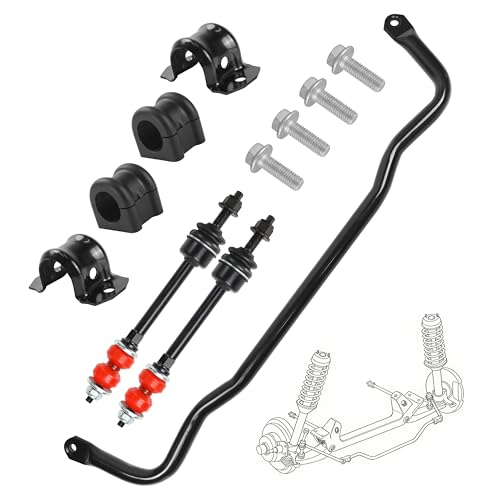
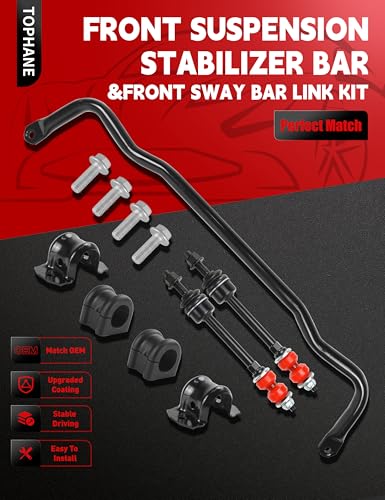
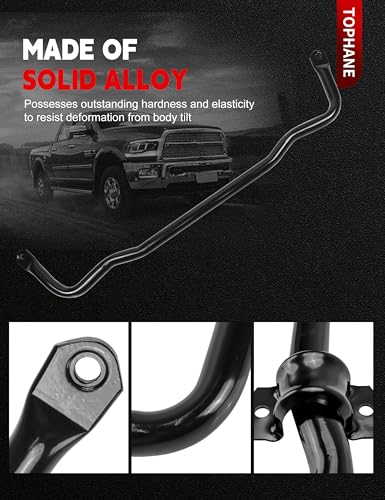
The kit is designed as a more complete front stabilizer-system repair and includes:
- Front suspension stabilizer/sway bar
- Front sway bar end links
- Sway bar mounting bushings
- Associated mounting components
This allows worn stabilizer components to be serviced together instead of replacing one component while leaving several equally tired parts behind.
What Does the Front Sway Bar Do?
The front sway bar connects the left and right sides of the front suspension.
During cornering, the outside suspension compresses while the inside suspension unloads.
This difference in movement twists the stabilizer bar.
The bar resists that twisting motion, helping control excessive body roll.
A properly functioning front stabilizer system contributes to:
- Cornering stability
- Steering response
- Highway handling
- Lane-change stability
- Suspension control
That’s particularly important on a full-size 4WD pickup.
Symptoms of Worn Ram 1500 Sway Bar Components
Common symptoms include:
- Clunking over bumps
- Knocking from the front suspension
- Excessive body roll
- Loose handling
- Reduced steering response
- Cracked sway bar bushings
- Loose end links
- Corroded mounting hardware
A damaged sway bar can also result from collision or off-road impact.
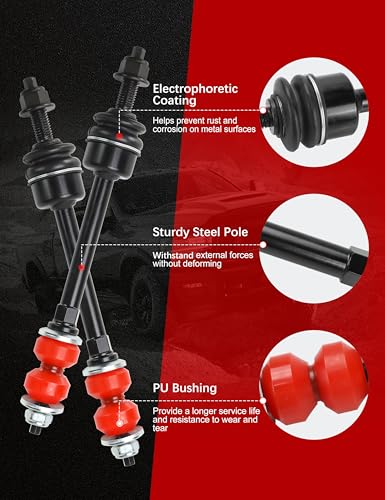
Why Replace the End Links?
The sway bar end links transfer suspension movement into the stabilizer bar.
As their joints and bushings wear, the links can develop excessive play.
Instead of immediately transferring suspension load into the bar, the worn components move first.
That can result in:
Suspension movement → Play in link → Clunk → Sway bar finally reacts
Replacing worn end links restores a more direct connection between the suspension and stabilizer bar.
Why Replace the Bushings?
The center bushings secure the sway bar to the chassis while allowing controlled rotation.
Worn bushings can allow excessive bar movement and commonly produce:
- Clunking
- Knocking
- Squeaking
- Poor sway-bar positioning
Replacing the mounting bushings at the same time as the bar eliminates another common source of front suspension noise.
OEM-Style Replacement
The 55398938AC replacement assembly is designed around the original factory dimensions and mounting locations.
That means it’s intended to work with the factory:
- Suspension mounting points
- Stabilizer system
- End-link locations
- Chassis brackets
No custom fabrication should be necessary on a correctly matched application.
Solid Steel Construction
The stabilizer bar uses solid steel construction capable of handling the repeated torsional loads generated during normal suspension operation.
A protective surface coating helps resist corrosion from:
- Water
- Road grime
- Mud
- Salt
- Environmental exposure
Because the sway bar lives underneath the truck, corrosion protection isn’t exactly decorative.
Restoring Handling
A worn stabilizer system can gradually make a truck feel less controlled.
Replacing damaged components can help restore more predictable behavior during:
- Highway ramps
- Lane changes
- Curving roads
- Emergency maneuvers
- Loaded driving
This is primarily a replacement/restoration part, not necessarily an aggressive performance sway-bar upgrade.
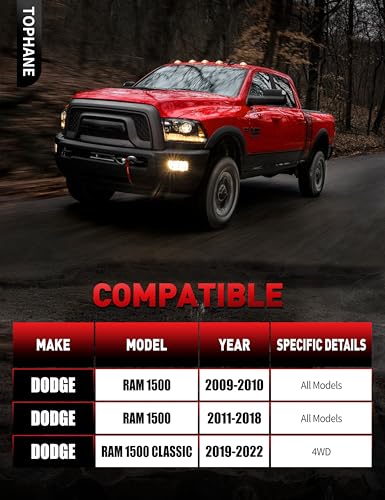
2009-2010 Dodge Ram 1500
Before Ram became its own brand, the truck was sold as the Dodge Ram 1500.
For catalog purposes, these applications should therefore be listed as:
2009 Dodge Ram 1500 4WD
2010 Dodge Ram 1500 4WD
This distinction helps shoppers find the part regardless of whether they’re searching under Dodge or Ram.
2011-2018 Ram 1500
After Ram became a standalone brand, the application becomes:
2011–2018 Ram 1500 4WD
These trucks remain part of the DS-generation architecture relevant to this sway-bar application.
2019-2022 Ram 1500 Classic
The DS-generation truck continued production as the:
2019–2022 Ram 1500 Classic 4WD
That’s the application that should appear in your product catalog.
Do not simply list “2019–2022 Ram 1500” without Classic, because that could incorrectly imply compatibility with DT-generation trucks.
Installation
General installation involves:
- Safely raise and support the truck.
- Inspect the complete front suspension.
- Disconnect the existing sway bar end links.
- Support the factory stabilizer bar.
- Remove the sway-bar mounting brackets.
- Remove the original bar.
- Compare the replacement with the original.
- Install the replacement bushings.
- Position the new sway bar.
- Install the mounting brackets.
- Install the replacement end links.
- Torque all hardware to factory specifications.
- Check suspension and steering clearance.
- Road-test.
- Reinspect the mounting hardware.
Follow the factory service procedure for the specific model year.
Does Installation Require an Alignment?
Normally, no.
The front sway bar doesn’t directly establish:
- Camber
- Caster
- Toe
Replacing the sway bar, bushings and links generally doesn’t require a wheel alignment unless other suspension components are disturbed.
Inspect These Components Too
While working on the front suspension, inspect:
- Upper control arms
- Lower control arms
- Ball joints
- Tie rods
- Wheel bearings
- Front shocks
- CV boots
- Steering components
A front suspension clunk shouldn’t automatically be blamed on the sway bar.
Diagnosis first. Parts cannon second.
Complete Vehicle Fitment Summary
2009–2010 Dodge Ram 1500 4WD
2011–2018 Ram 1500 4WD
2019–2022 Ram 1500 Classic 4WD







There are no reviews yet.