

Replacement Part Numbers
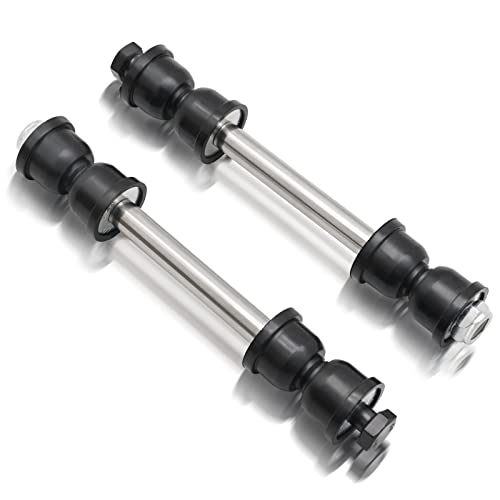
Primary Part Number: K700432
Interchange: K700538
Matching the original link dimensions and vehicle suspension configuration is recommended before installation.
What Do Front Sway Bar End Links Do?
The front sway bar connects the left and right sides of the suspension.
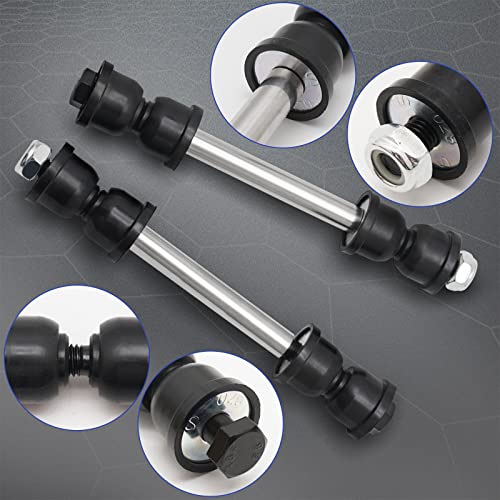
The end links provide the connection between that bar and the suspension components.
During cornering:
Outside suspension compresses
→ End link transfers force
→ Sway bar twists
→ Bar resists body roll
If the links are worn or damaged, the stabilizer bar can’t react as effectively.
Symptoms of Bad Sway Bar Links
Common symptoms include:
- Clunking over bumps
- Clicking or knocking noises
- Excessive body roll
- Loose handling
- Reduced steering response
- Noise during cornering
- Visible link or bushing damage
Clunking over small, sharp bumps is particularly common with worn stabilizer links.
However, don’t immediately assume every front suspension clunk is an end link.
Ball joints, control arm bushings, tie rods and shock mounts are equally capable of contributing their own percussion section.
Why Sway Bar Links Wear Out
Front stabilizer links operate constantly while the suspension moves.
They experience:
- Suspension articulation
- Cornering loads
- Road impacts
- Water exposure
- Dirt
- Road salt
- Heat cycles
Eventually, bushings or joints can develop excessive play.
Once that happens, the stabilizer bar is no longer tightly connected to the suspension.
Chevrolet Silverado 1500 Fitment
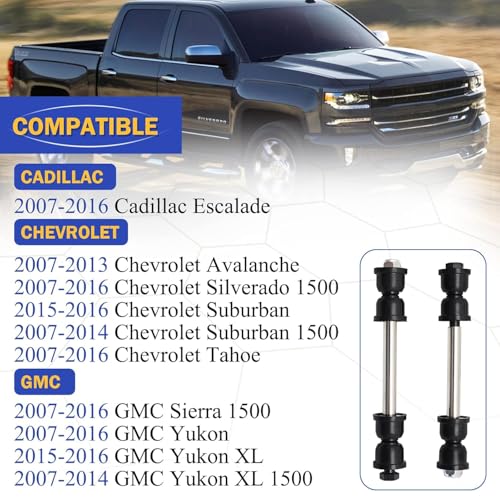
K700432 is listed for:
2007–2016 Chevrolet Silverado 1500
This makes it applicable to a large portion of the GMT900 and subsequent-generation Silverado 1500 production period.
Because suspension packages can vary, verify the original equipment configuration before ordering.
Chevrolet Tahoe Fitment
Compatible Tahoe applications include:
2007–2016 Chevrolet Tahoe
These full-size SUVs place substantial loads on their stabilizer systems because of their weight and relatively high center of gravity.
Fresh end links help ensure the factory sway bar can function as intended.
Chevrolet Suburban Fitment
Applications include:
2007–2014 Chevrolet Suburban 1500
and:
2015–2016 Chevrolet Suburban
The naming distinction reflects GM’s model and platform transition.
Chevrolet Avalanche Fitment
The kit is also compatible with:
2007–2013 Chevrolet Avalanche
The Avalanche shares substantial chassis and suspension architecture with GM’s contemporary full-size truck and SUV platforms.
GMC Sierra 1500 Fitment
Compatible applications include:
2007–2016 GMC Sierra 1500
Like the Silverado, verify the exact suspension configuration for the individual truck.
GMC Yukon Fitment
The K700432 is listed for:
2007–2016 GMC Yukon
and:
2007–2014 GMC Yukon XL 1500
2015–2016 GMC Yukon XL
These vehicles share substantial suspension architecture with the corresponding Chevrolet Tahoe and Suburban.
Cadillac Escalade Fitment
The kit also supports:
2007–2016 Cadillac Escalade
Despite the Escalade’s luxury positioning, the underlying full-size GM truck architecture means many suspension components are related to Tahoe and Yukon applications.
Leather seats apparently don’t exempt sway bar links from potholes.
Corrosion-Resistant Construction
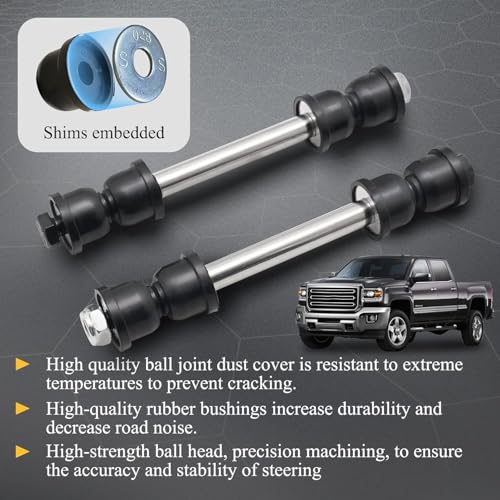
The links use an electrophoretic coating intended to resist corrosion.
The manufacturer states that the coating has undergone a 120-hour salt-spray test.
This is useful because sway bar links live underneath the vehicle where they’re routinely exposed to:
- Rain
- Road salt
- Mud
- Dirt
- Sand
- Road debris
Corrosion resistance can help extend component service life.
Improved Suspension Stability
Replacing worn links restores a more direct connection between the stabilizer bar and suspension.
That can improve:
- Body-roll control
- Transitional response
- Cornering stability
- Steering confidence
This isn’t a horsepower modification.
It’s simply allowing the suspension components already installed on the truck to perform their intended job.
Can K700432 Fix Suspension Clunking?
Yes—if worn sway bar links are actually causing the noise.
A worn link can knock against its mounting points as the suspension moves.
However, similar noises can originate from:
- Ball joints
- Control arm bushings
- Tie-rod ends
- Wheel bearings
- Shock absorbers
- Strut mounts
- Sway bar mounting bushings
Inspect the suspension before replacing components.
Installation
General installation involves:
- Park the vehicle on a level surface.
- Safely raise and support it as required.
- Locate the front sway bar end links.
- Inspect the existing links and bushings.
- Remove the upper and lower mounting hardware.
- Remove the original links.
- Compare the replacements with the original components.
- Install the K700432 links.
- Position bushings and washers correctly.
- Torque hardware according to factory specifications.
- Verify suspension clearance.
- Road-test.
- Reinspect the installation.
The kit does not include installation instructions, so factory service information should be consulted.
Does Sway Bar Link Replacement Require an Alignment?
Normally, no.
Sway bar links don’t directly establish:
- Camber
- Caster
- Toe
Therefore, replacing them generally doesn’t require a wheel alignment.
If other suspension components are replaced simultaneously, an alignment may be appropriate.
Inspect the Sway Bar Bushings Too
If the end links are worn, inspect the center sway-bar mounting bushings.
Look for:
- Cracking
- Splitting
- Excessive clearance
- Distortion
- Bar movement inside the bushing
Replacing end links while ignoring completely destroyed center bushings may leave some of the original suspension noise unresolved.
Vehicle Fitment Summary
Chevrolet
- 2007–2013 Avalanche
- 2007–2016 Silverado 1500
- 2007–2014 Suburban 1500
- 2015–2016 Suburban
- 2007–2016 Tahoe
GMC
- 2007–2016 Sierra 1500
- 2007–2016 Yukon
- 2007–2014 Yukon XL 1500
- 2015–2016 Yukon XL
Cadillac
- 2007–2016 Escalade



There are no reviews yet.