
Mechanical Water-Temperature Gauge
The coolant-temperature gauge displays readings from 100°F to 250°F.
Its mechanical sensing bulb connects to the gauge through a permanently sealed capillary tube. This design measures temperature without requiring an electronic sender or sensor-resistance calibration.
A rising temperature may indicate:
- Low coolant
- Cooling-fan failure
- Restricted radiator flow
- Stuck thermostat
- Water-pump failure
- Air trapped in the cooling system
- Heavy towing or engine load
- Marine cooling-system restrictions
If the temperature begins climbing unexpectedly, read our guide explaining why a car overheats and how to find the cause.
8–16V Electrical Voltmeter
The voltmeter monitors vehicle-system voltage from 8V to 16V.
Unlike the oil-pressure and water-temperature gauges, the voltmeter is electrical. No mechanical linkage has yet discovered a practical way to measure alternator output from the dashboard, despite the listing’s enthusiasm.
Voltage monitoring can help identify:
- Weak battery condition
- Alternator failure
- Charging-system trouble
- Loose battery connections
- Excessive accessory load
- Faulty grounds
- Wiring voltage loss
A healthy 12V system typically shows higher voltage while the engine is running than when it is switched off. Exact readings depend on the charging system, battery condition, temperature and vehicle design.
Classic Chrome-Finished Panel
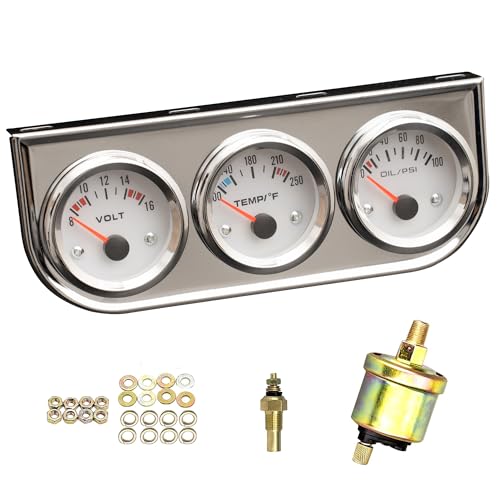
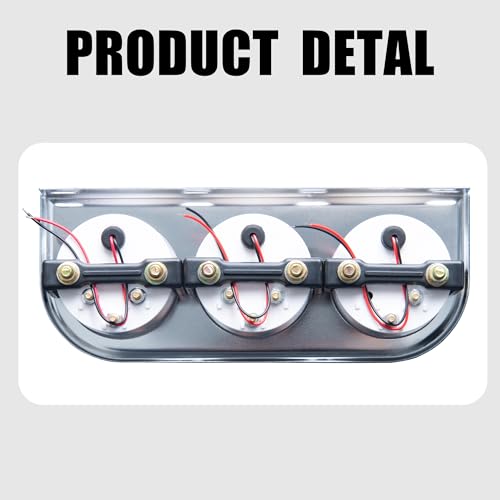
The three gauges are housed in a coordinated chrome-plated panel with silver-colored bezels and clear analog displays.
The traditional styling works well in:
- Classic cars
- Older trucks
- Street rods
- Restomod builds
- Custom dashboards
- Utility vehicles
- Boats and marine panels
- Vintage-inspired interiors
The panel combines ABS plastic and chrome-plated metal components. It is intended for normal vehicle use, but no waterproof or corrosion-protection certification is specified.
Illuminated Analog Displays
The dials include illumination for nighttime viewing.
The lighting circuit requires 12V DC power. The oil-pressure and coolant-temperature readings remain mechanically operated, while the voltmeter and illumination require electrical connections.
Product Specifications
- Product type: Three-gauge instrument panel
- Display type: Analog
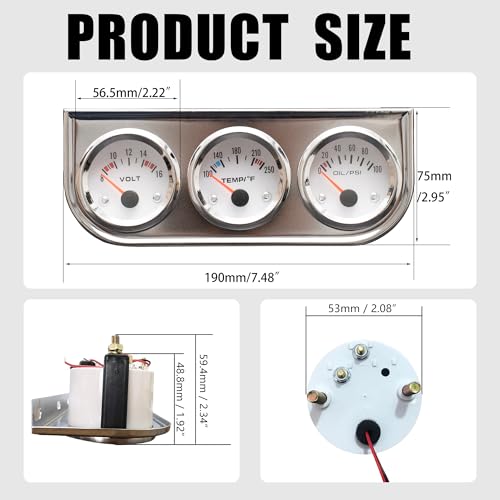
- Individual gauge diameter: Approximately 2 inches / 52mm
- Gauge count: Three
- Oil-pressure range: 0–100 PSI
- Oil-pressure operation: Mechanical
- Water-temperature range: 100–250°F
- Water-temperature operation: Mechanical
- Voltmeter range: 8–16V
- Voltmeter operation: Electrical
- Electrical-system compatibility: 12V DC
- Panel finish: Chrome
- Housing materials: ABS plastic and chrome-plated metal
- Illumination: Yes
- Installation type: Universal
- Manufacturer part number: 3IN1-WVO-CH
- Brand: Unbranded
These details align with the matching current triple-gauge product listing.
What’s Included
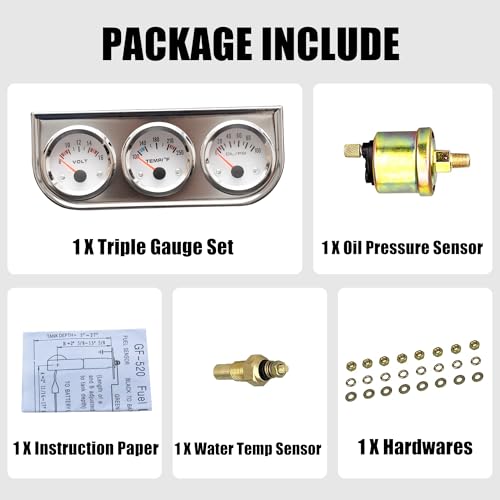
Package contents are described as including:
- One 0–100 PSI oil-pressure gauge
- One 100–250°F water-temperature gauge
- One 8–16V voltmeter
- Chrome-finished triple mounting panel
- Mechanical oil-pressure tubing and fittings
- Mechanical coolant-temperature sensing bulb and capillary tube
- Voltmeter and illumination wiring
- Mounting brackets and hardware
- Installation accessories
Confirm the exact fittings and thread sizes against physical inventory before publishing. The available listing does not clearly establish every adapter size.
Understanding the Mixed Gauge Design
This set uses three different measurement paths:
| Function | Operating method | Connection |
|---|---|---|
| Oil pressure | Mechanical | Oil line from engine to gauge |
| Water temperature | Mechanical | Sealed bulb and capillary tube |
| Voltage | Electrical | Power and ground wiring |
Describing the entire set as mechanical would be inaccurate. The oil-pressure and coolant gauges are mechanical; the voltmeter is electrical.
Important Mechanical-Line Precautions
Oil-pressure line
The oil-pressure gauge routes pressurized engine oil toward the dashboard. Install the line carefully and inspect it regularly for damage or leakage.
Keep it away from:
- Exhaust components
- Sharp metal edges
- Pedal assemblies
- Moving steering parts
- Abrasive surfaces
A copper or braided line upgrade may be worth considering for demanding applications.
Temperature capillary tube
The coolant-temperature sensing bulb is permanently connected to the gauge by a sealed capillary tube.
Never:
- Cut it
- Splice it
- Shorten it
- Crush it
- Make sharp bends
- Twist the bulb
- Route it against the exhaust
Damage to the tube will permanently disable the temperature gauge.
Installation Notes
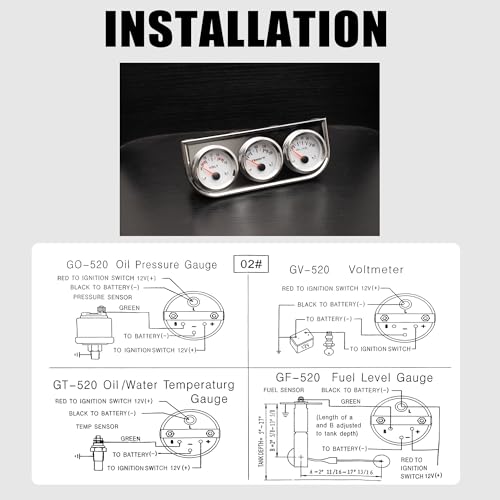
Professional installation is recommended because the kit involves pressurized engine oil, engine coolant and electrical wiring.
Before beginning:
- Allow the engine to cool completely.
- Disconnect the negative battery terminal.
- Confirm adequate dashboard and rear-panel clearance.
- Identify a compatible oil-pressure port.
- Identify a compatible coolant-temperature port.
- Plan the oil line and capillary-tube routes.
- Use protected firewall grommets.
- Keep both lines away from exhaust heat.
- Avoid belts, pulleys, fans and steering components.
- Connect the voltmeter to switched 12V power and ground.
- Connect illumination through a protected lighting circuit.
- Install appropriate fuse protection.
- Bleed the cooling system after installation.
- Start the engine and immediately inspect for oil and coolant leaks.
- Confirm all three gauges respond correctly.
Do not remove an electronic factory coolant or oil-pressure sensor unless doing so is confirmed safe. The ECU or dashboard may depend on those signals.
Frequently Asked Questions
Is this one multifunction gauge or three separate gauges?
It is a panel containing three individual 52mm analog gauges.
Which gauges are mechanical?
The oil-pressure and water-temperature gauges are mechanical. The voltmeter is electrical.
What are the measurement ranges?
- Oil pressure: 0–100 PSI
- Water temperature: 100–250°F
- Voltage: 8–16V
Does the water-temperature gauge use an electronic sender?
No. It uses a mechanical sensing bulb and sealed capillary tube.
Can the capillary tube be shortened?
No. Cutting or modifying it will permanently damage the gauge.
Does the mechanical oil-pressure gauge bring oil into the cabin?
Yes. A mechanical oil-pressure gauge uses tubing to carry engine pressure to the gauge. Proper routing, fittings and regular inspection are essential.
Will this work on a 24V vehicle?
No. The voltmeter range and illumination are intended for 12V systems.
Can it be used in a boat?
It may be used in compatible 12V marine applications, but no IP waterproof rating is specified. Protect the gauges, rear connections and oil line from moisture and corrosion.
Are all adapters included?
The listing claims installation accessories are included, but exact adapter sizes are not clearly documented. Verify the fittings against the application before installation.
What should I do if oil pressure suddenly drops?
Stop safely and shut the engine off if pressure remains abnormally low. Check the oil level and inspect for leakage before restarting.
What should I do if coolant temperature rises?
Reduce engine load and watch whether the temperature stabilizes. If it continues rising, steam appears or coolant escapes, stop safely and shut the engine off.
Our guide on how to deal with an overheating engine explains the next diagnostic steps.
Classic Three-System Monitoring
This chrome triple-gauge set combines oil pressure, coolant temperature and system voltage in a coordinated analog panel.
It is a practical option for compatible 12V vehicles that need traditional instrumentation and direct mechanical readings without filling the dashboard with mismatched gauges from three different decades.








There are no reviews yet.