
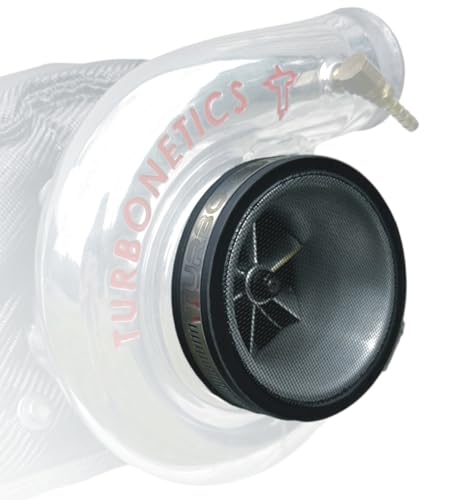
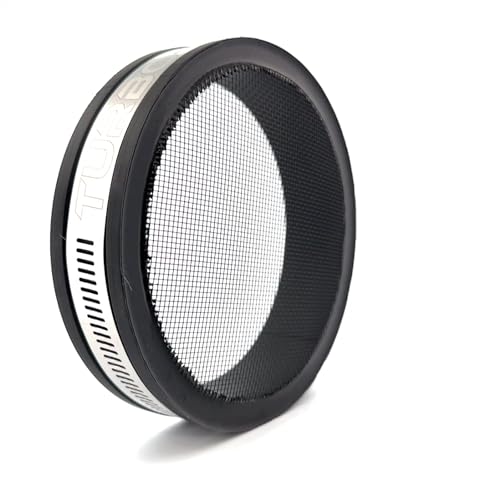
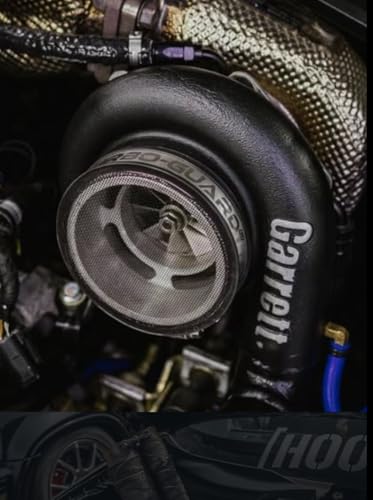
What Is a Turbo Guard?
A Turbo Guard is essentially a protective screen that installs directly over the turbocharger inlet.
Unlike a conventional filter, it does not use:
- Cotton filter media
- Foam filter elements
- Synthetic filtration material
Instead, it relies on a durable stainless-steel mesh screen to block larger debris from entering the turbocharger.
Designed for Tight Spaces
One of the biggest reasons enthusiasts choose a Turbo-Guard is fitment.
Many turbocharged vehicles simply don’t have enough room for:
- Large cone filters
- Velocity stacks with filters
- Traditional intake systems
This is especially common on:
Turbo Honda Builds
Large-frame turbochargers often sit close to frame rails and radiator supports.
LS Turbo Swaps
Engine bays become crowded quickly.
Drag Cars
Packaging is often prioritized over filtration.
Drift Cars
Turbo placement can limit intake options.
The Turbo-Guard is specifically designed for these situations.
4-Inch Inlet Compatibility
Size
- 4.00-inch turbo inlet
Requirement
- Minimum 1-inch inlet snout
Always verify compressor housing dimensions before ordering.
One-Piece Construction
According to the manufacturer, the Turbo-Guard utilizes a unique:
One-Piece Design
Benefits include:
- Increased durability
- Improved structural integrity
- Better resistance to vibration
- Easier installation and removal
The one-piece construction eliminates many of the weak points found in multi-piece designs.
Heavy-Duty Stainless Steel Screen
Screen Material
- Stainless Steel
Strength Rating
- 223 lbs per square inch
The heavy-duty screen is designed specifically for high-performance turbocharger applications.
Benefits include:
- Corrosion resistance
- Strength under boost-related vibration
- Long service life
- Improved durability
Made in the USA
For enthusiasts looking to support domestic manufacturing:
Manufacturing Location
- United States
The Turbo-Guard is manufactured entirely in the USA using American materials and production methods.
Increased Turbo Sound
One reason these screens have become popular is the sound.
Without a traditional filter restricting intake noise, drivers often experience:
- Louder compressor sounds
- Increased turbo spool noise
- More pronounced induction sounds
- Enhanced blow-off valve acoustics
If you’re the type of enthusiast who enjoys hearing every ounce of boost, you’ll probably appreciate the difference.
Potential Airflow Advantages
The manufacturer claims airflow improvements compared to traditional filters.
Potential benefits may include:
- Reduced intake restriction
- Faster spool response
- Increased airflow capacity
- Improved turbocharger efficiency
Actual performance gains depend heavily on the vehicle, turbocharger, and existing intake system.
Important Limitations
The manufacturer makes an important distinction:
Not a Traditional Air Filter
Turbo-Guard specifically states:
- Not a replacement for a cone filter
- Designed for applications where conventional filters cannot fit
- Intended as basic turbo protection
This is an important consideration for daily-driven vehicles exposed to:
- Dust
- Sand
- Dirt roads
- Heavy debris
A traditional air filter will always provide significantly better filtration.
Not Designed for Superchargers
The Turbo-Guard is intended only for:
✅ Turbocharger applications
❌ Supercharger applications
Always follow manufacturer recommendations regarding fitment.
Ideal Applications
This product is best suited for:
Drag Cars
Maximum airflow with limited packaging space.
Dyno Vehicles
Temporary protection during testing.
Race Cars
Applications where airflow is prioritized.
Custom Turbo Builds
Where conventional filters simply won’t fit.
Pros and Cons
Pros
- Compact design
- Fits tight engine bays
- One-piece construction
- Stainless steel screen
- Increased turbo sound
- Lightweight
- Made in USA
- Easy installation
Cons
- Not a replacement for a traditional air filter
- Limited filtration capability
- Not ideal for dusty environments
- Not intended for superchargers
- Primarily suited for performance applications
Frequently Asked Questions
Is a Turbo-Guard better than a cone filter?
No. It serves a different purpose. A cone filter provides significantly better filtration.
Does it increase turbo noise?
Yes. Many users report noticeably louder turbo spool and induction sounds.
Can it improve airflow?
In some applications, reduced restriction may improve airflow compared to a traditional filter.
Is it safe for daily driving?
It depends on the environment. Vehicles exposed to dust and debris are generally better served by a traditional air filter.
Final Thoughts
The Turbo-Guard 4-Inch Screen Filter fills a unique niche in the performance market. For race cars, drag builds, dyno applications, and custom turbo setups where traditional filters simply won’t fit, it offers basic compressor protection while maximizing airflow and turbo sound.
Just remember: a Turbo-Guard is a turbo protector—not a full air filtration system. It’s the difference between wearing a motorcycle helmet and wearing a full hazmat suit. Both offer protection, but one is definitely better at keeping the bad stuff out.




There are no reviews yet.