
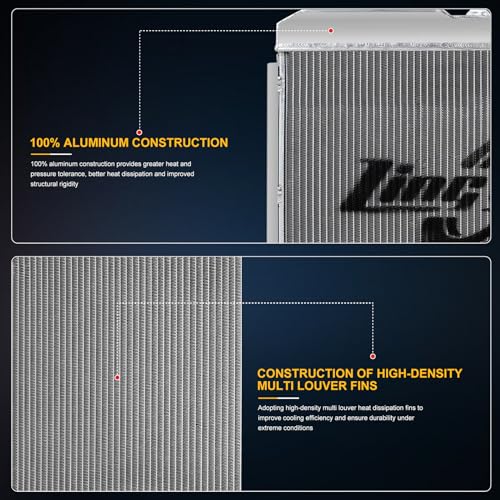
Three-Row Aluminum Core for Improved Cooling Performance
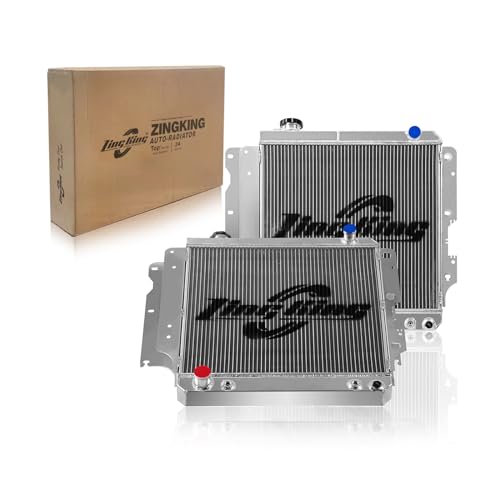
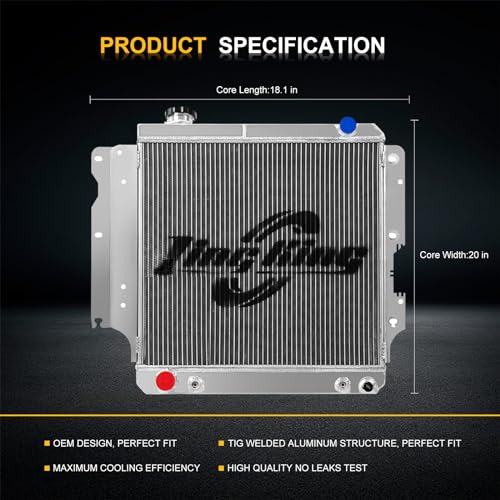
The ZING KING CC2101 features a three-row aluminum radiator core measuring approximately 18.11 × 20 inches, with a core thickness of 1.73 inches.
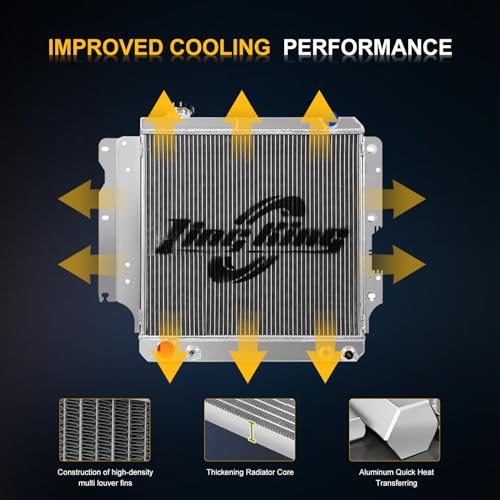
Its high-density corrugated aluminum fins are designed to increase the surface area available for heat transfer.
As hot coolant circulates through the radiator tubes, heat transfers into the aluminum fins and is carried away by airflow.
Why a Three-Row Radiator Can Be Useful
Radiator cooling performance depends on several factors:
- Coolant flow through the radiator tubes.
- Core thickness and tube configuration.
- Fin density and heat-transfer surface area.
- Cooling fan performance.
- Airflow through the radiator.
- Ambient temperature and engine load.
A properly engineered three-row radiator can provide additional cooling capability compared with certain factory-style designs.
However, row count alone does not guarantee better performance.
Tube dimensions, fin density, coolant circulation, and airflow are equally important.
For a detailed explanation of radiator efficiency and cooling system operation, visit our Complete Car Cooling System Guide.
Built for Demanding Jeep Off-Road Conditions
Jeep Wrangler cooling systems face unique challenges during off-road driving.
Rock crawling, steep climbs, and slow-speed trail navigation often place the engine under substantial load while limiting natural airflow through the radiator.
A properly functioning cooling system must dissipate heat even when the vehicle is barely moving.
Rock Crawling
During technical rock crawling, the engine may operate under load at very low vehicle speeds.
Because natural airflow is limited, cooling fan performance becomes particularly important.
A radiator with adequate heat-transfer capability can support stable engine temperatures when paired with a properly functioning fan and shroud.
Trail Driving
Extended off-road driving can expose the radiator to dust, mud, debris, and elevated temperatures.
Maintaining unobstructed airflow through the radiator fins is essential.
Hot Weather Operation
Higher ambient temperatures reduce the temperature difference between the radiator and surrounding air.
This makes radiator efficiency and cooling fan operation especially important.
Daily Driving
The CC2101 is also intended for compatible street-driven Wranglers.
Replacing a deteriorated factory radiator can help restore dependable cooling performance during commuting and highway use.
All-Aluminum Construction for Long-Term Durability
Many factory-style radiators use plastic end tanks attached to an aluminum cooling core.
Although these designs work well under normal conditions, repeated temperature cycling can eventually weaken plastic components and seals.
The ZING KING CC2101 uses all-aluminum construction intended to provide durability under demanding operating conditions.
Advantages of Aluminum Radiator Construction
Durable End Tanks: All-aluminum construction eliminates the aging plastic end tanks found on many factory-style radiators.
Efficient Heat Transfer: Aluminum conducts heat effectively, supporting coolant-to-air heat exchange.
Performance Appearance: Aluminum construction provides a clean, upgraded appearance under the hood.
Long-Term Serviceability: Replacing an aging radiator can reduce the risk of leaks caused by deteriorated original components.
Corrosion Resistance: When paired with compatible coolant and proper maintenance, aluminum radiators can provide dependable service.
The result is a radiator designed to combine performance-oriented construction with practical Jeep cooling system functionality.
Manufacturer-Reported Quality Testing and Reliability
ZING KING advertises manufacturing quality controls intended to improve radiator consistency and durability.
According to the supplied product information, the manufacturer operates under ISO 9001 and IATF 16949 quality management systems.
The company also reports four inspection procedures before shipment.
Leak Testing
Designed to identify leaks or sealing problems in the radiator assembly.
Vibration Testing
Intended to evaluate the radiator’s resistance to vibration and repeated movement.
Corrosion Resistance Testing
Used to assess the radiator’s resistance to certain corrosive conditions.
Flow Testing
Intended to verify coolant passage flow through the radiator.
The manufacturer reports a 99.7% inspection pass rate.
These figures are manufacturer-supplied claims and should not be interpreted as independently verified failure-rate or lifetime-performance guarantees.
ZING KING CC2101 Technical Specifications
| Specification | Details |
|---|---|
| Manufacturer | ZING KING |
| Part Number | CC2101 |
| Product Type | Performance Aluminum Radiator |
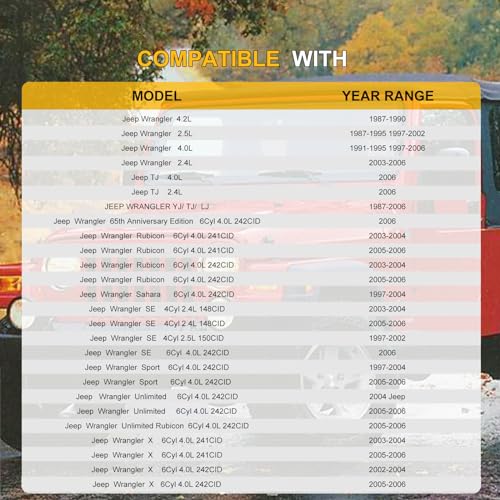
| Advertised Vehicle Fitment | 1987–2006 Jeep Wrangler |
| Chassis Applications | Selected YJ, TJ, LJ |
| Advertised Engine Applications | 2.4L, 2.5L, 4.0L, 4.2L |
| Radiator Construction | All-Aluminum |
| Core Configuration | 3-Row |
| Overall Dimensions | 25.98 × 23.03 × 4.13 inches |
| Core Dimensions | 18.11 × 20 inches |
| Core Thickness | 1.73 inches |
| Inlet Diameter | 1.26 inches |
| Outlet Diameter | 1.5 inches |
| Cooling Fins | High-Density Corrugated Aluminum |
| Advertised Cooling Improvement | 25–30% |
| Quality Testing | Leak, Vibration, Corrosion, Flow |
| Quality System Certifications | ISO 9001 / IATF 16949, Manufacturer-Claimed |
| Warranty | Advertised 12 + 3 Months |
Important: These specifications are based on the supplied seller listing. Confirm radiator dimensions, mounting points, hose connections, fan shroud compatibility, and transmission cooler requirements before ordering.
Jeep Wrangler YJ, TJ and LJ Vehicle Fitment
The CC2101 is advertised for selected Jeep Wrangler applications produced between 1987 and 2006.
However, different Wrangler generations and engine configurations may use different radiator designs.
Jeep Wrangler YJ – 1987–1995
The YJ Wrangler introduced the rectangular-headlight Jeep design and was offered with several four-cylinder and inline-six engines.
Advertised engine applications include:
- 1987–1990 Jeep Wrangler 4.2L inline-six.
- 1987–1995 Jeep Wrangler 2.5L four-cylinder.
- 1991–1995 Jeep Wrangler 4.0L inline-six.
Important: Some early YJ cooling systems use different radiator and hose configurations from later TJ models. Confirm the exact radiator design and cooling system layout before purchasing.
Jeep Wrangler TJ – 1997–2006
The TJ Wrangler introduced coil-spring suspension and returned to traditional round headlights.
Advertised engine applications include:
- 1997–2002 Jeep Wrangler 2.5L four-cylinder.
- 1997–2006 Jeep Wrangler 4.0L inline-six.
- 2003–2006 Jeep Wrangler 2.4L four-cylinder.
The CC2101 is advertised for selected TJ models, but exact fitment depends on the engine, transmission, and cooling system configuration.
Jeep Wrangler LJ Unlimited – 2004–2006
The longer-wheelbase Wrangler Unlimited, commonly called the LJ, is a popular platform for off-road builds.
Advertised applications include selected 2004–2006 Wrangler Unlimited and Unlimited Rubicon models equipped with the 4.0L inline-six.
Before ordering, verify radiator dimensions, mounting locations, and cooling fan clearance.
Jeep Wrangler Engine Compatibility
Jeep 2.4L PowerTech Four-Cylinder
The 2.4L four-cylinder was offered in later TJ Wrangler models.
Maintaining proper coolant circulation is important for reliable daily driving and off-road operation.
Jeep 2.5L AMC Four-Cylinder
The 2.5L four-cylinder powered numerous YJ and TJ Wranglers.
Although these engines produce less power than the 4.0L inline-six, they still require effective cooling under sustained load.
Jeep 4.0L AMC Inline-Six
The legendary Jeep 4.0L inline-six is known for its durability, torque delivery, and extensive aftermarket support.
These engines remain popular in daily-driven Wranglers and off-road builds.
A properly functioning radiator is essential for maintaining stable operating temperatures during slow-speed trail driving and highway use.
Jeep 4.2L AMC Inline-Six
Early YJ Wranglers were offered with the 4.2L inline-six.
Cooling system configurations on these vehicles may differ significantly from later models.
Owners should verify radiator mounting points, hose routing, and cooling system design before purchasing.
Common Jeep Wrangler Overheating Problems
An upgraded radiator can restore cooling capability, but overheating may result from other mechanical problems.
Clogged Radiator
Internal corrosion and mineral deposits can restrict coolant flow and reduce heat transfer.
Failing Thermostat
A thermostat that remains closed can prevent proper coolant circulation.
Weak Water Pump
A failing water pump may reduce coolant flow or develop leaks.
Cooling Fan Problems
A damaged mechanical fan, failing fan clutch, malfunctioning electric fan, or improperly fitted shroud can reduce airflow.
Damaged Radiator Hoses
Cracked or collapsed hoses can cause coolant loss or restrict circulation.
Trapped Air
Air pockets can interfere with coolant circulation after radiator replacement or other cooling system repairs.
Internal Engine Problems
Combustion gases entering the cooling system can cause excessive pressure, coolant loss, and overheating.
Before replacing expensive components, inspect the complete cooling system and identify the underlying cause.
Visit our Complete Car Cooling System Guide for additional cooling system troubleshooting information.
How to Install the CC2101 Aluminum Radiator on a Jeep Wrangler
Replacing the radiator on a Jeep Wrangler can be a manageable DIY project for experienced enthusiasts.
However, installation procedures vary between YJ, TJ, and LJ models.
Step 1: Allow the Engine to Cool
Park the Jeep on a level surface and allow the engine to cool completely.
Never remove a radiator cap while the cooling system is hot or pressurized.
Step 2: Drain the Cooling System
Position a suitable drain pan beneath the radiator.
Drain the coolant according to the applicable factory service procedure.
Inspect the coolant for corrosion, contamination, or debris.
Step 3: Remove the Factory Radiator
Disconnect the upper and lower radiator hoses.
Remove the fan shroud and any components obstructing radiator removal.
Disconnect transmission cooler lines if the vehicle is equipped with an automatic transmission and the radiator contains an integrated cooler.
Remove the radiator mounting hardware.
Carefully lift the original radiator from the engine compartment.
Step 4: Install the CC2101 Aluminum Radiator
Position the replacement radiator into the mounting area.
Confirm that the mounting points align correctly.
Inspect clearance around the cooling fan, hoses, engine accessories, and surrounding components.
Do not force the radiator into position if the mounting points or hose connections do not match.
Step 5: Reconnect Radiator Hoses and Cooling Components
Reconnect the upper and lower radiator hoses using suitable clamps.
Reinstall compatible fan shrouds and cooling components.
For automatic-transmission vehicles, confirm the replacement radiator has the required transmission cooler connections or use an appropriately engineered external cooling arrangement.
Step 6: Refill and Bleed the Cooling System
Refill the system using coolant appropriate for the engine and model year.
Follow the applicable factory coolant filling and bleeding procedure.
Air pockets can cause unstable temperature readings and overheating.
Our Complete Car Cooling System Guide explains why proper coolant circulation and air removal are essential.
Step 7: Verify Cooling System Operation
Start the engine and monitor coolant temperature.
Confirm that the thermostat opens and the cooling fan operates correctly.
Inspect all radiator hose connections and fittings for leaks.
After the engine cools, recheck coolant level and mounting hardware.
Complete Your Jeep Wrangler Cooling System Upgrade
When replacing the radiator, consider inspecting related cooling system components.
Radiator Hoses: Replace hoses showing cracks, swelling, or deterioration.
Thermostat: Verify correct operation and replace it when necessary.
Water Pump: Inspect for coolant leaks, bearing noise, and other signs of failure.
Cooling Fan: Confirm proper operation and adequate airflow through the radiator.
Radiator Cap: Use the correct pressure rating for the vehicle’s cooling system.
Coolant: Use a coolant formulation appropriate for the engine and aluminum radiator.
Fan Shroud: Confirm proper fitment and airflow through the radiator.
Transmission Cooler: Verify compatible connections for automatic-transmission applications.
Explore additional Jeep Wrangler radiators, off-road performance components, and engine cooling upgrades at Pro Street Online.
Is the ZING KING CC2101 3-Row Aluminum Radiator Worth It?
For Jeep Wrangler owners seeking a cooling system upgrade, the ZING KING CC2101 offers several practical advantages.
Its three-row aluminum core, high-density cooling fins, all-aluminum construction, and manufacturer-reported testing make it an appealing alternative to aging factory cooling components.
This radiator may be particularly useful for owners who:
- Are restoring a Jeep Wrangler YJ, TJ, or LJ.
- Want to replace a leaking factory radiator.
- Drive a 2.4L, 2.5L, 4.0L, or 4.2L Jeep engine.
- Regularly participate in off-road trail driving.
- Want additional cooling capability for demanding conditions.
- Prefer all-aluminum radiator construction.
- Want a radiator backed by the seller’s advertised extended warranty.
The most important consideration remains proper fitment.
Because Jeep Wrangler radiator designs vary across generations and engine configurations, verify compatibility before purchasing.
Upgrade Your Jeep Wrangler Cooling System at Pro Street Online
Whether you’re restoring a classic YJ, maintaining a daily-driven TJ, or upgrading an LJ Rubicon for off-road adventures, dependable engine cooling is essential.
The ZING KING CC2101 3-Row Aluminum Radiator combines a three-row aluminum core, high-density corrugated fins, and all-aluminum construction in a performance-oriented cooling package.
Advertised for selected 1987–2006 Jeep Wrangler applications, this radiator offers an upgrade path for owners seeking improved cooling system durability and heat-transfer capability.
Shop Jeep Wrangler aluminum radiators, performance cooling components, off-road upgrades, and engine parts at www.ProStreetOnline.com.








There are no reviews yet.