

Benefits of Aluminum Radiators
Effective Heat Transfer: Aluminum conducts heat efficiently, allowing engine heat to move from the coolant into the radiator core.
Lightweight Construction: Aluminum helps minimize unnecessary weight on a performance motorcycle.
Corrosion Resistance: With compatible coolant and proper maintenance, aluminum radiator components can provide dependable service.
Performance-Oriented Design: The radiator is intended for motorcycles regularly exposed to demanding riding conditions.
Replacement Convenience: A vehicle-specific design can simplify installation compared with modifying a universal radiator.
Although aluminum construction provides several advantages, radiator guards and proper mounting remain important for protecting the radiator against off-road impacts.
Vacuum-Brazed Radiator Core Without Epoxy
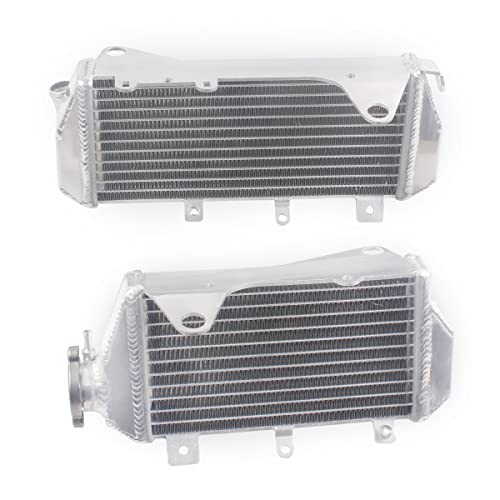
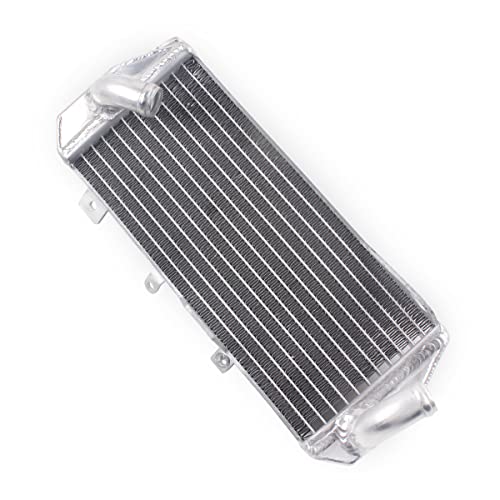
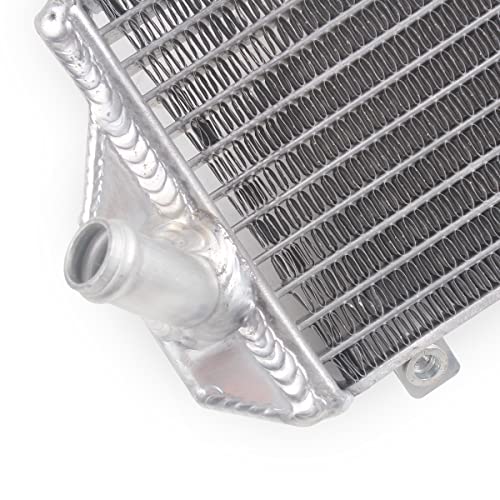
One of the advertised construction features of this radiator is its vacuum-brazed aluminum core.
During the brazing process, radiator components are joined using controlled heat and a suitable filler material.
The supplied product description specifies that the core is manufactured without epoxy bonding.
Why Brazed Radiator Construction Matters
A properly manufactured brazed radiator core can provide:
- Durable joints between cooling tubes and fins.
- Efficient thermal contact between core components.
- Consistent heat-transfer performance.
- Resistance to normal cooling system operating conditions.
The quality of the final radiator also depends on manufacturing tolerances, welding, pressure testing, and correct installation.
Vacuum-brazed construction is a useful feature, but it does not make the radiator immune to impact damage or improper mounting.
Radiator Core Dimensions and Specifications
The supplied product listing provides two radiator core dimensions.
These likely correspond to the two differently sized radiator sections used on the motorcycle, but buyers should verify the package contents before ordering.
| Specification | Details |
|---|---|
| Product Type | Aluminum Motorcycle Radiator |
| Motorcycle Manufacturer | Honda |
| Compatible Model | CRF450R |
| CRF450R Model Years | 2017–2020 |
| Additional Compatible Model | CRF450RX |
| CRF450RX Model Years | 2017–2018 |
| Radiator Material | Aluminum |
| Core Construction | Vacuum-Brazed Aluminum |
| Epoxy Construction | No Epoxy Advertised |
| Larger Core Dimensions | 10.24 × 4.65 × 1.02 inches |
| Larger Core Metric Dimensions | 260 × 118 × 26 mm |
| Smaller Core Dimensions | 7.87 × 4.65 × 1.02 inches |
| Smaller Core Metric Dimensions | 200 × 118 × 26 mm |
| Installation Type | Advertised OE-Style Replacement |
| Fitment Type | Vehicle-Specific |
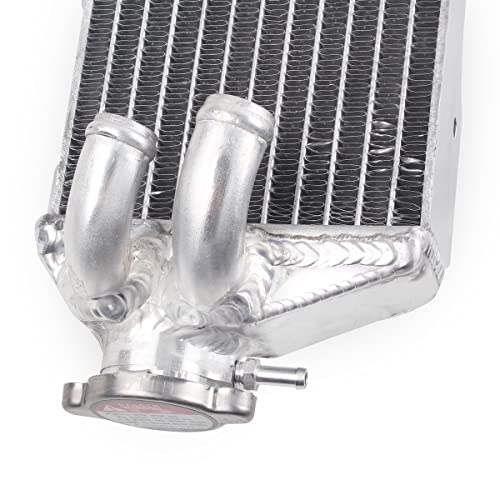
Important: Confirm whether the product includes both left and right radiator assemblies or only one radiator. The supplied listing provides two core sizes but does not explicitly confirm package quantity, hose fittings, radiator cap inclusion, or mounting hardware.
Honda CRF450R Fitment: 2017–2020
The Honda CRF450R is a competition-focused motocross motorcycle designed for aggressive riding and demanding track conditions.
Its liquid-cooled four-stroke engine relies on radiator airflow to regulate coolant temperature.
The replacement radiator is advertised for the following model years:
- 2017 Honda CRF450R
- 2018 Honda CRF450R
- 2019 Honda CRF450R
- 2020 Honda CRF450R
Why Cooling Matters on the CRF450R
Motocross riding involves repeated acceleration, high engine speeds, and substantial engine loads.
During demanding riding sessions, the radiator must continuously transfer heat away from the engine.
A leaking or damaged radiator can reduce coolant capacity and compromise cooling system performance.
Replacing a damaged radiator helps restore the cooling system to proper working condition.
Honda CRF450RX Fitment: 2017–2018
The Honda CRF450RX is designed for off-road competition and trail-oriented performance.
Compared with a motocross-only application, off-road riding may involve extended low-speed sections where natural airflow is reduced.
The replacement radiator is advertised for:
- 2017 Honda CRF450RX
- 2018 Honda CRF450RX
Why Off-Road Cooling Is Important
Technical trail riding often involves steep climbs, tight turns, and slow vehicle speeds.
These conditions can increase engine temperatures while limiting airflow through the radiator.
A properly functioning radiator helps manage heat, but slow-speed cooling also depends on the motorcycle’s overall cooling system configuration and operating conditions.
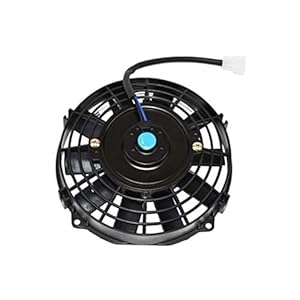
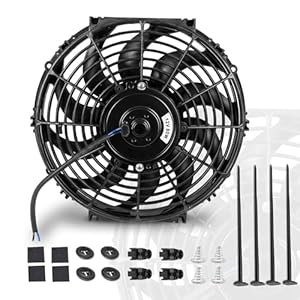
For demanding technical riding, riders may also consider compatible radiator guards and cooling fan upgrades where appropriate.
Direct OE-Style Replacement for Easier Installation
This aluminum radiator is advertised as a direct OE-style replacement for compatible Honda CRF450R and CRF450RX motorcycles.
A vehicle-specific radiator is intended to simplify installation by matching the factory mounting arrangement and coolant hose locations.
Advantages of Direct-Fit Design
Factory-Style Mounting: Intended to align with the original radiator mounting points.
Compatible Hose Routing: Designed to support the original cooling system layout.
Reduced Fabrication: A properly matched replacement radiator generally avoids custom brackets or major modifications.
Cleaner Installation: The radiator is designed to fit within the motorcycle’s existing bodywork and frame configuration.
Before installation, compare the replacement radiator with the original component and verify mounting tabs, hose connections, and clearance around the fuel tank and radiator shrouds.
How to Replace a Honda CRF450R or CRF450RX Radiator
Replacing a damaged radiator can be a manageable maintenance project for experienced motorcycle owners.
However, proper coolant handling, hose connections, and mounting alignment are essential.
Step 1: Allow the Engine to Cool
Park the motorcycle securely and allow the engine to cool completely.
Never remove the radiator cap while the cooling system is hot or pressurized.
Step 2: Remove the Necessary Bodywork
Remove the radiator shrouds and any components obstructing access to the radiator.
Follow the appropriate Honda service manual for the specific model year.
Step 3: Drain the Cooling System
Position a suitable drain pan beneath the motorcycle.
Drain the coolant according to the factory service procedure.
Inspect the coolant for contamination, debris, or unusual discoloration.
Step 4: Remove the Damaged Radiator
Disconnect the coolant hoses and any crossover connections attached to the radiator.
Remove the radiator mounting hardware.
Carefully remove the damaged radiator without stressing surrounding hoses or components.
Step 5: Compare the Replacement Radiator
Before installation, compare the new radiator with the original.
Check:
- Core dimensions.
- Mounting tab positions.
- Coolant hose connections.
- Radiator cap neck, if applicable.
- Clearance around the frame and bodywork.
- Compatibility with any installed radiator guards.
Do not force a radiator into position if the mounting points or hose connections do not match.
Step 6: Install the Aluminum Radiator
Position the replacement radiator in the factory mounting area.
Install the appropriate mounting hardware according to Honda’s service specifications.
Reconnect the coolant hoses and verify that clamps are securely positioned.
Ensure the hoses are not twisted, kinked, or contacting sharp surfaces.
Step 7: Refill the Cooling System
Refill the system using coolant that meets Honda’s specifications for the motorcycle.
Follow the factory coolant filling and air-removal procedure.
Trapped air can interfere with coolant circulation and contribute to overheating.
Step 8: Inspect for Leaks and Proper Operation
Start the engine and allow it to reach normal operating temperature while monitoring for leaks.
Inspect the radiator, hose connections, and coolant fittings.
After the engine cools completely, recheck the coolant level.
Common Honda CRF450R Radiator Problems
Motocross and off-road motorcycles can develop cooling system problems for several reasons.
Bent Radiator Core
Falls or contact with obstacles can bend the radiator and restrict airflow.
Coolant Leaks
Impact damage, cracked joints, or loose hose connections can cause coolant loss.
Clogged Cooling Fins
Mud, dirt, and debris can restrict airflow through the radiator.
Damaged Radiator Hoses
Worn or damaged hoses may leak coolant or restrict circulation.
Faulty Radiator Cap
An incorrect or malfunctioning radiator cap can interfere with proper cooling system pressure.
Trapped Air
Air pockets introduced during maintenance can interfere with coolant circulation.
Engine Overheating During Slow Riding
Extended low-speed riding can reduce natural airflow through the radiator.
A properly functioning radiator is important, but additional cooling solutions may be necessary for certain riding conditions.
Complete Your Honda CRF450 Cooling System Maintenance
When replacing the radiator, inspect the surrounding cooling system components.
Coolant Hoses: Replace hoses showing cracks, swelling, or deterioration.
Radiator Cap: Confirm proper operation and the correct pressure rating.
Coolant: Use a motorcycle-compatible coolant that meets Honda’s specifications.
Radiator Guards: Consider compatible guards to help protect the radiator against trail impacts.
Water Pump: Inspect for leaks and other signs of wear.
Radiator Shrouds: Confirm proper installation and airflow through the radiator.
Cooling Fan: Where applicable, inspect any installed fan system for proper operation.
Explore additional motorcycle cooling components, performance parts, and maintenance accessories at Pro Street Online.
Is This Aluminum Radiator Worth It for Your Honda CRF450?
For Honda CRF450R and CRF450RX owners replacing a damaged radiator, this full-aluminum replacement offers several practical advantages.
Its vacuum-brazed construction, OE-style fitment design, and vehicle-specific core dimensions make it an appealing replacement for compatible motorcycles.
This radiator may be particularly useful for riders who:
- Own a 2017–2020 Honda CRF450R.
- Own a 2017–2018 Honda CRF450RX.
- Need to replace a bent or leaking radiator.
- Want to restore cooling system performance.
- Prefer aluminum radiator construction.
- Maintain a motocross or off-road competition motorcycle.
- Want an OE-style replacement without custom fabrication.
Proper fitment remains the most important consideration.
Confirm the exact motorcycle model, year, radiator side, and package contents before ordering.
Restore Honda CRF450R Cooling Performance at Pro Street Online
Whether you’re preparing your CRF450R for motocross practice, maintaining a CRF450RX for trail riding, or replacing a damaged radiator after a hard ride, reliable cooling is essential.
The Full Aluminum Radiator for 2017–2020 Honda CRF450R and 2017–2018 Honda CRF450RX features vacuum-brazed aluminum construction, vehicle-specific core dimensions, and an OE-style replacement design.
Built for compatible Honda 450cc off-road motorcycles, this radiator offers a practical way to restore cooling system reliability and keep your bike ready for its next ride.
Shop Honda CRF450R radiators, motorcycle cooling upgrades, and performance maintenance parts at www.ProStreetOnline.com.





There are no reviews yet.