

Benefits of Aluminum Radiator Construction
Improved Durability: Welded aluminum tanks eliminate certain failure points associated with aging plastic end tanks.
Heat Transfer: Aluminum provides effective thermal conductivity for automotive cooling applications.
Performance Applications: Aluminum radiators are commonly used in vehicles exposed to demanding operating conditions.
Corrosion Resistance: Proper coolant chemistry helps protect aluminum cooling components.
Long-Term Serviceability: Durable construction can support dependable operation when properly installed and maintained.
The radiator’s overall durability still depends on coolant maintenance, installation quality, vibration control, and operating conditions.
Two-Row 1.65-Inch Cooling Core
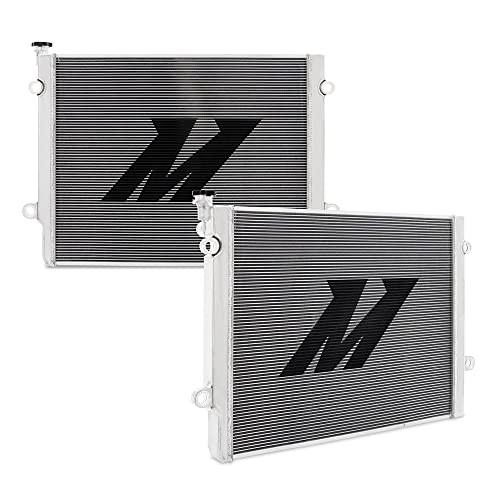
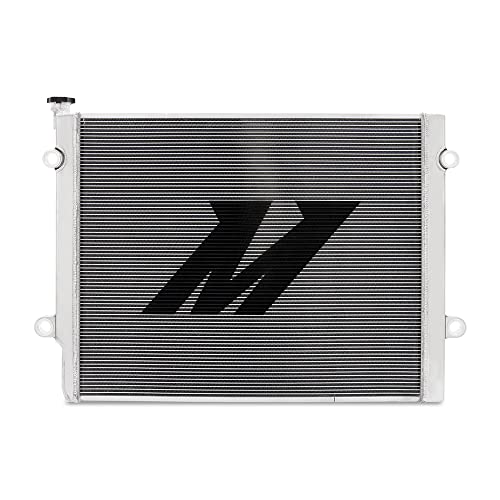
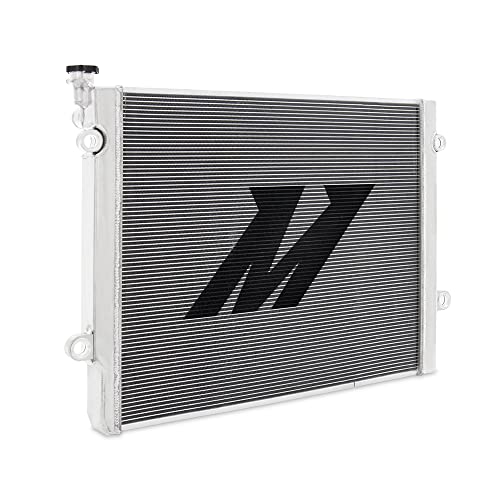
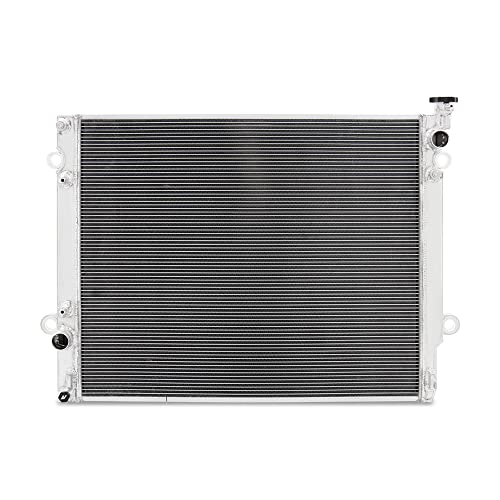
The Mishimoto Tacoma radiator features a two-row aluminum cooling core measuring 1.65 inches thick.
The core is engineered to increase heat-transfer capability while maintaining a vehicle-specific design.
Why Core Thickness Matters
Radiator core thickness affects the amount of cooling surface and coolant capacity available within the radiator.
However, thicker radiators do not automatically provide better cooling.
Cooling performance depends on the interaction between:
- Radiator tube design.
- Core thickness.
- Fin density.
- Coolant flow.
- Cooling fan performance.
- Vehicle airflow.
- Engine operating conditions.
Mishimoto’s two-row core is designed to balance these factors for improved heat rejection.
28% Greater Radiator Core Volume
According to Mishimoto, this radiator provides a 28% increase in core volume compared with the original Tacoma radiator.
Greater core volume can provide additional coolant capacity within the radiator assembly.
It also reflects the larger internal cooling structure used in the performance design.
Why Increased Core Volume Matters
- Provides additional radiator core capacity.
- Supports the performance-oriented cooling design.
- Can help accommodate demanding engine operating conditions.
- Complements the radiator’s increased heat-transfer surface area.
Core volume is only one factor in cooling performance.
Proper coolant circulation and airflow remain essential.
91% More External Fin Surface Area
One of the radiator’s most significant design improvements is its increased external fin surface area.
Mishimoto reports a 91% increase in external fin surface area compared with the factory radiator.
Radiator fins transfer heat from the coolant tubes into the surrounding airflow.
Increasing the effective fin surface area can improve the radiator’s ability to reject heat.
Benefits of Increased Fin Surface Area
Greater Heat-Transfer Potential: More external fin surface provides additional area for coolant heat to transfer into passing air.
Improved Cooling Efficiency: The engineered fin arrangement supports the radiator’s reported heat-rejection improvement.
Performance Applications: Increased heat-transfer capability can be useful during sustained engine operation.
Efficient Core Design: The fin arrangement helps maximize available cooling surface within the radiator package.
Fin density must also be balanced against airflow resistance.
Mishimoto’s reported results reflect its complete radiator design rather than fin count alone.
30.2% Greater Heat Rejection Than Stock
Mishimoto reports that its Tacoma performance radiator achieves 30.2% greater heat rejection than the factory radiator.
Heat rejection measures how effectively a radiator transfers heat away from the coolant.
This is particularly important when an engine operates under sustained load.
When Improved Heat Rejection Matters
Off-Road Driving: Slow-speed trails can place greater demands on the cooling fans because natural airflow is limited.
Towing: Pulling trailers increases engine load and heat generation.
Mountain Driving: Extended climbs can increase cooling system demands.
Hot Weather: Higher ambient temperatures reduce the temperature difference between coolant and outside air.
Modified Trucks: Performance modifications can increase heat output under demanding conditions.
Important: The 30.2% improvement is a manufacturer-reported test result. Actual operating temperatures and cooling benefits depend on the vehicle, airflow, coolant circulation, and driving conditions.
Mishimoto Toyota Tacoma Radiator Technical Specifications
| Specification | Details |
|---|---|
| Manufacturer | Mishimoto |
| Product Type | Performance Aluminum Radiator |
| Advertised Application | Toyota Tacoma |
| Advertised Model Years | 2016+ |
| Engine Compatibility | 2.7L I4 / 3.5L V6 |
| Radiator Construction | All-Aluminum |
| End Tank Construction | Precision TIG-Welded Aluminum |
| Core Configuration | Two-Row |
| Core Thickness | 1.65 Inches |
| Core Volume Increase | 28% vs. Stock |
| External Fin Surface Area Increase | 91% vs. Stock |
| Heat Rejection Improvement | 30.2% vs. Stock |
| Installation Type | Advertised Direct Fit |
| Warranty | Mishimoto Lifetime Warranty |
| Core Height / Width | Not Provided |
| Overall Dimensions | Not Provided |
| Inlet / Outlet Diameters | Not Provided |
| Transmission Cooler | Not Specified |
| Radiator Cap | Not Specified |
| Product Part Number | Not Provided |
Fitment note: The supplied description uses “2016+,” but Tacoma generations and cooling system configurations have changed since 2016. Verify the exact model-year coverage using Mishimoto’s current application catalog before listing compatibility.
2016+ Toyota Tacoma 2.7L Radiator Upgrade
The 2.7L four-cylinder Tacoma is popular among owners who value simplicity, reliability, and everyday utility.
Although the four-cylinder engine has different cooling requirements from the V6, maintaining a dependable cooling system remains essential.
The Mishimoto radiator is advertised for compatible 2.7L Tacoma applications.
Benefits for 2.7L Tacoma Owners
- All-aluminum radiator construction.
- Improved resistance to certain plastic end-tank failures.
- Manufacturer-reported increased heat rejection.
- Performance-oriented cooling core.
- Vehicle-specific replacement design.
Verify the original radiator dimensions, hose connections, transmission configuration, and mounting arrangement before purchasing.
2016+ Toyota Tacoma 3.5L V6 Radiator Upgrade
The 3.5L V6 Tacoma is a popular platform for towing, off-road driving, and overland builds.
These activities can increase engine load and cooling system demands.
The Mishimoto radiator is advertised for compatible 3.5L V6 applications.
Benefits for 3.5L Tacoma Owners
Off-Road Cooling: Increased radiator heat-transfer capability can be useful during slow-speed operation.
Towing Support: Proper engine cooling helps manage heat generated during sustained towing.
Performance Durability: TIG-welded aluminum construction eliminates plastic radiator end tanks.
Long-Term Reliability: A properly installed radiator can help maintain cooling system performance.
Modified Truck Applications: Performance-oriented cooling can complement compatible engine and vehicle upgrades.
An upgraded radiator cannot compensate for a malfunctioning thermostat, weak water pump, or improperly functioning cooling fan.
Ideal for Tacoma Off-Road and Overland Builds
The Toyota Tacoma is one of the most popular platforms for off-road and overland modifications.
Owners commonly add larger tires, aftermarket bumpers, skid plates, roof racks, camping equipment, and other accessories.
These modifications can increase vehicle weight and, in some cases, alter airflow through the engine compartment.
Off-Road Cooling Considerations
Low-Speed Trails: Cooling fans become especially important when vehicle speed is low.
Long Climbs: Sustained engine load increases heat generation.
Heavy Accessories: Added weight can increase engine workload.
Hot Weather: High ambient temperatures make cooling system efficiency more important.
Restricted Airflow: Aftermarket bumpers, lighting, and accessories may affect airflow through the radiator.
A properly sized radiator and functioning cooling fan system are essential for dependable off-road operation.
How to Install a Mishimoto Aluminum Radiator on a Toyota Tacoma
Replacing the radiator on a Toyota Tacoma can be a manageable project for experienced DIY mechanics.
However, installation procedures vary by model year, engine, transmission, and cooling system configuration.
Step 1: Allow the Engine to Cool
Park the truck on a level surface and allow the engine to cool completely.
Never remove the radiator cap or pressurized coolant reservoir cap while the cooling system is hot.
Step 2: Drain the Cooling System
Position a suitable drain pan beneath the radiator.
Drain the coolant according to the factory service procedure.
Inspect the coolant for corrosion, contamination, or debris.
Step 3: Remove the Factory Radiator
Disconnect the upper and lower radiator hoses.
Remove the cooling fan shroud and any components obstructing radiator removal.
Disconnect transmission cooler lines only where applicable.
Remove the radiator mounting hardware.
Carefully lift the original radiator from the engine compartment.
Step 4: Compare the Replacement Radiator
Before installation, compare the Mishimoto radiator with the original.
Verify:
- Overall radiator dimensions.
- Mounting bracket locations.
- Upper and lower hose connections.
- Cooling fan and shroud clearance.
- Transmission cooler compatibility, if applicable.
- Radiator cap or pressure-control configuration.
- Clearance around engine accessories.
Do not force the radiator into position if the mounting points or hose connections do not match.
Step 5: Install the Mishimoto Radiator
Position the aluminum radiator into the factory mounting area.
Confirm that the radiator sits securely and that the mounting points align correctly.
Install the appropriate mounting hardware.
Step 6: Reconnect Radiator Hoses
Reconnect the upper and lower radiator hoses using suitable clamps.
Inspect the hoses for cracking, swelling, or deterioration.
Replace damaged hoses before refilling the cooling system.
Step 7: Reconnect Transmission Cooler Lines
If the vehicle and radiator use integrated transmission cooling, reconnect the cooler lines according to the applicable instructions.
Confirm fitting compatibility before installation.
Do not modify transmission cooling connections without an approved procedure.
Step 8: Refill and Bleed the Cooling System
Refill the system using coolant that meets Toyota specifications for the engine and model year.
Follow the factory coolant filling and air-removal procedure.
Trapped air can interfere with coolant circulation and cause overheating.
Step 9: Verify Cooling System Operation
Start the engine and monitor coolant temperature.
Confirm that the thermostat opens and the cooling fans operate correctly.
Inspect all radiator hose connections for leaks.
After the engine cools, recheck coolant level and mounting hardware.
Common Toyota Tacoma Cooling System Problems
A radiator replacement may be necessary when the original cooling system develops leaks, restrictions, or physical damage.
Cracked Plastic Radiator Tanks
Repeated heating and cooling cycles can weaken aging plastic components.
Restricted Cooling Passages
Corrosion, contamination, and deposits can reduce coolant flow.
Leaking Radiator Seals
Aging seals can allow coolant to escape from the radiator assembly.
Damaged Cooling Fins
Bent or clogged fins can restrict airflow and reduce heat transfer.
Cooling Fan Problems
A malfunctioning fan or fan control system can reduce airflow through the radiator.
Thermostat Failure
A faulty thermostat can restrict coolant circulation and contribute to overheating.
Water Pump Problems
A failing water pump can cause coolant leakage or reduced circulation.
Trapped Air in the Cooling System
Improper coolant bleeding can create air pockets and cause overheating.
Before replacing components, inspect the complete cooling system and identify the underlying cause.
Complete Your Toyota Tacoma Cooling System Upgrade
When replacing the radiator, consider inspecting related components.
Radiator Hoses: Replace hoses showing cracks, swelling, or deterioration.
Thermostat: Verify correct operation and replace it when necessary.
Water Pump: Inspect for coolant leaks, bearing noise, and other signs of failure.
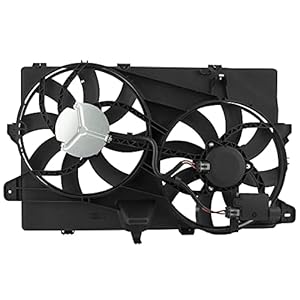
Cooling Fan Assembly: Confirm proper operation and adequate airflow through the radiator.
Radiator Cap: Verify the correct pressure rating for the cooling system.
Coolant: Use a coolant formulation appropriate for the engine and model year.
Transmission Cooling System: Inspect the original cooling configuration and verify compatibility with the replacement radiator.
Airflow Management: Check that aftermarket bumpers, accessories, and off-road equipment do not excessively restrict radiator airflow.
Explore additional Toyota Tacoma, Mishimoto, and performance cooling components at Pro Street Online.
Is the Mishimoto Tacoma Aluminum Radiator Worth It?
For Tacoma owners seeking a durable performance cooling upgrade, the Mishimoto radiator offers several meaningful advantages over a conventional factory-style replacement.
Its all-aluminum construction, TIG-welded end tanks, increased core volume, and manufacturer-reported heat-rejection improvement make it an appealing choice for compatible applications.
This radiator may be particularly useful for owners who:
- Want to replace an aging factory radiator.
- Drive a compatible 2016+ Toyota Tacoma.
- Prefer all-aluminum radiator construction.
- Use their Tacoma for towing or hauling.
- Frequently drive off-road or on mountain trails.
- Are building an overland Tacoma.
- Want increased cooling core capacity.
- Value Mishimoto’s lifetime warranty coverage.
Proper fitment remains the most important consideration.
Confirm the vehicle’s model year, engine, transmission, original radiator dimensions, and cooling system configuration before purchasing.
Upgrade Your Toyota Tacoma Cooling System with Mishimoto at Pro Street Online
Whether you’re maintaining a daily-driven Tacoma, preparing for an off-road adventure, or upgrading a modified truck for demanding use, dependable engine cooling is essential.
The Mishimoto Performance Aluminum Radiator for 2016+ Toyota Tacoma 2.7L and 3.5L combines precision TIG-welded aluminum construction, a two-row 1.65-inch core, and significantly increased heat-transfer surface area in a performance-oriented replacement package.
With manufacturer-reported improvements of 30.2% greater heat rejection, 91% more external fin surface area, and 28% greater core volume, this radiator is engineered to deliver improved cooling performance compared with the original radiator.
Backed by the Mishimoto Lifetime Warranty, it offers a compelling upgrade for compatible Tacoma owners seeking performance, durability, and long-term cooling system reliability.
Shop Mishimoto performance radiators, Toyota Tacoma cooling upgrades, aluminum radiators, and off-road performance parts at www.ProStreetOnline.com.





There are no reviews yet.