
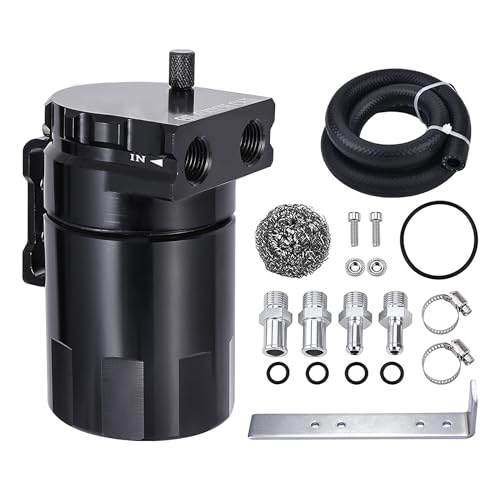
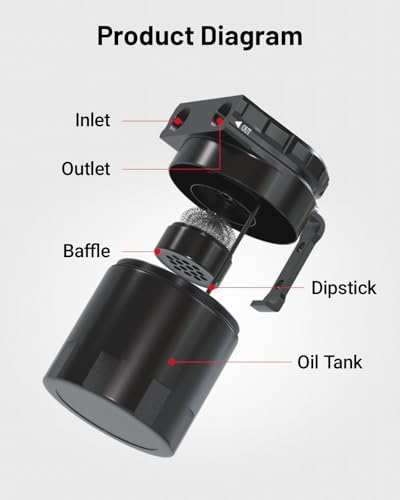
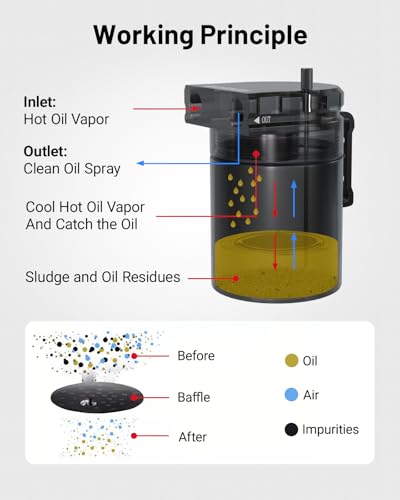
Removable Baffle and Optional Steel Wool Filtering Media
The internal baffle is an important part of the EVIL ENERGY catch can design.
Instead of allowing crankcase vapors to travel directly from the inlet to the outlet, the baffle creates a less direct flow path.
This can help encourage suspended oil droplets to separate from the ventilation gases.
The manufacturer also describes the option of adding a suitable amount of steel wool-style filtering material.
Why Filtering Media Matters
Additional filtering media may provide more surface area for oil mist to collect.
However, excessive or improperly secured media can restrict airflow or shed fibers into the PCV system.
Use only clean, suitable, securely retained filtering media approved for the catch can. Avoid overpacking the reservoir.
Important: A baffled oil catch can may reduce oil contamination entering the intake, but it cannot guarantee the prevention of carbon buildup, especially on direct-injection engines.
300ml Capacity for Compact Engine Bay Installations
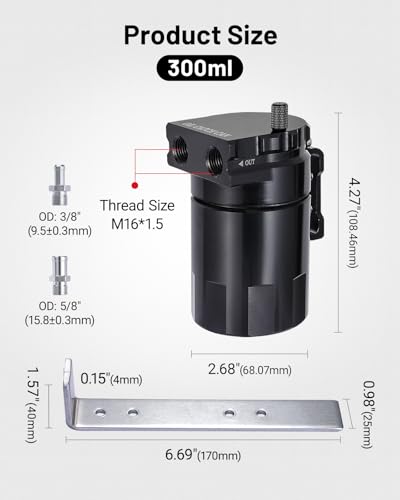
The EVIL ENERGY catch can has a nominal collection capacity of 300 milliliters, equivalent to approximately 10.1 US fluid ounces.
This compact capacity makes it useful for installations where engine bay space is limited.
The amount of oil and moisture collected depends on engine condition, operating temperature, blow-by volume, driving habits, and climate.
A catch can should be checked frequently after initial installation to establish an appropriate service interval.
Includes 3/8-Inch NBR Rubber Hose
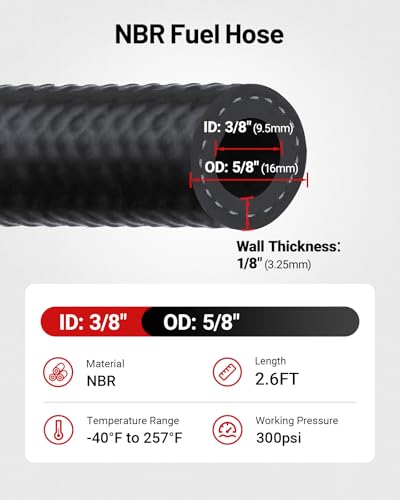
The supplied kit includes an NBR rubber hose intended for compatible crankcase ventilation plumbing.
| Hose Specification | Measurement |
|---|---|
| Hose material | NBR rubber |
| Hose length | 2.6 feet (0.8m) |
| Inside diameter | 3/8 inch (9.5mm) |
| Outside diameter | Approximately 2/3 inch (16.9mm) |
| Intended use | Compatible crankcase ventilation connections |
NBR rubber is commonly used in automotive applications involving petroleum-based fluids.
However, the supplied hose should not automatically be considered suitable for fuel injection, brake hydraulics, or other high-pressure applications.
Its use in this kit is for compatible PCV and crankcase ventilation plumbing.
M16 × 1.5 Threaded Inlet and Outlet Ports
The EVIL ENERGY catch can features two threaded ports with an M16 × 1.5 thread specification.
These ports accept appropriately matched fittings.
The M16 × 1.5 measurement refers to the threaded connection on the catch can body, not the inside diameter of the supplied rubber hose.
Before installation, confirm that the supplied or separately purchased fittings are compatible with both the M16 × 1.5 ports and the intended PCV hose diameter.
Do not force NPT or AN-threaded fittings into the metric ports.
Closed PCV System vs. Breather Filter Installation
One of the most important decisions when installing an oil catch can is whether to retain a closed crankcase ventilation system.
Closed PCV Installation
For most modern street-driven vehicles, the appropriate configuration is a sealed inline catch can installed in a compatible PCV hose circuit.
The system continues routing crankcase vapors into the intake rather than releasing them to the atmosphere.
Breather Filter Installation
Some older engines and specialized off-road or racing applications use open crankcase ventilation arrangements.
A breather filter may be used in certain purpose-built systems, but adding one to a modern closed PCV system can introduce unmetered air, cause drivability issues, affect emissions compliance, or interfere with crankcase pressure management.
Recommendation: For modern EFI street vehicles, retain the original closed-PCV function unless an engine-specific, emissions-compliant alternative has been engineered and approved.
EVIL ENERGY 300ml Baffled Oil Catch Can Specifications
| Specification | Details |
|---|---|
| Brand | EVIL ENERGY |
| Product type | Baffled Oil Catch Can / PCV Oil Separator |
| Capacity | 300ml |
| Port configuration | 2-port |
| Inlet thread | M16 × 1.5 |
| Outlet thread | M16 × 1.5 |
| Internal design | Removable baffle |
| Optional media | Steel wool-style filtering media |
| Included hose | NBR rubber |
| Hose length | 2.6ft (0.8m) |
| Hose inside diameter | 3/8 inch |
| Hose outside diameter | Approximately 2/3 inch |
| Installation | Universal custom PCV plumbing |
| Vehicle-specific fitment | No |
| Mounting hardware | Verify package contents |
| Breather filter | Verify package contents |
| Housing material | Not specified in supplied description |
| Color | Not specified in supplied description |
The manufacturer description does not establish exact housing material, supplied fitting sizes, bracket contents, or whether a breather filter is included. Confirm the specific kit variant before publishing these as included items.
What Vehicles Does the EVIL ENERGY 300ml Catch Can Fit?
This is a universal aftermarket catch can rather than a vehicle-specific bolt-on kit.
It may be adapted to compatible crankcase ventilation systems when the hose diameter, available mounting space, and PCV architecture are suitable.
| Vehicle / Engine Platform | Potential Custom Application |
|---|---|
| Chevrolet Camaro / Corvette LS | Closed-PCV oil vapor separation |
| Chevrolet Silverado / GMC Sierra | Custom LS-based crankcase ventilation |
| Ford Mustang 5.0L | Aftermarket PCV hose modifications |
| Honda Civic / Acura Integra | Custom crankcase ventilation plumbing |
| Nissan 240SX SR20DET / KA24 | Turbo or naturally aspirated PCV systems |
| Toyota Supra 2JZ | Custom oil vapor separation |
| Lexus IS300 2JZ-GE | Compatible custom PCV plumbing |
| Mitsubishi Lancer Evolution | Modified turbocharged crankcase ventilation |
| Subaru WRX / STI | Custom PCV oil separation |
| BMW turbocharged engines | Engine-specific custom installation |
Fitment warning: These are potential applications, not confirmed direct-fit installations. Some engines use multiple crankcase ventilation paths, integrated oil separators, or specialized PCV pressure regulation.
A single two-port catch can may not be suitable for every ventilation circuit.
How to Install the EVIL ENERGY 300ml Oil Catch Can
-
Identify the engine’s PCV hose routing and determine whether a catch can is appropriate for the intended circuit.
-
Measure the original hose inside diameter and verify compatibility with the supplied 3/8-inch hose.
-
Choose a mounting location away from exhaust heat, belts, fans, and other moving components.
-
Confirm adequate clearance for removing and servicing the reservoir.
-
Install the correct M16 × 1.5 fittings into the catch can ports.
-
Secure the catch can using appropriate mounting hardware.
-
Connect the crankcase-side hose to the inlet.
-
Connect the outlet to the intended intake-side PCV connection.
-
Use suitable hose clamps and support the hoses to prevent kinking or abrasion.
-
Start the engine and check for vacuum leaks, abnormal crankcase pressure, and loose connections.
-
Inspect the catch can after initial operation and establish a maintenance schedule.
Important Installation Precautions
-
Do not block or restrict the crankcase ventilation system.
-
Do not eliminate required PCV valves or pressure regulators.
-
Do not install the catch can in a location exposed to excessive exhaust heat.
-
Do not assume the supplied hose fits every vehicle.
-
Do not overpack the catch can with filtering media.
-
Do not route crankcase vapors into an unintended intake connection.
Cold Weather Warning: Prevent Catch Can Freezing
Oil catch cans can collect water vapor that condenses during normal engine operation.
In freezing conditions, accumulated moisture can freeze inside the reservoir, hoses, or fittings.
A blocked crankcase ventilation system can cause excessive crankcase pressure, oil leaks, and other engine problems.
EVIL ENERGY recommends inspecting and cleaning the catch can weekly in freezing weather or returning to the original PCV hose arrangement when appropriate.
For vehicles regularly operated in cold climates, additional engine-specific cold-weather considerations may be necessary.
How Often Should You Empty an Oil Catch Can?
The correct maintenance interval depends on how quickly the catch can collects oil and moisture.
During the first several weeks after installation, inspect the reservoir frequently.
Short trips and cold weather can increase condensation, while worn engines or heavily modified turbocharged engines may generate more crankcase vapor.
Empty the catch can before the collected fluid approaches the internal baffle or begins restricting ventilation.
Clean the reservoir and inspect the hose connections and seals during routine maintenance.
Frequently Asked Questions
Will an oil catch can increase horsepower?
An oil catch can does not directly create horsepower. Its primary function is to help separate oil mist and moisture from crankcase ventilation gases.
Does a catch can prevent carbon buildup?
It may reduce the amount of oil mist entering the intake, but it cannot guarantee the prevention of intake valve deposits or carbon buildup.
Can I install this on a turbocharged engine?
Potentially, provided the catch can, hoses, and fittings are suitable for the engine’s crankcase ventilation system and pressure conditions.
Does the kit include a hose?
Yes. The supplied description specifies a 2.6-foot NBR rubber hose with a 3/8-inch inside diameter.
Can I install this catch can on a Lexus IS300?
It may be adapted to a compatible PCV circuit on a first-generation IS300, but the installation requires verification of hose sizing, mounting clearance, and the factory ventilation layout.
Should I use a breather filter?
Most modern street-driven vehicles should retain a properly functioning closed PCV system. A breather filter should only be used where the engine design and applicable regulations permit it.
Buy the EVIL ENERGY 300ml Baffled Oil Catch Can Kit at Pro Street Online
Help manage crankcase oil vapor with the EVIL ENERGY 300ml Universal Baffled Oil Catch Can Kit.
Featuring a removable baffle, serviceable collection reservoir, two M16 × 1.5 ports, and 2.6 feet of NBR rubber hose, this kit offers a customizable solution for compatible PCV oil separation applications.
Shop oil catch cans, engine ventilation components, and performance engine upgrades at Pro Street Online





There are no reviews yet.