
Vehicle Fitment Chart
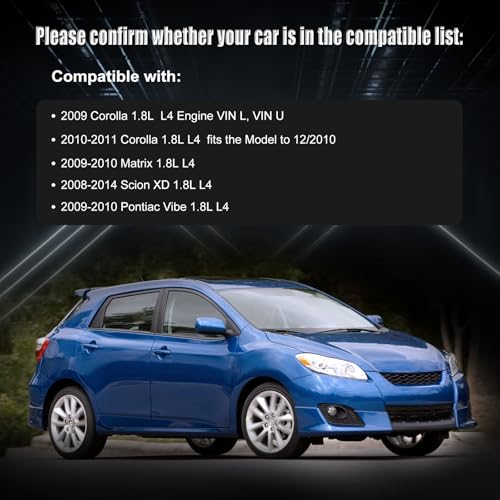
| Vehicle | Years | Engine | Important fitment notes |
|---|---|---|---|
| Toyota Corolla | 2009 | 1.8L L4 | VIN L and VIN U applications listed |
| Toyota Corolla | 2010–2011 | 1.8L L4 | Advertised for production through December 2010 |
| Toyota Matrix | 2009–2010 | 1.8L L4 | Verify OE number |
| Scion xD | 2008–2014 | 1.8L L4 | Verify pulley and connector |
| Pontiac Vibe | 2009–2010 | 1.8L L4 | Toyota-derived 1.8L application |
The 2009–2011 Toyota Corolla is particularly important because engine options and production changes can affect replacement-part compatibility.
For 2011 Corolla models, the advertised December 2010 production cutoff should be checked against the vehicle’s manufacturing date.
Likewise, this listing does not establish compatibility with the larger 2.4-liter engines offered in certain Corolla, Matrix, and Vibe configurations.
Toyota Corolla 1.8L Alternator Replacement
The 2009–2011 Corolla 1.8L is a common application for the 11385 alternator.
If your Corolla has a battery warning light, low charging voltage, or an alternator bearing making noise, this replacement may be worth considering.
Before buying, confirm the original alternator’s OE number and check the production-date restrictions.
Toyota Matrix Alternator Replacement
The 2009–2010 Toyota Matrix 1.8L shares several powertrain components with the Corolla.
That makes the 11385 alternator a potential replacement for compatible Matrix models.
Owners of 2.4L Matrix models should not assume interchangeability.
Scion xD Alternator Replacement
The 2008–2014 Scion xD uses a Toyota 1.8-liter four-cylinder engine, making it another advertised application for the 11385 replacement.
For owners maintaining a higher-mileage Scion xD, a failed alternator can cause battery discharge and eventual loss of electrical power.
Pontiac Vibe Alternator Replacement
The 2009–2010 Pontiac Vibe 1.8L uses Toyota-derived engine technology, which explains why certain charging-system components overlap with Toyota applications.
The 11385 alternator is advertised for these 1.8L Vibe models.
Do not assume compatibility with the 2.4L engine.
11385 Alternator OEM Cross-Reference Numbers
Matching an alternator by its OE number is often more reliable than shopping by vehicle model alone.
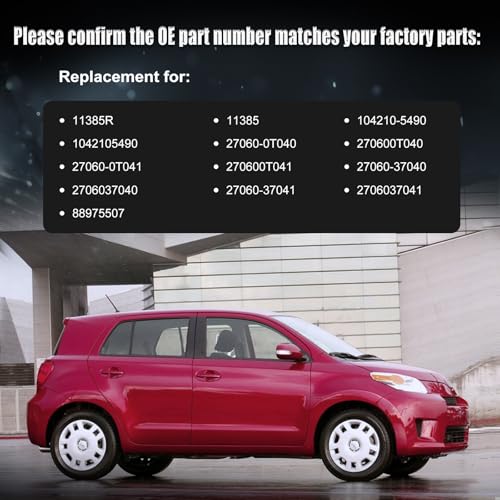
The product listing provides the following cross-references:
| Reference number | Alternate formatting |
|---|---|
| 11385 | 11385R |
| 104210-5490 | 1042105490 |
| 27060-0T040 | 270600T040 |
| 27060-0T041 | 270600T041 |
| 27060-37040 | 2706037040 |
| 27060-37041 | 2706037041 |
| 88975507 | — |
These are manufacturer-advertised cross-references. Their inclusion does not independently establish compatibility with every vehicle in the fitment chart.
If the original alternator has a matching OE number, that provides a useful starting point, but physical and electrical compatibility should still be confirmed.
Why a 100-Amp Alternator Matters
Your alternator does more than keep the battery charged.
When the engine is running, the charging system supplies electricity to essential components such as:
- Engine control modules and ignition components
- Fuel injection system
- Headlights and exterior lighting
- Heater and air-conditioning blower
- Audio and infotainment equipment
- Rear-window defroster
- Other electrical accessories
The 11385 alternator’s advertised 100-amp rating makes it a candidate for restoring the factory charging capacity of compatible vehicles.
However, this should be considered a stock-replacement alternator, not a verified high-output upgrade for heavily modified electrical systems.
If you’re running powerful aftermarket amplifiers, additional lighting, or other high-current accessories, calculate your vehicle’s electrical demand before purchasing.
Signs Your Toyota Corolla Alternator Is Going Bad
A failing alternator doesn’t always quit without warning.
In many cases, drivers experience several symptoms before the charging system stops working altogether.
1. Battery Warning Light Stays On
If the battery warning light remains illuminated while driving, your Corolla may have a charging-system problem.
The warning can indicate insufficient alternator output, a drive-belt problem, damaged wiring, or another electrical fault.
2. Headlights Flicker or Dim
A weakening charging system can cause noticeable changes in headlight brightness.
This is particularly apparent when electrical demand increases at idle.
3. Battery Keeps Going Dead
A bad alternator can leave your battery partially or completely discharged.
However, a failing battery, parasitic electrical draw, or loose battery connection can produce the same symptoms.
Before spending money on replacement parts, follow our guide to testing alternator output with a multimeter to understand the basic electrical checks.
4. Grinding or Whining Noise
Worn alternator bearings may produce grinding, whining, or rattling sounds that increase with engine speed.
A failing pulley, belt tensioner, or other accessory-drive component can create similar noises.
5. Electrical Accessories Behave Strangely
Unstable charging voltage may contribute to electronic problems, including intermittent warning lights and unusual accessory behavior.
Because these symptoms can have several causes, testing should come before replacement.
How to Test the Alternator Before Buying a Replacement
One of the most common DIY mistakes is replacing an alternator without confirming that it has failed.
Fortunately, basic charging-system diagnosis is possible with an inexpensive digital multimeter.
Step 1: Check Battery Voltage
With the engine off and the battery rested, measure voltage across the battery terminals.
A fully charged conventional 12V lead-acid battery typically reads approximately 12.6 volts.
Step 2: Start the Engine
With the engine running, measure voltage again.
Many conventional charging systems operate around 13.5–14.8 volts, although actual voltage depends on vehicle-specific charging controls and operating conditions.
Step 3: Turn On Electrical Accessories
Switch on the headlights, cabin blower, and rear defroster.
Watch for abnormal voltage drops or unstable charging behavior.
Step 4: Inspect the Charging Circuit
Check the alternator output cable, battery terminals, engine grounds, drive belt, and relevant fuses.
Voltage-drop testing can reveal resistance in electrical connections that a simple battery-voltage reading might miss.
Safety warning: Never disconnect the battery while the engine is running as an alternator test. Voltage spikes can damage electronic components.
How to Replace the Alternator on a Toyota Corolla 1.8L
Alternator replacement on compatible Toyota 1.8L engines is generally a reasonable project for experienced DIY mechanics.
However, access, fasteners, and installation procedures vary by model year and vehicle.
General Installation Steps
- Park the vehicle on a level surface and allow the engine to cool.
- Disconnect the negative battery cable.
- Identify the accessory belt routing before removal.
- Release the belt tension using the appropriate tensioner procedure.
- Disconnect the alternator electrical connector and main charging cable.
- Remove the alternator mounting fasteners.
- Carefully remove the original alternator.
- Compare the original unit against the replacement.
- Install the 11385 alternator using the correct factory mounting procedure and torque specifications.
- Reinstall the drive belt and verify pulley alignment.
- Reconnect the battery and test charging-system operation.
Always consult the correct vehicle service manual for model-specific instructions and torque values.
Important Installation Considerations
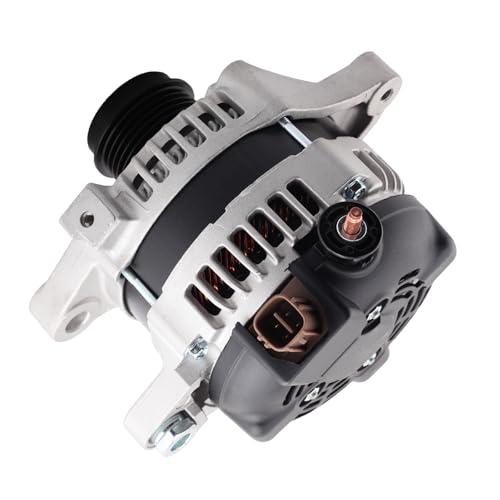
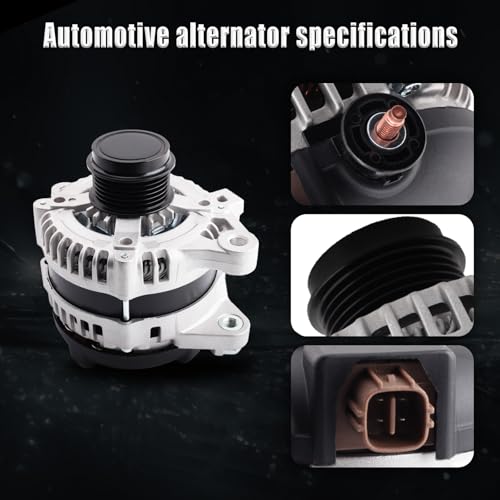
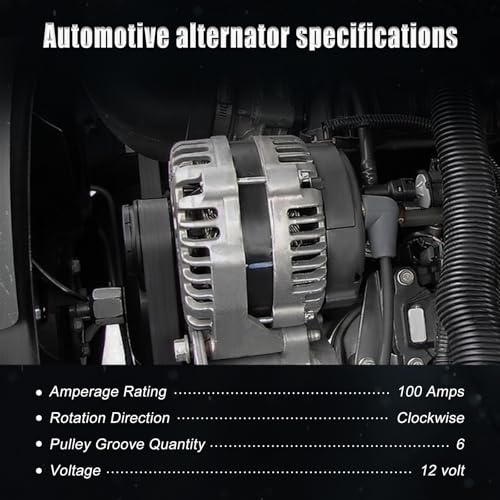
Check the pulley: The advertised replacement uses a six-groove pulley. Confirm it matches the original belt system.
Inspect the drive belt: Cracked, glazed, or contaminated belts can create charging problems and noise.
Inspect the connector: Never force an incompatible electrical connector into place.
Test the battery: A deeply discharged or damaged battery may create problems even after a functioning alternator has been installed.
Is the 11385 Alternator a Good Replacement?
The 11385 100A alternator is worth considering for owners of compatible Toyota Corolla, Matrix, Scion xD, and Pontiac Vibe models who need to restore normal charging-system operation.
Advantages
- Advertised compatibility with several popular 1.8L compact vehicles
- 100-amp rated output
- 12V electrical configuration
- Six-groove pulley design
- Multiple OE reference numbers for compatibility checks
- Potential aftermarket alternative to an original-equipment replacement
Things to Consider
The supplied product information does not identify a verified manufacturer, warranty duration, independent durability results, or actual selling price.
Therefore, it would be premature to claim that this alternator outperforms original Toyota equipment or delivers a specific cost saving.
Buyers should confirm the seller’s warranty, return policy, and exact vehicle compatibility before purchasing.
Frequently Asked Questions
Will the 11385 alternator fit a 2010 Toyota Corolla?
It is advertised for select 2010 Corolla models with the 1.8L four-cylinder engine. Verify the original alternator part number and electrical connector.
Does the 11385 alternator fit a 2011 Toyota Corolla?
The supplied listing specifies compatible 2011 applications with production dates through December 2010. Confirm the vehicle’s manufacturing date and OE part number.
Is this alternator compatible with a 2009 Pontiac Vibe?
The product is advertised for the 2009–2010 Pontiac Vibe equipped with the 1.8L engine.
Will this alternator fit a Toyota Matrix 2.4L?
The supplied fitment information covers the 1.8L Matrix only. Compatibility with the 2.4L engine is not established.
Is a 100-amp alternator enough for a Toyota Corolla?
A correctly matched 100-amp replacement is intended to meet the charging requirements of compatible factory-equipped vehicles. Modified electrical systems may require additional capacity.
What does alternator part number 104210-5490 mean?
It is one of the advertised OE cross-reference numbers associated with this replacement alternator. Always confirm interchangeability before purchasing.
Can I drive with a failing alternator?
A vehicle with a failed charging system may continue running briefly using battery power, but it can stall or fail to restart once voltage drops. Driving with a confirmed charging failure is not recommended.
Final Verdict: 11385 100A Alternator for Toyota 1.8L Applications
For owners of a compatible 2009–2011 Toyota Corolla, 2009–2010 Toyota Matrix, 2008–2014 Scion xD, or 2009–2010 Pontiac Vibe, the 11385 100-amp alternator provides an aftermarket replacement option worth evaluating.
Its advertised 12-volt configuration, 100-amp output, clockwise rotation, and six-groove pulley make it a potential fit for several popular 1.8-liter applications.
The key to a successful replacement is verifying the OE reference number and physical configuration before ordering.
Diagnose the charging system first, check the battery and belt, and make sure you’re purchasing the correct alternator.
After all, replacing a perfectly good alternator only to discover a loose battery cable isn’t exactly the kind of weekend project anyone looks forward to.



There are no reviews yet.