
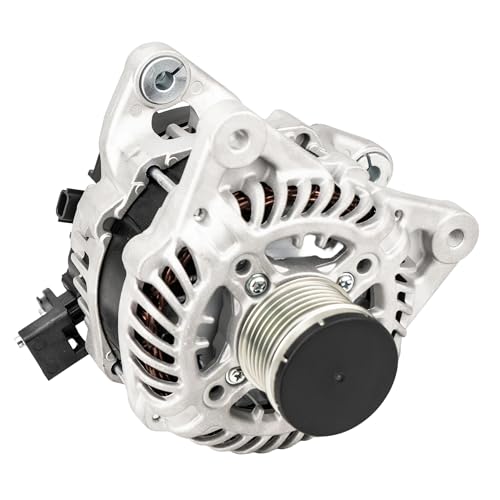


What Nissan Altima Models Does the 23100-6CA0A Alternator Fit?
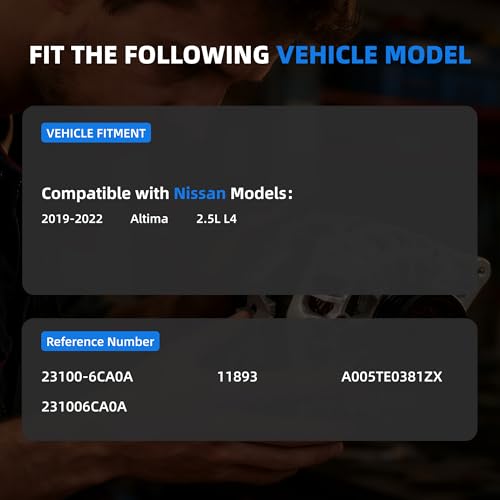
According to the supplied product listing, this alternator is designed for the following vehicles:
| Year | Make | Model | Engine |
|---|---|---|---|
| 2019 | Nissan | Altima | 2.5L L4 |
| 2020 | Nissan | Altima | 2.5L L4 |
| 2021 | Nissan | Altima | 2.5L L4 |
| 2022 | Nissan | Altima | 2.5L L4 |
These applications use Nissan’s 2.5-liter four-cylinder engine family.
The listing does not establish compatibility with Altima models equipped with the 2.0-liter VC-Turbo engine or vehicles outside the advertised model-year range.
Even when the engine displacement and model year match, confirm the original alternator’s part number, mounting configuration, pulley, and electrical connector.
Nissan Altima 2.5L Alternator Compatibility
The 2019–2022 Altima generation incorporates modern electrical management systems that control charging behavior according to operating conditions.
That makes correct alternator selection particularly important.
An aftermarket alternator must not only physically mount to the engine but also operate correctly with the vehicle’s electrical system.
A replacement with the wrong connector or charging-control characteristics can cause warning lights, charging problems, or electrical malfunctions.
23100-6CA0A Alternator OEM Cross-Reference Numbers
The manufacturer advertises compatibility with the following reference numbers:
| Part number | Description |
|---|---|
| 23100-6CA0A | Nissan OE reference |
| 231006CA0A | Same number without hyphen |
| 11893 | Aftermarket interchange reference |
| A005TE0381ZX | Alternator cross-reference |
These numbers are useful when comparing aftermarket products with the alternator originally installed in your vehicle.
However, cross-reference listings should be treated as compatibility guidance rather than a substitute for VIN-specific parts verification.
Before purchasing, compare the replacement’s mounting ears, pulley alignment, electrical connector, and charging specifications against the original alternator.
Why Choose a 120-Amp Alternator for Your Nissan Altima?
The alternator supplies electricity to the vehicle while the engine runs and replenishes energy used during starting.
On a modern Nissan Altima, that electrical power supports numerous systems, including:
- Engine control modules and ignition
- Fuel injection and electronic throttle controls
- Exterior lighting and interior electronics
- Climate control and blower motors
- Audio and infotainment systems
- Safety and driver-assistance electronics
- Battery charging and other electrical accessories
The 23100-6CA0A replacement is advertised with a 120-amp output rating to support compatible factory electrical systems.
This capacity is particularly important when multiple electrical accessories are operating simultaneously.
However, drivers with substantial aftermarket audio equipment or additional electrical accessories should not assume a 120-amp stock replacement will provide adequate additional capacity.
Signs Your 2019–2022 Nissan Altima Alternator Is Failing
Alternator problems can develop gradually, sometimes making them difficult to distinguish from battery failure.
1. Battery Warning Light
An illuminated battery warning light while driving may indicate a charging-system malfunction.
Although the symbol looks like a battery, the actual problem could involve the alternator, wiring, drive belt, or charging controls.
For a deeper explanation, read our battery warning light troubleshooting guide.
2. Repeatedly Dead Battery
If your Altima repeatedly needs jump-starting, the alternator may not be restoring enough energy to the battery.
But a failing battery, parasitic draw, or poor electrical connection can create identical symptoms.
Replacing the alternator without testing the system can result in unnecessary repair expenses.
3. Flickering or Dimming Headlights
Headlights that flicker or change brightness unexpectedly may indicate unstable charging voltage.
Because modern vehicles actively regulate electrical output, not every voltage fluctuation means the alternator has failed.
4. Whining or Grinding Noise
Worn bearings or pulley problems can produce noises that change with engine speed.
Inspect the belt tensioner and other accessory-drive components before assuming the alternator is responsible.
5. Electrical System Malfunctions
Low system voltage can contribute to warning lights, electronic instability, and intermittent accessory operation.
These symptoms should be diagnosed with appropriate electrical testing before replacing parts.
How to Test Your Nissan Altima Alternator
Before purchasing the 23100-6CA0A alternator, perform a basic charging-system inspection.
Our guide to testing alternator output with a multimeter explains the fundamentals of checking charging voltage.
Step 1: Check Battery Voltage
With the engine off and the battery rested, measure voltage across the battery terminals.
A fully charged conventional 12V lead-acid battery typically reads around 12.6 volts.
Step 2: Start the Engine
Measure battery voltage with the engine running.
Traditional charging systems often operate around 13.5–14.8 volts, but modern Nissan charging controls can vary output depending on operating conditions.
A single voltage reading is not enough to conclusively diagnose an alternator failure.
Step 3: Apply an Electrical Load
Turn on the headlights, cabin blower, and rear defroster.
Observe how the charging system responds.
If voltage remains abnormally low or fluctuates excessively, further diagnosis may be necessary.
Step 4: Inspect Electrical Connections
Check the battery terminals, charging cable, ground connections, drive belt, and related electrical circuits.
An automotive voltage-drop test can help identify excessive resistance in the charging circuit.
Safety warning: Never disconnect the battery while the engine is running to test alternator output. Doing so can damage electronic components.
23100-6CA0A Alternator Construction and Reliability
The supplied product listing describes several features intended to support reliable charging-system performance.
New Replacement Construction
The alternator is advertised as new rather than remanufactured.
New construction can appeal to buyers who prefer a replacement assembly over a rebuilt component, although new condition alone does not establish superior durability.
No-Load and Load Testing
The manufacturer claims the alternator undergoes no-load and loaded operating tests.
These procedures are intended to evaluate basic electrical output and operation before the product reaches customers.
Independent testing data was not supplied, so these claims should not be interpreted as verified comparative performance results.
Six-Groove Clutch Pulley
The six-groove clutch pulley is designed to work with the corresponding accessory-drive belt configuration.
A correctly matched pulley helps maintain belt alignment and appropriate accessory-drive operation.
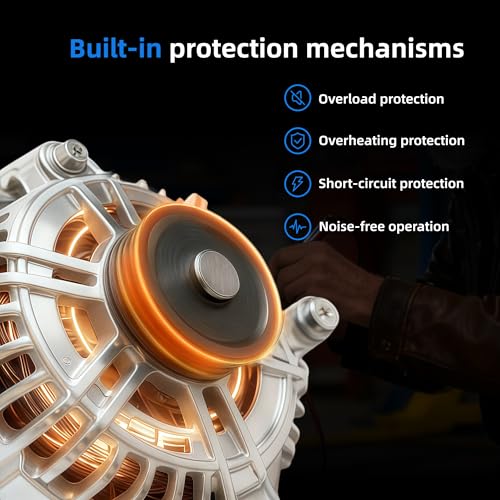
Advertised Electrical Protection
The manufacturer claims integrated protection against overload, short circuits, and overheating.
The precise protection mechanisms and thresholds are not specified, so they should not be treated as independently verified technical features.
One-Year Warranty
The listing advertises a one-year warranty and customer support for quality-related issues.
Before purchasing, confirm the warranty’s coverage, exclusions, and claim procedure with the seller.
How to Replace the Alternator on a 2019–2022 Nissan Altima 2.5L
Alternator replacement requires careful attention to electrical safety, belt routing, and correct component fitment.
The following is a general overview rather than a substitute for the factory Nissan service procedure.
General Replacement Procedure
- Park on level ground, switch off the ignition, and allow the engine to cool.
- Disconnect the negative battery terminal.
- Identify the alternator location and accessory belt routing.
- Remove components necessary to access the alternator according to the service manual.
- Release belt tension using the specified tensioner procedure.
- Disconnect the alternator electrical connector and main output cable.
- Remove the alternator mounting fasteners.
- Remove the original alternator and compare it with the replacement.
- Install the 23100-6CA0A replacement using factory torque specifications.
- Reinstall the belt and any removed components.
- Reconnect the battery and perform the appropriate charging-system checks.
Do not force an incompatible electrical connector or modify the mounting arrangement to make an incorrect alternator fit.
Should You Replace the Serpentine Belt Too?
Not necessarily.
However, if the belt is cracked, glazed, contaminated, or excessively worn, replacing it during the alternator repair may help avoid future problems.
Inspect the tensioner and pulley system as well.
Is the 23100-6CA0A Alternator Worth Buying?
For owners of compatible 2019–2022 Nissan Altima 2.5L models, the 23100-6CA0A 120A alternator is a potential aftermarket replacement when the original charging system has failed.
Its main advantages include:
- Advertised fitment for four Altima model years
- 120-amp rated output
- New replacement construction
- Six-groove clutch pulley
- Multiple cross-reference numbers
- Advertised one-year warranty
However, the product information does not establish independent long-term reliability, verified OEM-equivalent testing, or a specific price advantage over genuine Nissan parts.
Compare the actual purchase price, warranty terms, and seller reputation before deciding.
Frequently Asked Questions
Does the 23100-6CA0A alternator fit a 2019 Nissan Altima?
According to the supplied fitment listing, it is designed for select 2019 Nissan Altima models equipped with the 2.5L four-cylinder engine.
Will this alternator fit a 2022 Nissan Altima?
The product is advertised for the 2022 Nissan Altima 2.5L. Verify the original equipment part number and electrical configuration before purchasing.
Does this alternator fit the Nissan Altima 2.0 VC-Turbo?
Compatibility with the 2.0L VC-Turbo engine is not established by the supplied listing.
Is the 23100-6CA0A alternator 120 amps?
Yes. The manufacturer advertises a 120-amp rated output and 12-volt electrical configuration.
What is alternator part number 11893?
11893 is an aftermarket interchange reference listed for this replacement alternator.
Is this a new or remanufactured alternator?
The product listing identifies the alternator as new.
Does the alternator include a warranty?
The listing advertises a one-year warranty. Confirm current terms and seller eligibility before purchasing.
Can a bad alternator cause a Nissan Altima not to start?
Yes. A failed alternator can allow the battery to discharge until insufficient electrical energy remains to start the engine.
Final Verdict: 23100-6CA0A 120A Alternator for Nissan Altima
The 23100-6CA0A 120A replacement alternator is worth considering for drivers maintaining a compatible 2019–2022 Nissan Altima with the 2.5-liter four-cylinder engine.
Its advertised 12-volt design, 120-amp output, six-groove clutch pulley, and one-year warranty provide useful purchasing considerations.
The most important step is verifying that the replacement matches your original alternator’s part number and electrical configuration.
Diagnose the charging system before buying, inspect the battery and drive belt, and compare warranty coverage with other replacement options.
Replacing a bad alternator can restore reliable electrical operation. Replacing a good one because the battery was dead? That’s just an expensive way to learn how to use a multimeter.




There are no reviews yet.