
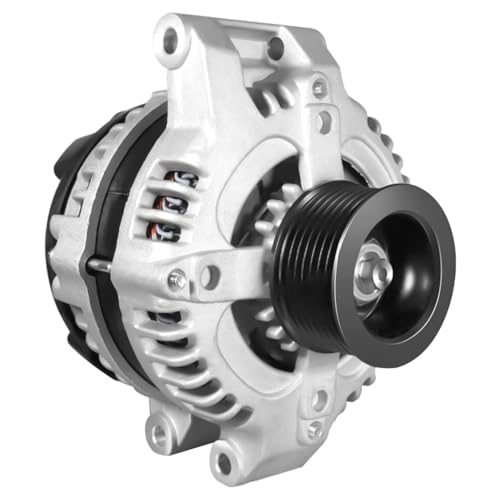
2003–2007 Honda Accord 2.4L Alternator Replacement
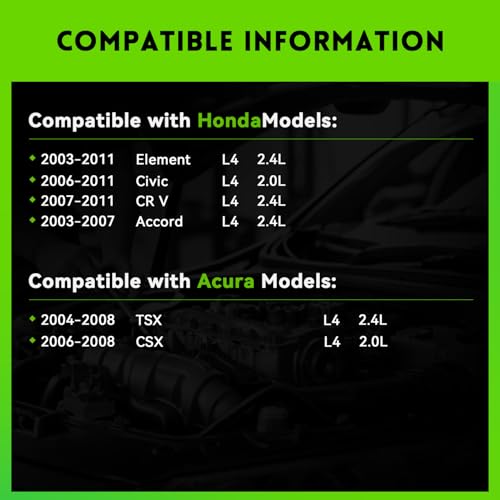
The seventh-generation Honda Accord equipped with the 2.4L four-cylinder engine is one of the most prominent applications in the seller’s listing.
The alternator supplies electrical power while the engine is running and replenishes the battery after starting.
When it fails, owners may notice a charging warning light, dim headlights or a battery that repeatedly becomes discharged.
The seller advertises the 13980N for 2003–2007 Honda Accord 2.4L applications.
Do not assume compatibility with the Accord’s V6 engine.
2006–2011 Honda Civic 2.0L Alternator Replacement
The seller lists the 2006–2011 Honda Civic 2.0L.
This distinction matters because the eighth-generation Civic was sold with different engine configurations.
Verify that your Civic is equipped with the applicable 2.0L engine and that its original alternator matches the replacement’s interchange information.
Do not treat this listing as universal fitment for every 2006–2011 Civic.
2007–2011 Honda CR-V 2.4L Alternator Replacement
The 2007–2011 Honda CR-V 2.4L is another advertised application.
If your CR-V has begun showing charging-system symptoms, inspect the battery, drive belt and electrical connections before replacing the alternator.
A damaged charging cable can produce symptoms similar to alternator failure.
2003–2011 Honda Element 2.4L Alternator Replacement
Honda Element owners often keep their vehicles for many years, making charging-system maintenance particularly relevant as components age.
The seller advertises compatibility with 2003–2011 Honda Element 2.4L models.
Because Honda used different part revisions and configurations across production years, verify the original unit before ordering.
2004–2008 Acura TSX 2.4L Alternator Replacement
The first-generation Acura TSX uses a 2.4L four-cylinder engine, and the seller lists 2004–2008 TSX applications.
Before ordering, confirm the original alternator’s identification number and electrical configuration.
2006–2008 Acura CSX 2.0L Alternator Replacement
The seller also lists 2006–2008 Acura CSX 2.0L applications.
The CSX was sold primarily in the Canadian market, so buyers should take particular care to verify parts-catalog compatibility.
13980N Alternator OEM and Interchange Part Numbers
The seller provides an extensive interchange list.
| Part number | Reference type |
|---|---|
| 13980 | Aftermarket interchange |
| 13980N | Aftermarket replacement |
| 31100-RAA-A01 | Honda OE reference |
| 31100-RAA-A03 | Honda OE reference |
| 31100-RAA-A04 | Honda OE reference |
| 31100-RAA-A05 | Honda OE reference |
| 31100-RTA-003 | Honda OE reference |
| 31100-RTA-013 | Honda OE reference |
| 31100-RTA-023 | Honda OE reference |
| 31100-RTA-033 | Honda OE reference |
| 104210-3290 | Alternator reference |
| 104210-3291 | Alternator reference |
| 104210-3292 | Alternator reference |
| 104210-3293 | Alternator reference |
| 104210-4730 | Alternator reference |
| 104210-4731 | Alternator reference |
| 104210-4732 | Alternator reference |
| CSC29 | Aftermarket interchange |
| CSD73 | Aftermarket interchange |
| AND0257 | Aftermarket interchange |
| VND0257 | Aftermarket interchange |
These are seller-listed references. Their appearance in one product listing does not prove that every original alternator bearing these numbers is interchangeable across all vehicles.
For the most accurate match, compare the part number stamped or labeled on your original alternator and verify it against a VIN-specific parts catalog.
What Does the Alternator Do on a Honda K-Series Engine?
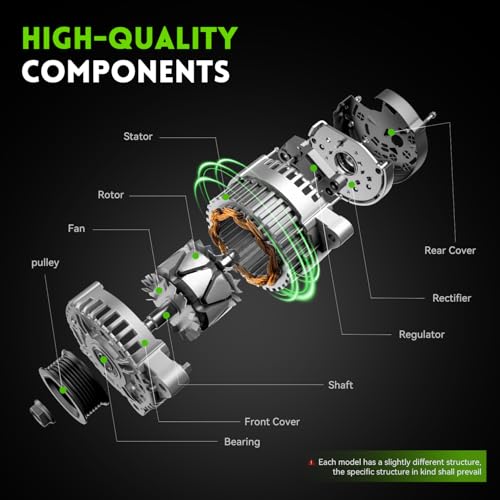
The alternator is part of the engine’s accessory-drive and electrical charging system.
Once the engine is running, the alternator supplies electrical power for systems such as:
- Engine-management electronics
- Ignition and fuel injection
- Headlights and exterior lighting
- Cabin blower motor
- Audio and infotainment equipment
- Cooling fans
- Battery recharging
The alternator must respond to changing electrical loads while working with the vehicle’s charging-system controls.
Honda charging systems may vary their charging behavior depending on electrical demand and operating conditions.
That means a single voltage reading is not always enough to diagnose a faulty alternator.
What Makes the 13980N Alternator Worth Considering?
OE-Style Replacement Design
The seller advertises construction intended to meet original-equipment-style specifications.
This may make the alternator an option for owners seeking a replacement rather than a custom high-output conversion.
However, the listing does not provide independent dimensional verification or factory Honda approval.
No-Load and Load Testing
According to the seller, every alternator undergoes no-load, load and quality testing before shipment.
Testing is an important part of alternator production, but the supplied listing does not include detailed test results or measured output curves.
Replacement for Multiple Part Numbers
The 13980N is advertised as an interchange option for numerous Honda and alternator-manufacturer references.
This can simplify parts research, provided the exact vehicle configuration is confirmed.
12-Month Seller Warranty
The seller advertises a 12-month warranty.
Before purchasing, review the actual terms, including any exclusions, labor coverage, shipping costs and claim procedures.
Seven Signs Your Honda or Acura Alternator Is Failing
1. Battery Warning Light Comes On
The battery-shaped warning light can indicate a charging-system problem.
Despite its name, the light doesn’t necessarily mean the battery itself is defective.
A failing alternator, loose drive belt, wiring fault or charging-control issue may be responsible.
Our battery warning light troubleshooting guide explains the most common causes.
2. Battery Keeps Dying
If your Accord, Civic, CR-V or Element repeatedly needs a jump-start, the alternator may not be replenishing the battery.
However, a deteriorating battery or parasitic electrical draw can cause similar symptoms.
Test both the battery and charging system before replacing parts.
3. Headlights Dim or Flicker
Unstable electrical voltage can cause lighting brightness to fluctuate.
The symptom may become more noticeable when the blower motor, rear-window defroster or other electrical accessories operate.
4. Whining or Grinding Noise
Worn alternator bearings can produce unusual noises.
But a defective belt tensioner or idler pulley can sound similar.
Inspect the complete accessory-drive system.
5. Electrical Accessories Act Strangely
Low voltage may contribute to intermittent electronic malfunctions, slow accessories or unusual warning messages.
These symptoms are not exclusive to alternator failure.
6. Burning Smell
An overheating electrical connection, damaged alternator or slipping belt can produce a burning odor.
If you notice smoke or melting insulation, stop operating the vehicle safely.
7. Engine Stalls or Won’t Restart
When the alternator stops charging, the battery temporarily supplies electrical power.
Eventually, battery voltage can fall low enough to interfere with engine operation or prevent restarting.
How to Test a Honda Alternator Before Replacing It
Before purchasing the 13980N, perform a charging-system diagnosis.
A digital multimeter is a useful starting point.
Step 1: Check Battery Voltage
With the engine off and the battery rested, measure voltage across the battery posts.
A fully charged conventional 12-volt lead-acid battery typically reads approximately 12.6 volts.
A significantly lower reading may indicate a discharged battery.
Step 2: Start the Engine
Measure battery voltage again with the engine running.
Many conventional charging systems operate around 13.5–14.8 volts during active charging.
However, Honda’s charging controls may reduce or vary alternator output under certain conditions.
Do not condemn the alternator based on a single voltage measurement.
Step 3: Apply Electrical Load
Turn on the headlights, cabin blower and rear-window defroster.
Observe charging-system behavior while electrical demand increases.
Step 4: Inspect the Drive Belt
Check the serpentine belt for cracking, glazing, contamination or improper tension.
A slipping belt can reduce alternator output even when the alternator itself is functioning correctly.
Step 5: Check Charging Cables and Grounds
Excessive resistance in the charging cable or ground path can prevent electrical current from reaching the battery efficiently.
Our automotive voltage-drop testing guide explains how to locate excessive resistance in electrical circuits.
For a complete walkthrough, read How to Test Alternator Output With a Multimeter.
Never disconnect the battery while the engine is running to test alternator operation. This outdated method can damage sensitive vehicle electronics.
How to Replace the 13980N Alternator
The exact procedure varies between the Honda Accord, Civic, CR-V, Element and Acura TSX.
Always follow the factory service manual for the specific vehicle and engine.
General Alternator Replacement Procedure
- Park the vehicle safely, switch off the ignition and allow the engine to cool.
- Disconnect the negative battery terminal.
- Identify the alternator location and accessory-belt routing.
- Remove any components required for safe access.
- Release serpentine-belt tension using the specified procedure.
- Remove the belt from the alternator pulley.
- Disconnect the alternator electrical connector and main output cable.
- Remove the alternator mounting fasteners.
- Carefully remove the original alternator.
- Compare the original unit with the 13980N replacement.
- Verify the mounting points, pulley, electrical connector and rated output.
- Install the replacement using factory torque specifications.
- Reinstall the belt and confirm proper alignment.
- Reconnect the battery.
- Start the engine and verify charging-system performance.
Do not guess fastener torque specifications or assume that every Honda K-series engine uses the same installation procedure.
Five Mistakes to Avoid When Buying a Honda Replacement Alternator
1. Buying Based on Engine Displacement Alone
Not every Honda 2.0L or 2.4L engine uses the same alternator.
Match the original part number.
2. Ignoring the Pulley
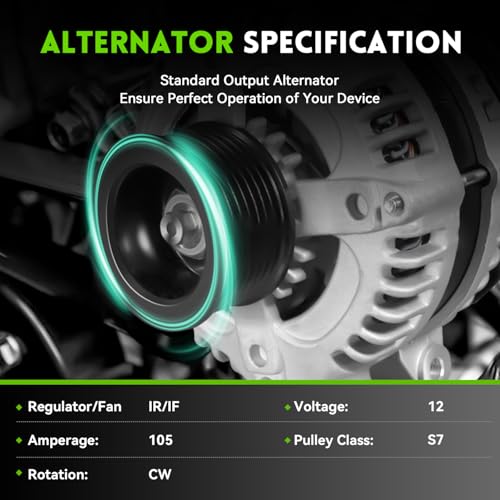
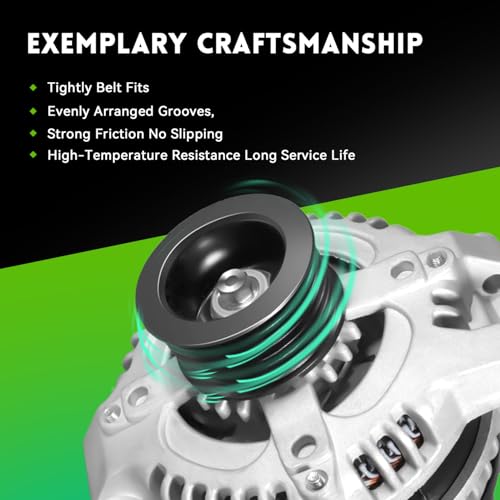
Pulley diameter, groove count, offset and design must match the vehicle’s accessory-drive system.
3. Overlooking the Electrical Connector
An alternator may physically mount to the engine while using an incompatible electrical connector or regulator configuration.
4. Replacing the Alternator Without Testing the Battery
A deteriorated battery can continue causing starting problems after a new alternator is installed.
5. Ignoring Wiring and Ground Problems
A corroded charging cable or poor ground can make a healthy alternator appear defective.
13980N Aftermarket Alternator vs. OEM Honda Alternator
| Feature | 13980N Aftermarket Alternator | OEM Honda Alternator |
|---|---|---|
| Product type | Aftermarket replacement | Original equipment/service replacement |
| Application | Seller-advertised Honda and Acura fitment | VIN-specific |
| Output | Not specified in supplied listing | Depends on original configuration |
| Pulley | Verify against original | Vehicle-specific |
| Testing | Seller-advertised no-load and load testing | Manufacturer-specific |
| Warranty | Seller-advertised 12 months | Depends on part and seller |
| Price | Varies | Varies |
The 13980N may be a reasonable replacement option when its mechanical and electrical specifications match the original alternator.
However, the supplied description does not establish independent long-term durability, measured output performance or compatibility for every listed trim.
Those details are worth checking before purchasing.
Frequently Asked Questions
What vehicles does the 13980N alternator fit?
The seller lists selected 2003–2007 Honda Accord 2.4L, 2006–2011 Civic 2.0L, 2007–2011 CR-V 2.4L, 2003–2011 Element 2.4L, 2004–2008 Acura TSX 2.4L and 2006–2008 Acura CSX 2.0L applications.
Does the 13980N fit a 2005 Honda Accord?
The seller advertises compatibility with 2003–2007 Honda Accord 2.4L models. Verify the original alternator number before ordering.
Does it fit a 2008 Honda Civic?
The seller lists 2006–2011 Honda Civic 2.0L applications. It should not be assumed to fit every Civic engine.
Does it fit a 2010 Honda CR-V?
The seller advertises compatibility with 2007–2011 Honda CR-V 2.4L models.
Does it fit a 2006 Honda Element?
The seller lists 2003–2011 Honda Element 2.4L applications.
Does it fit a 2007 Acura TSX?
The seller advertises compatibility with 2004–2008 Acura TSX 2.4L models.
Is 31100-RAA-A01 an interchange number?
Yes. The seller includes 31100-RAA-A01 in its advertised interchange list.
Is 104210-4732 compatible with the 13980N?
The seller lists 104210-4732 as an interchange reference. Verify the original alternator configuration before ordering.
How many amps is the 13980N alternator?
The supplied product listing does not specify a rated amperage. Confirm the output rating with the seller and match it to the original unit.
Does the 13980N have a warranty?
The seller advertises a 12-month warranty, subject to the actual terms of sale.
Can a failing alternator cause repeated dead batteries?
Yes. If the alternator cannot replenish the battery, it may eventually become discharged.
Should I replace the battery when replacing the alternator?
Not automatically. Test the battery and replace it only if its condition warrants replacement.
Final Verdict: Is the 13980N Alternator Worth Buying?
The 13980N replacement alternator is advertised for selected Honda and Acura four-cylinder vehicles, including the Accord, Civic, CR-V, Element, TSX and CSX.
Its seller-advertised OE-style construction, performance testing, extensive interchange list and 12-month warranty make it an option worth evaluating when the original alternator fails.
However, the correct replacement depends on more than model year and engine size.
Before ordering, verify the original alternator number, rated amperage, electrical connector, pulley, mounting configuration and vehicle VIN.
And before replacing anything, test the battery, inspect the drive belt and check the charging cables.
Because replacing a good alternator to fix a bad battery connection is an expensive way to spend your weekend.



There are no reviews yet.