




Why Exhaust Gas Temperature Monitoring Matters
Exhaust gas temperature, commonly abbreviated EGT, is an important measurement for understanding how an engine responds to load, fueling, boost pressure, and combustion conditions.
As an engine produces power, hot exhaust gases travel through the exhaust manifold and downstream components.
On turbocharged engines, these gases also drive the turbine wheel, making exhaust temperature particularly relevant to turbocharger operating conditions.
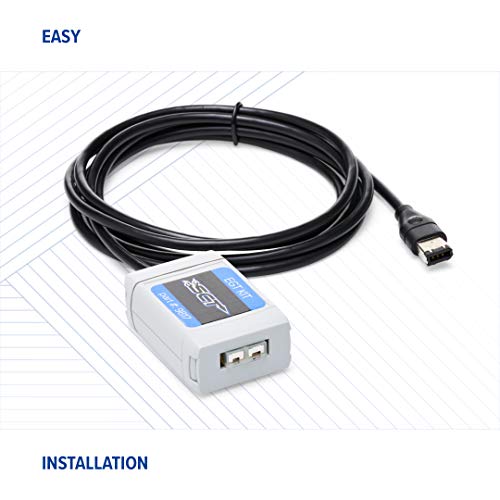
The SCT Performance 9817 EGT Sensor Kit provides the temperature measurement needed for compatible monitoring equipment to display exhaust heat information.
Monitor Exhaust Temperature Under Heavy Load
Sustained acceleration, towing, climbing steep grades, and extended high-load driving can increase exhaust temperatures.
An EGT sensor allows drivers to observe temperature trends and recognize when exhaust heat is rising beyond the engine’s normal operating behavior.
This can be especially valuable on modified diesel trucks and turbocharged performance applications.
Evaluate Engine Modifications
Changes to engine calibration, fueling, turbocharger components, and exhaust systems can influence exhaust temperature.
Monitoring EGT before and after modifications can provide additional information about how the engine responds.
However, EGT alone cannot establish whether an engine calibration is safe or whether combustion conditions are optimal.
Recognize Unusual Temperature Trends
Unexpectedly high or low exhaust temperature readings may indicate changes in engine load, fueling, sensor operation, or other conditions.
A functioning EGT sensor provides useful diagnostic information, but readings must be interpreted alongside other engine measurements.
Important: There is no single safe EGT limit for every engine. Appropriate temperature limits depend on the engine, sensor location, operating conditions, and manufacturer’s specifications.
Designed for SCT Livewire TS and X4 Monitoring Systems
The SCT 9817 is advertised for use with compatible SCT Livewire TS and X4 tuning devices.
These devices can provide access to engine operating information, making them useful for enthusiasts who want to monitor performance data without installing multiple individual gauges.
When connected through the correct interface, the EGT sensor provides an additional temperature measurement.
SCT Livewire TS Applications
Compatible SCT Livewire TS systems may display supported engine operating parameters and additional sensor information.
The 9817 EGT sensor is intended to extend this monitoring capability by providing exhaust temperature data.
SCT X4 Applications
The SCT X4 is primarily a handheld tuning and diagnostic device.
EGT monitoring compatibility depends on the exact device configuration and supported accessories.
Do not assume the two sensor wires connect directly to every X4 programmer. Confirm the required analog input adapter or monitoring interface with SCT before installation.
Stainless Steel EGT Probe for Exhaust System Applications
The SCT 9817 features a stainless steel exhaust temperature probe designed for use in automotive exhaust systems.
Stainless steel construction provides corrosion resistance and durability in an environment exposed to high temperatures and repeated thermal cycling.
The probe is intended to be secured using the supplied compression-style fitting.
Proper installation is essential because the sensor must remain firmly mounted while exposed to engine vibration and exhaust gas flow.
The probe should be positioned according to SCT’s installation instructions and the engine manufacturer’s recommendations.
RFI-Shielded Cable for Reliable Temperature Monitoring
Modern vehicles contain numerous electrical components capable of producing electromagnetic interference.
Ignition systems, alternators, electronic controllers, and aftermarket accessories may introduce electrical noise into nearby wiring.
The SCT 9817 uses RFI-shielded cable to help reduce interference affecting the temperature signal.
This is particularly useful in modified vehicles with additional electronic equipment.
Shielding improves resistance to interference but does not eliminate the need for correct wiring, secure connections, and proper cable routing.
Twin-Ferrule Compression Fitting with 1/8-Inch NPT Threads
The SCT Performance 9817 includes a twin-ferrule compression fitting designed to secure the EGT probe within a compatible exhaust sensor mounting location.
The fitting uses 1/8-inch NPT threads, a common tapered pipe-thread standard used for aftermarket automotive sensors.
When installing the sensor, confirm that the exhaust bung uses the correct thread standard.
Do not confuse 1/8 NPT with 1/8 PT (BSPT), which is used by some other aftermarket gauge manufacturers.
These thread standards are different and should not be treated as interchangeable.
SCT Performance 9817 Technical Specifications
| Specification | Details |
|---|---|
| Manufacturer | SCT Performance |
| Manufacturer part number | 9817 |
| Product type | Exhaust gas temperature sensor kit |
| Sensor application | EGT monitoring |
| Probe material | Stainless steel |
| Sensor wiring | RFI-shielded cable |
| Connection | Two-wire sensor connection |
| Mounting fitting | Twin-ferrule compression fitting |
| Fitting thread | 1/8-inch NPT |
| Advertised compatibility | SCT Livewire TS and X4 systems |
| Temperature measurement range | Not independently verified |
| Cable length | Not specified |
| Required interface | Depends on SCT device configuration |
| Quantity | One EGT sensor kit |
For manufacturer information and compatibility resources, visit SCT Performance.
What’s Included with the SCT 9817 EGT Sensor Kit?
The supplied product description identifies the following components:
-
Stainless steel exhaust gas temperature probe
-
RFI-shielded sensor cable
-
Twin-ferrule compression fitting with 1/8-inch NPT threads
-
Two-wire sensor connection
Additional accessories, mounting hardware, wiring adapters, and installation instructions should be confirmed against the actual retail package.
Sold separately unless explicitly included: SCT tuning device, compatible analog input adapter, and any required exhaust mounting bung.
How to Install the SCT 9817 EGT Sensor
Installing an exhaust gas temperature sensor requires careful attention to mounting location, thread compatibility, and wiring.
Step 1: Select the EGT Sensor Location
Choose an exhaust measurement location appropriate for the engine and intended monitoring application.
On turbocharged engines, EGT probes may be installed before or after the turbocharger, depending on the monitoring strategy.
These locations produce different temperature readings.
Always follow SCT’s instructions and engine-specific guidance.
Step 2: Install the Correct Sensor Bung
The SCT 9817 uses a 1/8-inch NPT compression fitting.
If the exhaust component does not already have a compatible sensor port, a suitable bung must be installed.
Drilling or welding exhaust components should be performed with the components removed or otherwise made safe for the operation.
Prevent metal debris from entering the turbocharger or engine.
Step 3: Secure the EGT Probe
Install the probe through the compression fitting according to the manufacturer’s instructions.
Ensure the probe is correctly positioned and securely retained.
Avoid overtightening the fitting or damaging the sensor.
Step 4: Route the Sensor Cable
Route the shielded cable away from exhaust heat, moving engine components, and sharp edges.
Secure the wiring using appropriate heat-resistant protection and mounting methods.
Avoid modifying or shortening the sensor cable unless SCT explicitly permits it.
Step 5: Connect to the SCT Monitoring System
Connect the sensor through the required SCT-compatible input interface.
Confirm that the device supports the sensor and is configured to interpret its signal correctly.
Step 6: Verify Temperature Readings
After installation, inspect the exhaust fitting for leaks and confirm that the monitoring system displays plausible readings.
Allow the engine to reach operating temperature and compare sensor behavior under appropriate operating conditions.
If readings are missing or implausible, inspect wiring, device configuration, and sensor compatibility before assuming the probe is defective.
SCT 9817 EGT Sensor vs. a Standalone EGT Gauge
| Feature | SCT 9817 EGT Sensor Kit | Standalone EGT Gauge System |
|---|---|---|
| Measures exhaust temperature | Yes, with compatible interface | Yes |
| Includes dedicated display | No | Usually |
| Requires compatible monitoring device | Yes | Depends on gauge |
| Dashboard gauge pod required | No | Often |
| Integrates with SCT tuner | Intended application | Not necessarily |
| Suitable for custom engine monitoring | Yes | Yes |
The SCT 9817 is particularly appealing to drivers who already own compatible SCT monitoring equipment.
For enthusiasts who prefer a dedicated analog EGT display, a separate exhaust temperature gauge system may be more appropriate.
Frequently Asked Questions
What does the SCT 9817 EGT Sensor Kit do?
It measures exhaust gas temperature and supplies that information to a compatible SCT monitoring system.
Does the SCT 9817 include a gauge?
No. The 9817 is an EGT sensor kit and requires compatible equipment to display the temperature reading.
Will the SCT 9817 work with my SCT X4?
The kit is advertised for X4 applications, but the exact input requirements and compatible accessories must be verified for your device.
What thread size does the SCT 9817 use?
The supplied specifications identify a 1/8-inch NPT compression fitting.
Is the SCT 9817 suitable for diesel trucks?
EGT monitoring is commonly useful on diesel engines, particularly during towing and sustained high-load operation. Actual compatibility depends on the vehicle, installation location, and SCT monitoring system.
Can the SCT 9817 diagnose engine problems?
It can provide useful exhaust temperature information, but temperature readings alone cannot identify the exact cause of a mechanical or tuning problem.
Why Choose the SCT Performance 9817 EGT Sensor Kit?
The SCT Performance 9817 Exhaust Gas Temperature Sensor Kit offers a practical way to add EGT monitoring to compatible SCT tuning and monitoring systems.
Its stainless steel probe, RFI-shielded cable, and 1/8-inch NPT twin-ferrule compression fitting provide the core components needed for a properly planned exhaust temperature monitoring installation.
For performance enthusiasts who want to understand how exhaust temperatures change during engine operation, the SCT 9817 provides an additional source of information without requiring a separate dedicated gauge display.
Explore SCT tuning accessories, engine monitoring equipment, and performance electronics at Pro Street Online.













There are no reviews yet.