

6061-T6 Billet Aluminum Construction
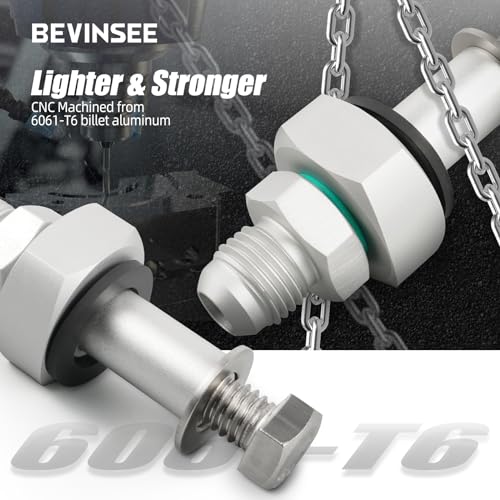
The Bevinsee fuel tank return bung is machined from 6061-T6 aluminum.
This material is widely used in automotive fittings because it combines:
- Low weight
- Good strength
- Corrosion resistance
- Machinability
- Dimensional stability
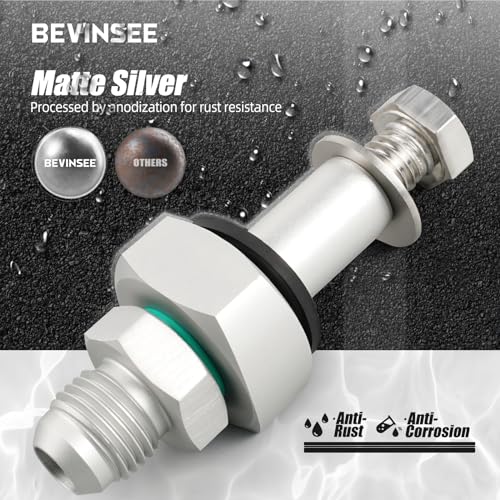
The fitting is also anodized to provide additional surface protection against corrosion and abrasion.
For a component permanently mounted in or around a fuel tank, material quality matters.
Weldless Expanding Bung Design
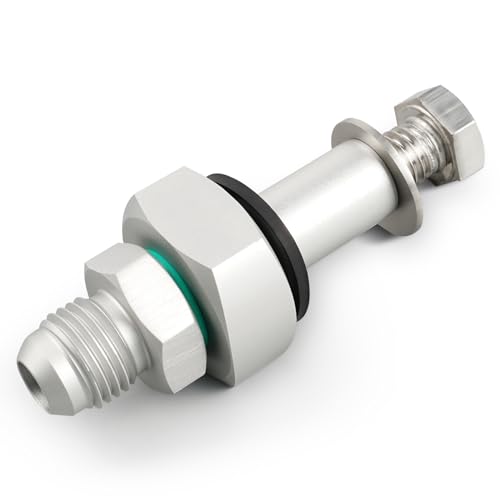
The defining feature of this return fitting is its mechanically expanding installation method.
After the correct opening is drilled, the supplied installation hardware is used to deform or collapse the bung.
As the fitting deforms, it expands against the inside surface of the tank, mechanically securing itself in position.
This creates a permanent-style threaded mounting point without requiring access for a conventional nut on the opposite side.
That makes the fitting useful in situations where the inside of the tank is difficult to reach after installation.
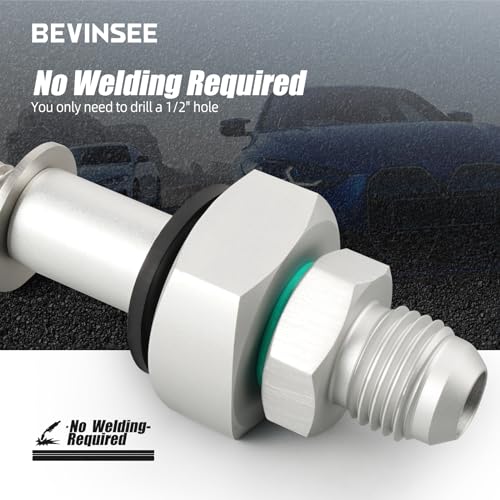
Only a 1/2-Inch Hole Is Required
Installation requires a 1/2-inch hole at the selected mounting location.
Compared with installing a large bulkhead fitting or fabricating a welded return port, the relatively small opening can simplify modification of a compatible tank.
Correct hole placement remains extremely important.
Before drilling, verify:
- Tank material
- Tank wall thickness
- Internal baffling
- Fuel level
- Clearance behind the drilling location
- Hose-routing clearance
- Access for the installation tool
- Distance from suspension and exhaust components
Measure twice.
Then measure again, because fuel tanks are particularly unforgiving about the “eh, close enough” school of fabrication.
Works with Material Up to 1/4 Inch Thick
The Bevinsee return bung is specified for compatible material up to approximately 1/4 inch thick.
That gives the fitting potential utility beyond thin sheet-metal tanks, depending on the material and installation requirements.
However, compatibility should never be determined by thickness alone.
The surface must also be suitable for:
- Mechanical deformation
- O-ring sealing
- Fuel exposure
- Secure fitting retention
Verify the construction of the tank before installation.
O-Ring Seal Helps Prevent Fuel Leakage
An O-ring is included to create a seal between the fitting and tank surface.
The mounting surface should be clean, smooth, and free of:
- Burrs
- Rust
- Deep scratches
- Paint buildup
- Cutting debris
- Surface distortion
The O-ring should sit evenly against the tank.
Do not use excessive tightening as a substitute for proper surface preparation.
If the seal isn’t sitting correctly, more torque generally produces a more aggressively incorrect seal.
Designed for Fuel Return Line Applications
The fitting is particularly useful for adding a dedicated return connection to a tank that was originally designed for a returnless or carbureted fuel system.
A typical return-style EFI system might be arranged as:
Fuel Tank → Fuel Pump → Fuel Filter → Fuel Rail → Bypass Regulator → 6AN Return Line → Bevinsee Tank Bung
The regulator sends excess fuel through the return line and back to the tank.
A properly sized return circuit allows the regulator to bypass fuel without excessive restriction.
For more information about how bypass regulators work, the Pro Street Fuel Pressure Regulator Guide explains fuel pressure, feed lines, regulator operation, and return-system design.
The Pro Street Fuel Pressure Regulator Installation Guide also provides useful technical background when planning a custom return-style system.
Useful for EFI Conversions
Modern EFI conversions often require a different fuel-system layout from the vehicle’s original carbureted configuration.
Depending on the EFI system, that can mean adding:
- High-pressure electric fuel pump
- EFI-rated hose
- Fuel filters
- Fuel pressure regulator
- New feed line
- Dedicated return line
If the existing tank doesn’t provide a return connection, this weldless bung creates a compact 6AN port that can be incorporated into the new plumbing.
LS Swap Fuel Return Applications
Engine swaps are another natural use for a weldless return fitting.
Older vehicles receiving an LS or other modern EFI engine frequently require fuel-system modifications to support the new injection system.
Depending on the regulator arrangement, a dedicated return line may need to be routed from the pressure regulator back to the tank.
If you’re planning a GM LS conversion, the Pro Street Ultimate GM LS Engine Guide provides additional background on the LS engine family and why it became such a popular swap platform.
For a practical swap example, the Pro Street LS1 240SX Swap Guide covers the considerations involved when installing an LS1 into a chassis that was never designed around that engine.
Works Well with 6AN Braided Fuel Lines
Because the fitting provides a 6AN connection, it can integrate naturally into a complete AN-plumbed fuel system.
6AN is commonly used for both supply and return plumbing in appropriately sized performance applications.
Actual line size should always be determined by:
- Fuel-pump flow
- Fuel pressure
- Engine power
- Fuel type
- Regulator requirements
- Hose length
- Number of fittings
- Filter restriction
Don’t select a line size based solely on what looks impressive under the hood.
Fuel systems are remarkably uninterested in Instagram.
Alternative to a Filler-Neck Return Adapter
There are several ways to add a fuel return to an older vehicle.
A filler-neck return adapter routes fuel into the tank through the filler tube.
A weldless bung like the Bevinsee instead creates a dedicated threaded return port directly in the tank.
The best solution depends on:
- Tank accessibility
- Tank material
- Filler-neck dimensions
- Available hose routing
- Return-line size
- Vehicle construction
- Builder preference
A direct tank fitting can produce a compact installation when a suitable mounting area is available.
Alternative to Welding an AN Bung
Welding a permanent AN bung can be an excellent solution when performed correctly on a compatible tank.
However, welding also requires:
- Proper tank preparation
- Welding equipment
- Compatible tank material
- Experienced fabrication
- Safe removal of fuel and vapor
- Appropriate access
The Bevinsee fitting provides an option for installations where a mechanically retained bung is more practical.
It still requires permanent tank modification, but the installer doesn’t need to weld the return fitting into place.
Installation Torque Requirement
The supplied instructions specify approximately 60 N·m of installation force/torque to deform the fitting.
This is part of the installation process rather than the normal tightening specification of an ordinary AN fitting.
The force is required to collapse the bung so it expands and grips the tank from the inside.
Power tools are recommended by the manufacturer for performing this deformation step.
Follow the actual instructions supplied with the product because installation procedure is critical to proper retention and sealing.
Installation Overview
A typical installation involves:
- Completely drain and safely prepare the fuel tank.
- Determine the appropriate return fitting location.
- Check the inside of the tank for baffling and obstructions.
- Confirm adequate clearance outside the tank.
- Mark the drilling location.
- Drill the required 1/2-inch hole.
- Carefully deburr the opening.
- Remove all drilling debris from the tank.
- Clean the O-ring sealing surface.
- Position the bung and O-ring.
- Install the deformation hardware.
- Use the appropriate tool to collapse the fitting.
- Verify that the bung is fully seated and secure.
- Remove the installation hardware as instructed.
- Connect the appropriate 6AN return line.
- Add a small amount of fuel.
- Inspect carefully for leakage.
- Complete the system and pressure-test where appropriate.
Do not fill the tank completely until the fitting has passed an initial leak inspection.
Fuel Tank Safety
Modifying a fuel tank requires extreme caution.
Gasoline vapor is highly flammable, and an apparently “empty” fuel tank can still contain dangerous vapor.
Never drill into a tank containing fuel or unsafe fuel vapor.
Before installation:
- Drain the tank completely
- Follow proper fuel-tank removal procedures
- Work in a ventilated area
- Eliminate ignition sources
- Follow appropriate vapor-purging procedures
- Keep suitable fire-safety equipment nearby
If you’re not experienced with fuel-tank modification, have the installation performed by a qualified automotive technician or fabricator.
Keep Drilling Debris Out of the Fuel System
One of the biggest risks when adding any tank fitting is leaving debris inside the tank.
Metal or plastic shavings can damage:
- Fuel pumps
- Filters
- Injectors
- Regulators
- Carburetors
After drilling and deburring the opening, thoroughly clean the tank before returning it to service.
A $20 fitting should not become the opening act for a $1,000 fuel-system repair.
Return Fitting Placement Matters
The return line should discharge fuel in a location appropriate for the tank and fuel-system design.
Avoid positioning the fitting where returning fuel could:
- Interfere with the fuel-level sender
- Contact moving internal components
- Create unnecessary aeration
- Interfere with the pump pickup
- Be exposed to road damage
- Contact hot exhaust components externally
The ideal location varies by tank design.
Why Choose the Bevinsee 6AN Fuel Tank Return Bung?
The Bevinsee fitting provides a compact way to add a standardized AN return connection to a compatible fuel tank without welding.
Key features include:
- 6AN fuel return connection
- 9/16-18 thread
- Weldless installation
- Requires only a 1/2-inch mounting hole
- Mechanically expanding bung design
- 6061-T6 billet aluminum
- Anodized surface
- Corrosion resistant
- Abrasion resistant
- O-ring seal included
- Compatible with material up to 1/4 inch thick
- Useful for EFI conversions
- Suitable for custom return-style fuel systems
- Useful for engine swaps and restomods
For builders who need a dedicated 6AN tank return but don’t want to weld a bung into the fuel tank, this fitting provides a clean and compact alternative.
Frequently Asked Questions
What is the Bevinsee 6AN fuel tank return fitting?
It is a weldless expanding bung designed to add a threaded 6AN return-line connection to a compatible fuel tank.
What thread size does the fitting use?
The fitting uses a 9/16-18 thread associated with 6AN connections.
What size hole is required?
Installation requires a 1/2-inch hole.
Does the fitting have to be welded?
No. The fitting is designed for weldless mechanical installation.
How does the weldless bung stay in the tank?
Installation hardware collapses or deforms the bung so that it expands against the inside of the tank, mechanically securing the fitting.
What is the fitting made from?
It is machined from 6061-T6 billet aluminum.
Is the aluminum anodized?
Yes. The fitting has an anodized finish for additional corrosion and abrasion resistance.
Does it include a seal?
Yes. An O-ring is included to seal the fitting against the tank surface.
What material thickness will it work with?
The fitting is specified for compatible material up to approximately 1/4 inch thick.
How much installation torque is required?
The supplied product information specifies approximately 60 N·m during the deformation/installation process. Follow the instructions included with the actual fitting.
Can I use this for an EFI fuel return?
Yes. Adding a dedicated return connection for a compatible return-style EFI system is one of its primary applications.
Can it be used for an LS swap?
It can be incorporated into an LS swap or other EFI conversion that requires an appropriately sized 6AN tank return.
Is 6AN the same as NPT?
No. AN and NPT use different threads and sealing methods. Use the appropriate adapter when transitioning between the two.







There are no reviews yet.