

Built-In Fuel Return
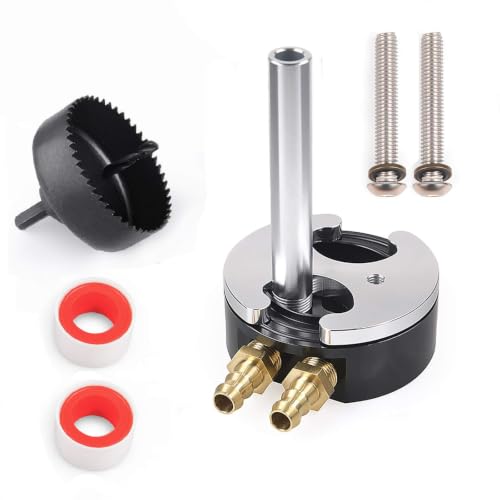
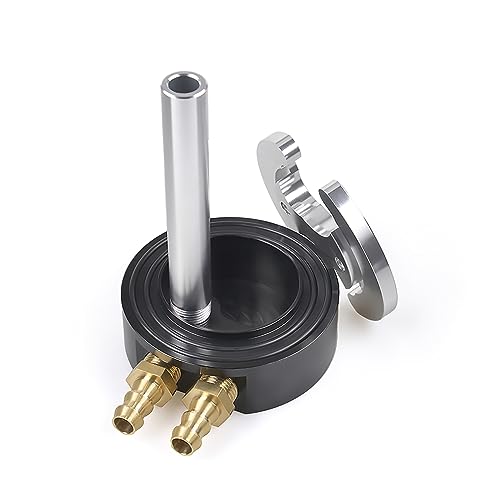
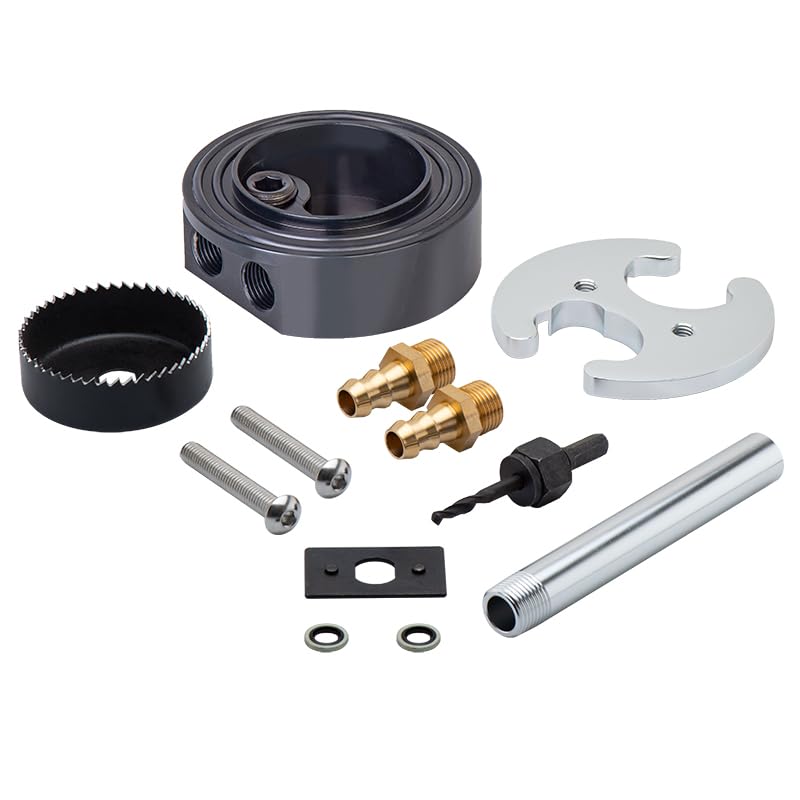
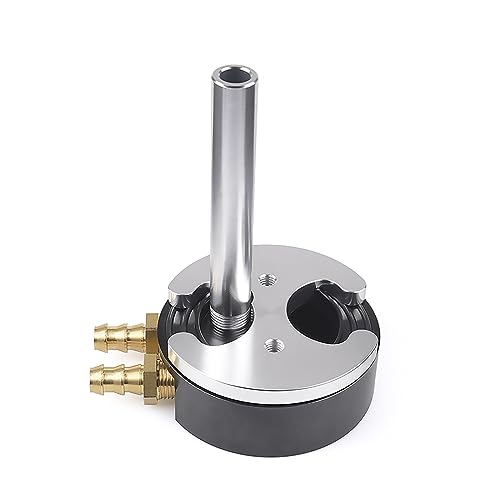
One of the most useful features of this sump is the integrated fuel-return connection.
Many aftermarket diesel lift-pump installations require both:
Fuel feed from tank → lift pump
and
Return fuel → tank
Instead of installing a separate return fitting elsewhere in the tank or filler neck, this sump incorporates the return into the same assembly.
That can simplify plumbing while reducing the number of modifications made to the fuel tank.
Internal Standpipe Separates Return Fuel from Feed Fuel
Simply dumping returned fuel directly beside the sump inlet isn’t necessarily ideal.
This assembly uses an internal standpipe to separate the fuel return from the feed pickup area.
The arrangement helps keep the returned fuel from immediately circulating back into the lift-pump feed.
That makes the design particularly useful for high-flow aftermarket diesel systems where both supply and return plumbing need to be accommodated at the tank.
Gravity-Fed Fuel Supply
A bottom-mounted sump changes the way fuel reaches an external lift pump.
Instead of relying on a pickup tube extending downward from the top of the tank, the sump allows fuel to collect at the lowest portion of the tank and flow directly into the external supply line.
A simplified aftermarket diesel system may look like:
Fuel Tank → Tank Sump → AirDog/FASS Lift Pump → Filters → Engine Fuel System
with excess fuel returning through:
Return Line → Sump Return Port → Internal Standpipe → Fuel Tank
This arrangement can provide a direct fuel path for compatible high-flow diesel lift-pump installations.
Helps Eliminate Restrictive Factory Pickup Arrangements
Modified diesel engines can require significantly more fuel flow than a stock engine.
Depending on the truck and fuel system, the original tank pickup can become a restriction when supporting:
- Larger injectors
- High-output injection pumps
- Modified CP3 systems
- Dual high-pressure pumps
- Performance tuning
- Competition engines
- High-horsepower diesel builds
A properly sized tank sump provides a direct path from the bottom of the fuel tank to the aftermarket lift pump.
Fuel-system requirements vary considerably, so line size, pump flow, filters, fittings, and engine demand should all be considered together.
No Tank Drop Installation on Compatible Trucks
This sump is designed to allow installation without removing the fuel tank when adequate access and clearance are available.
That can substantially reduce installation time compared with modifying the top of the tank or replacing the factory sending unit.
However, “no tank drop” does not mean “drill wherever you can reach.”
Before cutting the tank, confirm:
- Tank construction
- Internal baffling
- Fuel sender location
- Factory pickup location
- Available drilling clearance
- Frame clearance
- Exhaust clearance
- Driveshaft clearance
- Suspension travel
- Final sump ground clearance
Inspect everything first.
The 3-inch hole is considerably less enthusiastic about moving later.
3-Inch Hole Saw Included
A 3-inch hole saw is supplied with the kit to simplify installation.
The installer should identify the correct mounting location, drain the tank appropriately, and follow all fuel-system safety procedures before drilling.
After cutting the opening, all drilling debris must be completely removed from the tank.
This is especially important on modern diesel fuel systems because contamination can damage:
- Lift pumps
- Fuel filters
- High-pressure pumps
- Fuel rails
- Injectors
Saving an hour during installation isn’t especially impressive if the reward is metal shavings entering a common-rail fuel system.
T6 Billet Aluminum Construction
The sump is manufactured from aircraft-grade T6 billet aluminum.
Billet aluminum provides a combination of:
- High strength
- Low weight
- Corrosion resistance
- Precise machining
- Durability
- Clean sealing surfaces
These properties make aluminum well suited to performance fuel-system fittings and tank-mounted components.
Works with Stock and Aftermarket Fuel Tanks
The sump is designed for use with many factory and aftermarket diesel fuel tanks.
Potential installations include trucks using:
- Factory plastic tanks
- Replacement tanks
- High-capacity diesel tanks
- Aftermarket performance fuel tanks
Compatibility depends on the construction and geometry of the specific tank.
The selected mounting area needs to provide a suitable surface for sealing and enough clearance for the sump assembly below the vehicle.
Cummins Diesel Applications
The sump can be incorporated into compatible Dodge and Ram trucks equipped with Cummins diesel engines and AirDog or FASS lift-pump systems.
Potential platforms include modified:
- Ram 2500 Cummins
- Ram 3500 Cummins
- Dodge Ram 2500 Cummins
- Dodge Ram 3500 Cummins
This is not a model-specific bolt-on component. Tank construction and installation clearance must be verified for the individual truck.
Duramax Diesel Applications
The sump can also be used with compatible Chevrolet Silverado and GMC Sierra Duramax fuel systems.
Potential applications include:
- Silverado 2500HD Duramax
- Silverado 3500HD Duramax
- Sierra 2500HD Duramax
- Sierra 3500HD Duramax
This makes the sump particularly useful when adding a high-flow AirDog or FASS lift pump to a modified Duramax.
The sump is part of the low-pressure supply system and should not be confused with the extremely high-pressure common-rail side of the Duramax injection system.
Power Stroke Diesel Applications
Compatible Ford diesel trucks equipped with aftermarket lift-pump systems can also use a tank sump when tank construction and clearance permit.
Potential applications include modified:
- Ford F-250 Super Duty Power Stroke
- Ford F-350 Super Duty Power Stroke
- Ford F-450 Super Duty Power Stroke
Again, this is a universal sump rather than a year-specific direct replacement.
Verify the tank before drilling.
Why Use a Fuel Tank Sump with an AirDog or FASS?
Aftermarket lift pumps are designed to provide a reliable supply of filtered fuel to the engine’s injection system.
The effectiveness of that pump still depends on its ability to receive fuel from the tank.
A tank sump can provide:
- Direct gravity-fed fuel supply
- Reduced dependence on the factory pickup
- Support for larger supply lines
- Simplified aftermarket plumbing
- Integrated fuel return
- Compatibility with high-flow lift pumps
The result is a more direct tank-to-pump fuel path for compatible performance diesel systems.
Feed and Return Fuel System Design
A diesel fuel system should be treated as a complete circuit rather than a collection of unrelated hoses.
Supply flow, return flow, filtration, restriction, and pump capacity all affect performance.
The same general principle applies to performance gasoline systems. The Pro Street Fuel Pressure Regulator Guide explains how fuel flow, pressure regulation, and return circuits interact.
Although Cummins, Duramax, and Power Stroke diesel systems use different pressure-control strategies than gasoline EFI, understanding unrestricted supply and return flow remains useful when designing any modified fuel system.
Fuel Tank Sump vs. Draw Straw
A draw-straw system typically uses a pickup tube extending down into the tank from above.
A sump instead draws fuel from a fitting mounted at the bottom of the tank.
Fuel Tank Sump
Potential advantages include:
- Gravity-fed fuel supply
- Shorter path to an external lift pump
- Large direct fuel outlet
- No pickup tube extending from the top of the tank
Draw Straw
Potential advantages include:
- No fuel-system hardware protruding below the tank
- Better protection for trucks frequently used off-road
- Reduced ground-clearance concerns
The best solution depends on the vehicle and how it is used.
Ground Clearance Warning
This sump mounts beneath the fuel tank and therefore reduces clearance below the tank.
For that reason, the product is not recommended for off-road vehicles or trucks where ground clearance is a concern.
Consider carefully whether the truck is used for:
- Off-roading
- Rock crawling
- Construction sites
- Farm work
- Deep ruts
- Unmaintained roads
- Obstacles that could contact the tank
Impacting a fuel sump mounted at the bottom of a diesel tank is the sort of excitement most owners would prefer to experience through somebody else’s YouTube video.
For trucks regularly exposed to terrain hazards, a top-mounted pickup arrangement may be more appropriate.
Fuel Tank Drilling Safety
Fuel tanks require careful handling before drilling.
Never drill into a tank containing unsafe quantities of fuel or fuel vapor.
Before installation:
- Follow the correct tank and fuel-system safety procedure.
- Drain fuel as required.
- Disconnect appropriate electrical power.
- Confirm the drilling location.
- Inspect the tank internally when possible.
- Verify there are no internal components behind the cutting area.
- Use the supplied hole saw correctly.
- Capture as much drilling debris as possible.
- Deburr the opening.
- Remove all debris from the tank.
- Install the sump and seals according to its instructions.
- Tighten hardware evenly.
- Connect the feed and return plumbing.
- Add a small quantity of fuel.
- Inspect the assembly carefully for leakage.
- Complete the fill only after verifying the seal.
If you’re uncomfortable modifying a fuel tank, have the installation performed by a qualified diesel technician.
Removing Drilling Debris Is Critical
The supplied instructions specifically emphasize keeping the tank free of debris after drilling.
Take that warning seriously.
Even small particles can eventually travel toward expensive fuel-system components.
After drilling:
- Remove the cut-out completely
- Remove plastic or metal shavings
- Inspect the tank
- Clean the tank thoroughly
- Verify the sump opening is properly deburred
- Do not operate the vehicle until the tank is clean
Common-rail diesel injectors have many talents. Digesting chunks of your fuel tank isn’t one of them.
Installation Position Matters
Choose a mounting point that allows fuel to reach the sump while maintaining adequate external clearance.
Avoid areas that interfere with:
- Tank straps
- Crossmembers
- Driveshaft
- Exhaust
- Suspension components
- Brake lines
- Electrical wiring
- Factory fuel-system components
Also account for the fittings and fuel hose attached to the sump—not merely the aluminum sump itself.
Why Choose This AirDog/FASS Fuel Tank Sump?
This sump combines several useful features for modified diesel fuel systems:
- Designed for AirDog and FASS lift pumps
- Compatible with many Cummins applications
- Compatible with many Duramax applications
- Compatible with many Power Stroke applications
- Built-in fuel return
- Internal standpipe separates feed and return fuel
- Bottom-mounted gravity feed
- No tank drop required on suitable applications
- 3-inch hole saw included
- T6 billet aluminum construction
- Works with many factory tanks
- Works with many aftermarket tanks
- Useful for high-flow diesel fuel systems
- 1-year warranty
For diesel owners who want both a high-flow tank outlet and integrated return connection, the dual-function sump can simplify an AirDog or FASS installation while eliminating the need for a separate tank return fitting.
Frequently Asked Questions
What is a diesel fuel tank sump?
A fuel tank sump is a fitting installed at the bottom of a fuel tank that provides a direct fuel outlet for an external lift pump.
Does this sump have a fuel return?
Yes. It features a built-in fuel-return system.
What does the internal standpipe do?
The standpipe separates returned fuel from the sump’s feed area so returned fuel isn’t discharged directly at the supply pickup.
Does this work with AirDog pumps?
Yes. It is designed for compatible AirDog diesel lift-pump systems.
Does it work with FASS pumps?
Yes. It is also intended for compatible FASS fuel systems.
Does it fit Cummins trucks?
It can be used on compatible Cummins diesel trucks when the tank design and installation clearance are suitable.
Does it fit Duramax trucks?
It can be used with compatible Chevrolet Silverado and GMC Sierra Duramax trucks equipped with appropriate aftermarket fuel systems.
Does it fit Power Stroke trucks?
It can be used on compatible Ford Power Stroke trucks when the fuel tank and available clearance permit installation.
Do I need to drop the fuel tank?
The sump is designed for no-tank-drop installation on compatible applications, although actual access varies by truck and tank design.
What size hole is required?
Installation requires a 3-inch tank opening, and a 3-inch hole saw is included.
What is the sump made from?
The sump is machined from T6 billet aluminum.
Does it work with factory fuel tanks?
It is designed for many compatible stock and aftermarket tanks. Tank construction and mounting clearance must be verified before installation.
Is this sump recommended for off-road trucks?
No. The product is not recommended for off-road use or applications where reduced ground clearance may expose the sump to impact.
Why is cleaning the tank important after installation?
Drilling creates debris that can contaminate the fuel system and potentially damage pumps or injection components. All debris must be removed before the truck is operated.
Does it include a warranty?
The supplied product information specifies a one-year warranty.









There are no reviews yet.