
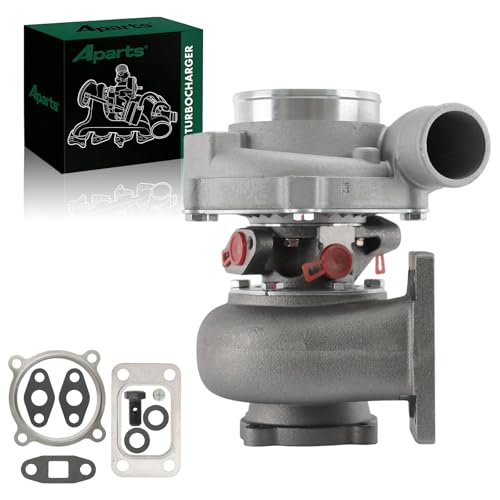
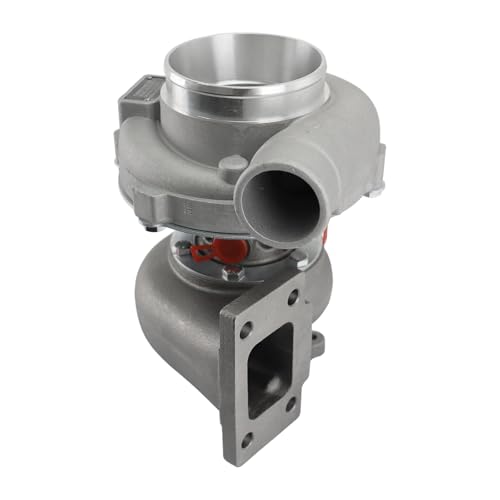
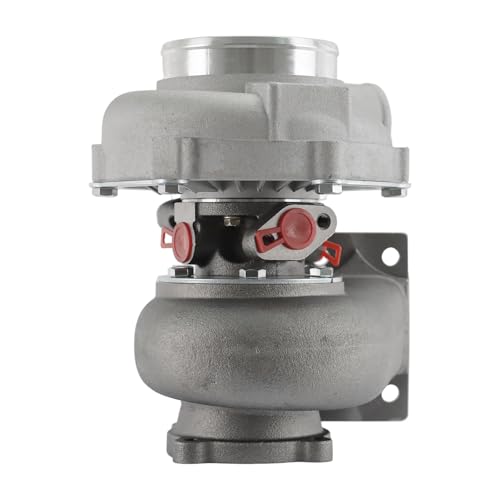

Important Fitment Correction
This turbocharger is not an OE-style direct replacement for any vehicle listed above.
None of the specified Honda Civic, Honda CRX, BMW 320i, 325, 325i or 325Ci applications originally used a GT3037 or GT3076 turbocharger from the factory.
Installation requires a custom or vehicle-specific combination of:
- Turbo exhaust manifold
- External or internal wastegate system
- Downpipe and exhaust fabrication
- Oil-feed line
- Oil-return line and oil-pan fitting
- Intercooler
- Charge piping
- Blow-off valve or bypass valve
- Intake pipe and air filter
- Fuel injectors
- Fuel-pump upgrades
- ECU tuning
- Boost-control system
- Wideband oxygen sensor
- Engine monitoring
- Heat shielding
- Appropriate cooling upgrades
Calling this a direct replacement is inaccurate. If it replaces the factory turbo, first you would need a factory turbo—and these cars rather inconveniently arrived without one.
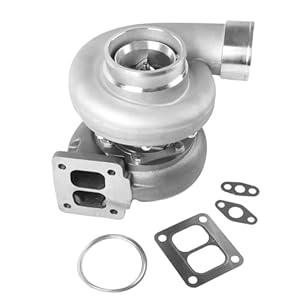
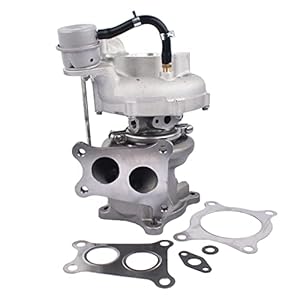
GT3037/GT3076-Style Turbocharger
The GT3037 and GT3076 designations generally describe a medium-frame performance turbo intended for custom street and competition builds. Actual airflow capability, response and safe power range depend on the exact compressor wheel, turbine wheel, housing dimensions and bearing system.
Before purchase, confirm:
- Compressor inducer and exducer dimensions
- Turbine-wheel dimensions
- Compressor-housing inlet and outlet sizes
- Turbine inlet flange
- Turbine outlet flange
- Turbine housing A/R
- Bearing type
- Cooling configuration
- Wastegate configuration
- Oil-feed fitting and pressure requirements
- Manufacturer-rated airflow or power range
A product title containing “GT3076” does not prove that its internal specifications match a genuine Garrett GT3076R.
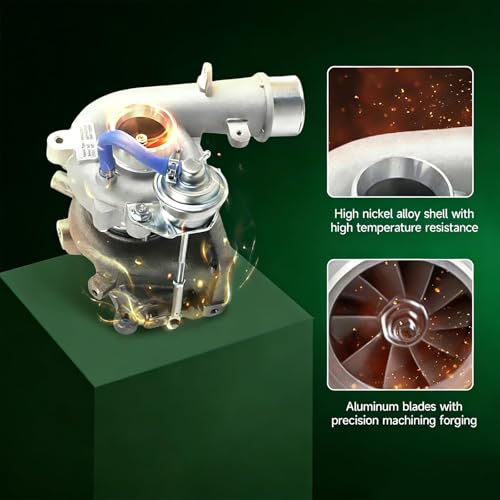
Product Construction
The turbocharger is advertised with:
- Cast-aluminum compressor housing
- Iron turbine housing
- Precision-machined sealing surfaces
- High-temperature turbine components
- Balanced compressor and turbine assembly
- Two-year limited warranty
These materials are commonly used in turbocharger construction, but final durability depends on machining accuracy, rotor balance, lubrication and installation quality.
Not a Complete Installation Kit
Despite the “complete installation kit” description, buyers should confirm exactly what is included.
A genuinely complete conversion requires far more than the turbocharger and a few fittings. At minimum, verify whether the package contains:
- Turbocharger
- Wastegate
- Oil-feed fittings and hose
- Oil-return fittings and hose
- Mounting gaskets
- V-band clamps
- Turbo mounting hardware
- Coolant fittings, if required
- Blow-off valve
- Intercooler piping
- Exhaust-manifold flange
- Downpipe flange
Vehicle-specific manifolds, downpipes, intercoolers, fuel-system parts and tuning equipment are unlikely to be included.
Honda Civic and CRX Installation Requirements
A 1990 CRX or 1997 Civic turbo build requires an engine-specific exhaust manifold. Fitment depends on the actual engine, which may include different D-series configurations or an engine swap.
Before installation, identify:
- Engine code
- Compression ratio
- Cylinder condition
- Turbo-manifold flange
- Fuel-system capacity
- ECU and tuning solution
- Clutch or transmission condition
- Desired boost and horsepower target
For a street-driven D-series engine, a GT3037/GT3076-size turbo may produce slower response than a smaller turbo selected around a modest power target. Bigger is not automatically better unless waiting for boost is part of the driving experience.
BMW Installation Requirements
BMW fitment varies substantially between chassis and engines, including:
- E30 325/325i
- E36 320i/325i
- E46 325i/325Ci
- Later market-specific 325i models
Each chassis requires different:
- Exhaust manifold
- Engine-mount clearance
- Downpipe routing
- Intercooler placement
- Oil-drain routing
- Intake plumbing
- ECU calibration
- Fuel-system upgrades
This product should therefore be listed as a universal turbo for custom BMW inline-six builds, not as a direct-fit replacement.
Check Engine Health Before Adding Boost
Before installing a turbocharger on a naturally aspirated engine, perform:
- Compression test
- Cylinder leak-down test
- Cooling-system pressure test
- Oil-pressure test
- Crankcase-ventilation inspection
- Ignition-system inspection
- Fuel-pressure test
- Timing-system inspection
Pro Street’s guide to checking engine health before adding boost explains why these checks matter before fabrication begins.
Adding boost to a tired engine does not rejuvenate it. It merely helps the existing problem reach its conclusion faster.
Fuel and Engine Management
A turbo conversion requires an ECU calibration matched to:
- Injector size
- Fuel pressure
- Turbo airflow
- Boost pressure
- Intercooler efficiency
- Fuel octane
- Compression ratio
- Ignition timing
Do not operate the engine under boost without a verified tune and wideband air/fuel monitoring. An adjustable fuel-pressure regulator and optimism are not engine management.
Turbocharger Installation Requirements
Before first startup:
- Clean the intake and exhaust systems.
- Confirm proper oil-feed pressure.
- Install an unrestricted gravity-fed oil drain.
- Prime the turbocharger with clean engine oil.
- Verify that the rotating assembly moves freely.
- Pressure-test the intercooler piping.
- Check wastegate and boost-controller plumbing.
- Crank the engine without starting until oil pressure develops.
- Check all oil, exhaust and intake connections.
- Begin tuning at wastegate spring pressure.
Garrett’s installation guidance recommends clean engine oil, fresh filters, proper oil priming and inspection of the intake and crankcase-breather systems during turbo installation. www.garrettmotion.com
Realistic Performance Expectations
This turbo may support a substantial custom build when properly sized and installed, but the listing should not promise improved fuel economy.
Turbocharging can increase power by forcing additional air into the engine, but that power requires additional fuel. Real results depend on:
- Engine condition
- Boost pressure
- Turbocharger efficiency
- Fuel quality
- Injector capacity
- Intercooler performance
- Exhaust backpressure
- ECU calibration
The safe power limit is usually determined by the engine, fuel system and tune—not the optimistic number printed beside the turbocharger.
Professional Fabrication and Tuning Required
This product is best suited to experienced builders or professional performance shops. Installation requires fabrication, fuel-system work, oil-system modifications and custom calibration.
It should not be purchased as a weekend bolt-on replacement for a failed factory turbo, because the listed vehicles never had one.







There are no reviews yet.