
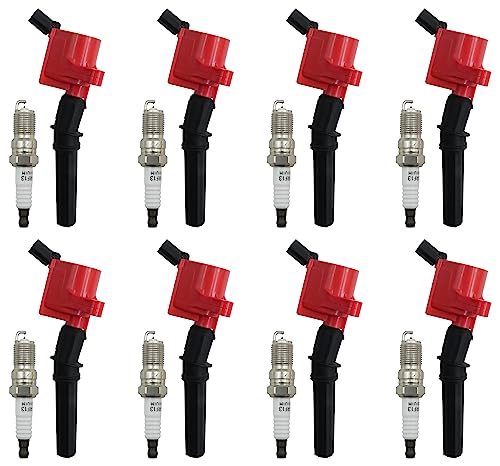
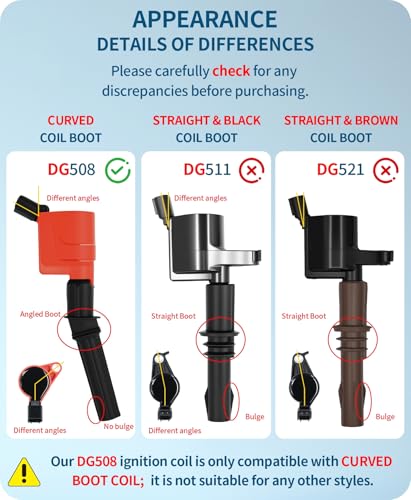
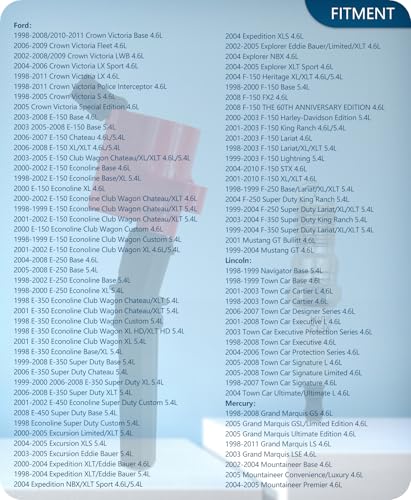
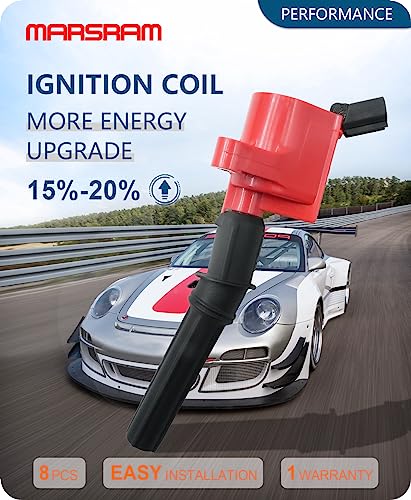
Important Engine Restrictions
This kit should not be selected by displacement alone.
Confirm whether the vehicle has a compatible:
- 4.6L two-valve Modular V8
- 5.4L two-valve Modular V8
- Applicable four-valve performance engine using the listed coil and plug specifications
Do not assume fitment for:
- 5.4L three-valve engines without OE-number verification
- 4.6L three-valve engines
- Later F-150 engines based only on trim level
- 2005–2010 Mustang GT 4.6L three-valve engines
- 2005-and-newer Expedition 5.4L three-valve engines
- 2004-and-newer F-150 5.4L three-valve engines
- Any application using a different spark-plug thread, reach or seat design
Several listed years were available with more than one version of the same-displacement engine. Verify the VIN, emissions label and original parts before ordering.
Interchange Numbers
Ignition-coil references
- DG508
- DG457
- DG467
- DG472
- DG473
- DG481
- DG491
- F523
- COP9
- FD503
- FD503T
- FD493
- C566
- GN10164
- 3W7Z-12029-AA
- F7TU-12A366-AB
- 1L2U-12029-AA
- 1L2U-12A366-A
Spark-plug references
- SP479
- SP493
- AGSF22WM
- AGSF22WMF4
- AWSF22E
Because SP479 and SP493 may represent different revisions or application requirements, confirm the actual number printed on the supplied plugs. Do not treat every listed reference as universally interchangeable across all 4.6L and 5.4L engines.
Symptoms This Kit May Correct
Properly matched coils and plugs may help correct:
- Rough or unstable idle
- Hesitation under acceleration
- Cylinder-specific P0301–P0308 codes
- P0300 random or multiple-cylinder misfire
- Difficult starting
- Reduced engine power
- Flashing check-engine light
- Fuel odor caused by an active misfire
- Coil primary or secondary circuit faults
Our engine-misfire diagnosis guide explains how the symptoms change with engine load and operating temperature.
A flashing check-engine light indicates a severe active misfire. Continued driving can send unburned fuel into the catalytic converters, turning an ignition problem into a much more expensive exhaust problem.
Installation Considerations
Before installing the kit:
- Confirm the original coil and spark-plug numbers.
- Work only on a cool engine.
- Remove dirt from around each plug well.
- Inspect the wells for water, oil and damaged threads.
- Compare the new plug’s thread diameter, reach and seat with the original.
- Verify the specified gap for the exact engine.
- Start every plug by hand.
- Tighten the plugs using the vehicle manufacturer’s specification.
- Inspect the coil connectors and boots for damage.
- Clear the stored codes and verify the repair with a scan tool.
Never use a generic torque specification simply because the engine says 4.6L or 5.4L. Cylinder-head and spark-plug designs changed during the Modular engine’s production run.
NGK recommends installing plugs into clean holes and tightening them to the specified torque or turning angle. Review proper spark-plug installation procedures before beginning the repair.
Why Replace the Coils and Plugs Together?
As spark-plug electrodes wear, the effective gap grows and requires more voltage to fire. That additional demand can expose a weak ignition coil, especially under acceleration or heavy load.
Replacing worn plugs at the same time as failed or aging coils can restore dependable ignition performance. However, a complete eight-coil replacement is not automatically necessary because one cylinder has a misfire. Test first and spend second—an unusual concept in online automotive retail.








There are no reviews yet.