
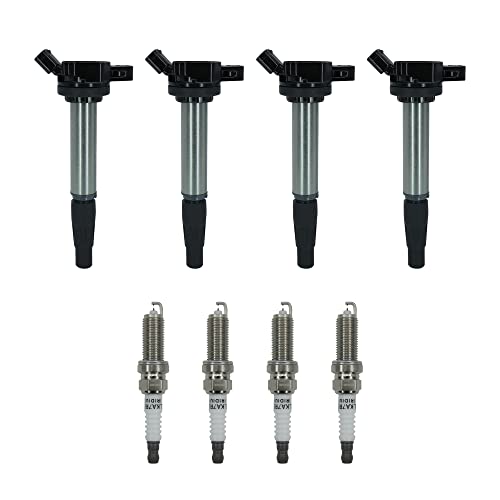
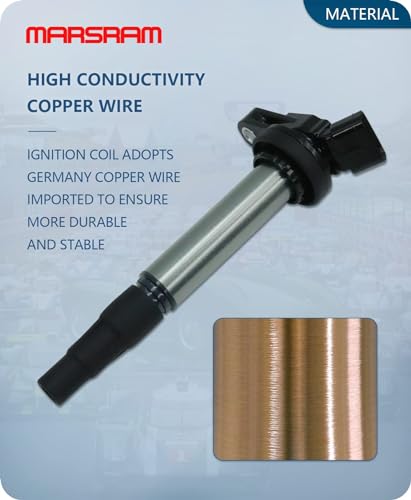
Heat-Resistant Ignition-Coil Construction
Each coil uses insulated internal windings enclosed in an engineered-plastic and epoxy-resin housing. This construction is designed to withstand the heat and vibration found around the cylinder head while delivering the voltage required to fire the spark plug.
A failing coil may cause:
- Rough or unstable idle
- Difficult starting
- Hesitation under acceleration
- Reduced engine power
- Poor fuel economy
- Engine shaking
- Random or cylinder-specific misfires
- An illuminated or flashing check-engine light
Read Pro Street’s guide to bad ignition-coil symptoms if you are still determining whether the coil is responsible.
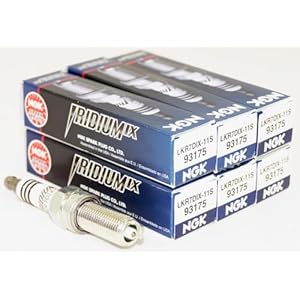
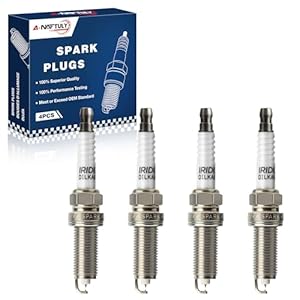
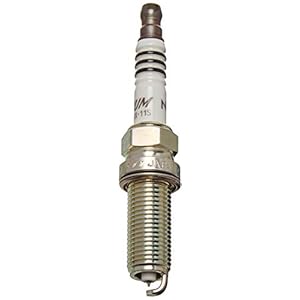
Double-Iridium Spark Plugs
The included plugs use iridium at both the center and ground electrodes. The corrosion- and wear-resistant electrode design helps control spark-gap growth and maintain consistent ignition over an extended service interval.
Replacing worn plugs may help restore:
- Faster starting
- Stable idle quality
- Smooth acceleration
- Consistent combustion
- Original engine response
- Fuel economy lost to worn ignition parts
New plugs restore lost performance; they do not manufacture bonus horsepower from thin air. Marketing departments remain deeply disappointed by basic physics.
For additional guidance, see How to Pick Spark Plugs for Your Build and Denso’s spark-plug technical information.
Hybrid Vehicle Compatibility
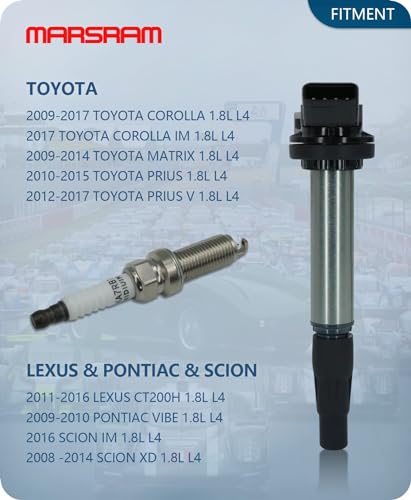
This kit includes applications for the Toyota Prius, Prius V and Lexus CT 200h. These vehicles still use conventional spark plugs and individual ignition coils because their gasoline engines remain part of the hybrid powertrain.
Hybrid vehicles can restart their engines frequently during normal operation, making proper ignition performance especially important. However, hybrid systems contain high-voltage components. This ignition service does not normally require opening the high-voltage system, but technicians should still follow the applicable Toyota or Lexus service procedure and safety precautions.
Symptoms This Kit May Address
This kit may help correct problems caused by worn plugs or weak ignition coils, including:
- P0300 random/multiple-cylinder misfire
- P0301 cylinder-one misfire
- P0302 cylinder-two misfire
- P0303 cylinder-three misfire
- P0304 cylinder-four misfire
- Rough cold starts
- Hesitation under load
- Intermittent loss of power
- Excessive fuel consumption
Misfires can also result from fuel injectors, vacuum leaks, wiring faults, head-gasket problems, oil consumption or low compression. Consult Pro Street’s engine-misfire diagnosis guide before declaring every drivability problem a coil failure.
Installation Notes
Install the coils and spark plugs only when the engine is cool.
- Verify the OE numbers and coil connectors.
- Remove the engine cover where applicable.
- Disconnect each ignition-coil connector.
- Remove the retaining bolts and coils.
- Clear dirt and debris from the plug wells.
- Inspect the wells for oil, coolant or moisture.
- Remove and compare the original plugs.
- Verify the replacement plug gap for the exact vehicle.
- Start each spark plug by hand.
- Tighten the plugs to the manufacturer’s torque specification.
- Reinstall the coils and reconnect the wiring.
- Clear stored trouble codes and confirm proper operation.
Do not guess the spark-plug gap or tightening torque. Check the correct Toyota owner and service information for the exact model and engine. Aluminum cylinder-head threads are remarkably unforgiving of enthusiasm with a long ratchet.
Why Replace the Coils and Plugs Together?
As a spark plug wears, its gap can grow and require more voltage to fire. That increased demand can place additional stress on an aging ignition coil.
Replacing both components together provides:
- Consistent ignition parts across all four cylinders
- Reduced risk of repeated repairs
- Fewer mismatched old and new components
- A dependable baseline for misfire diagnosis
- More consistent performance under load







There are no reviews yet.