


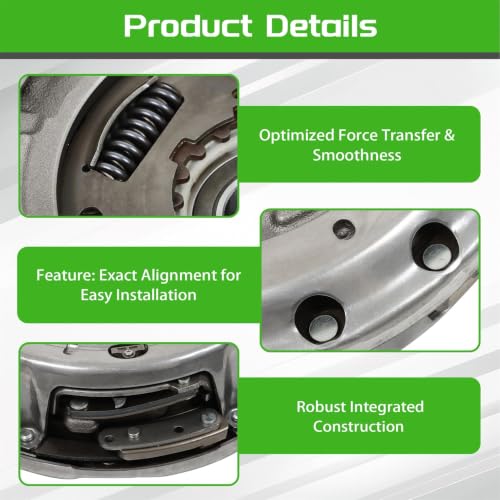


How to verify DPS6 fitment
Before ordering, confirm:
- Transmission code is DPS6 or 6DCT250
- Vehicle identification number
- Engine and destination market
- Original clutch reference number
- Number and design of clutch forks
- Input-shaft and clutch dimensions
- Included bearings and retaining hardware
- Required installation-tool compatibility
Common cross-reference numbers for this transmission family include 6DCT250, DPS6 and 602000800, but the Munirater listing should be checked for its exact supported OE references before those numbers are added to structured product data.
What is the Ford DPS6 transmission?
The DPS6 is a six-speed dry dual-clutch automated manual transmission. It uses two clutch sections:
- One clutch operates the odd-numbered gears
- The other operates the even-numbered gears
- Electric actuators control clutch engagement
- The transmission control module coordinates shifting
- Shift forks preselect the next gear
This design can provide efficient power transfer, but proper operation depends on the clutch, forks, actuators, seals, bearings, wiring and transmission control system all working together.
A new clutch kit cannot repair every DPS6 complaint. Ford issued service information addressing clutch shudder and required technicians to perform transmission adaptive learning with the appropriate diagnostic system. Ford DPS6 clutch-shudder service bulletin
Common symptoms of DPS6 trouble
A worn or contaminated dual-clutch assembly may cause:
- Shudder when accelerating from a stop
- Delayed engagement
- Harsh first-to-second shifts
- Engine speed increasing without normal acceleration
- Intermittent loss of drive
- Grinding or rattling
- Transmission overheating warnings
- Difficulty selecting reverse
- Transmission malfunction messages
However, similar symptoms can also come from:
- Failed clutch actuators
- Seized clutch forks
- Input-shaft seal leakage
- Transmission control module faults
- Low battery voltage
- Damaged wiring or connectors
- Incorrect clutch adjustment
- Incomplete adaptive learning
- Internal transmission damage
Ford previously issued extended-coverage programs for certain DPS6 clutch-shudder and input-shaft-seal concerns. Coverage depended on vehicle eligibility, mileage, time and market. Ford DPS6 program information filed with NHTSA
What comes in the Munirater kit?
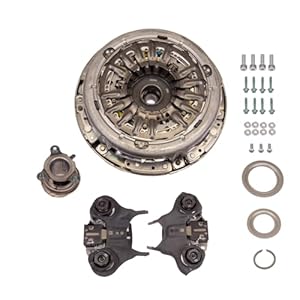
The listing identifies the package as a dual-clutch and clutch-fork kit but does not provide a complete component inventory.
Before purchase, confirm whether the package includes:
- Dry dual-clutch assembly
- Both clutch forks
- Fork bearings
- Engagement bearings
- Retaining rings
- Springs
- Installation hardware
- Adjustment shims
- Protective shipping locks
Do not assume that actuators, seals, installation tools or a transmission control module are included.
Is it really easy to install?
No—not in the usual bolt-on sense.
Replacing a DPS6 clutch normally requires:
- Removing the transmission
- Inspecting both input-shaft seals
- Removing the clutch with dedicated tools
- Inspecting the clutch-fork system
- Measuring and setting clutch position
- Installing the dual clutch at the correct depth
- Unlocking or setting the clutch mechanism
- Reinstalling and aligning the transmission
- Performing actuator checks
- Completing the clutch adaptive-learning procedure
Attempting installation without the correct tool set can damage the clutch, forks or transmission input shafts. Even if the hardware bolts together, the vehicle may still shift poorly until the transmission control module completes the proper relearn.
“Direct fit” describes the intended dimensions. It does not mean the job is equivalent to replacing an air filter.
Diagnosis before replacement
Before condemning the clutch, scan the transmission control module for diagnostic trouble codes and review live data.
A proper diagnosis should include:
- Battery and charging-system test
- TCM communication check
- Clutch actuator operation
- Shift-fork movement
- Input-shaft seal inspection
- Clutch contamination inspection
- Transmission mount inspection
- Wiring and connector checks
- Adaptive-learning status
- Software update verification
If the vehicle has no TCM communication or actuator control, replacing only the clutch may not solve the problem.
Find more diagnostic and repair information through the My Pro Street technical library or browse the Ford FAQ section.
Installation recommendations
This repair is best handled by a technician familiar with Ford’s DPS6 transmission. Required equipment may include:
- Vehicle lift
- Transmission jack
- DPS6 clutch removal and installation tool set
- Measuring and adjustment tools
- Torque wrenches
- Ford-compatible bidirectional scan tool
- Transmission-support equipment
- Approved service information
During repair, inspect the input-shaft seals carefully. Fluid contamination on a dry clutch can quickly ruin the replacement assembly and recreate the original shudder.
The transmission should also receive the latest applicable control-module calibration before final adaptive learning.
Clutch adaptive learning
After mechanical installation, the transmission control module must learn clutch touch points and actuator positions. The procedure normally requires a compatible scan tool capable of accessing Ford transmission service functions.
The process may include:
- Clutch travel learning
- Shift-drum or fork learning
- Clutch touch-point calibration
- Adaptive reset
- Controlled road testing
- Rechecking fault codes
Skipping this procedure can cause harsh shifts, delayed engagement, shudder or a no-drive condition. Driving aggressively is not a substitute for calibration, no matter how educational the check-engine light becomes.
Final verdict
The Munirater DPS6 clutch and fork kit may provide the core mechanical components needed to repair a compatible Ford Focus, B-Max or EcoSport PowerShift transmission. Its value depends on accurate transmission identification, complete package contents and proper installation.
The listing’s “convenient installation” language understates the job considerably. Confirm the OE reference numbers and supplied components, inspect the input seals and actuators, and plan for a scan-tool adaptive relearn before purchasing.
Browse more replacement and drivetrain products at ProStreetOnline or visit My Pro Street for additional diagnostic guides.







There are no reviews yet.