


Vehicle Fitment
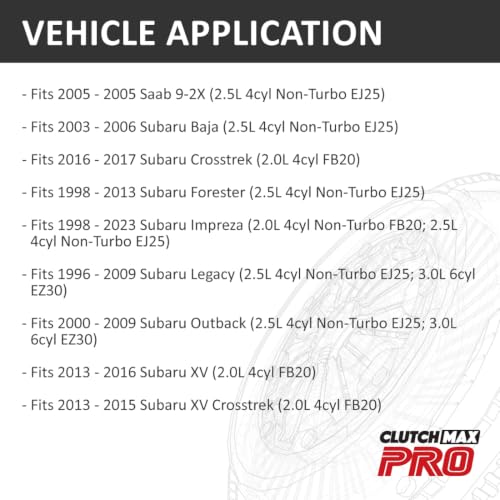
According to the supplied CMPRO application data, this package is intended for select:
| Vehicle | Engine | Supplied Years |
|---|---|---|
| Saab 9-2X | 2.5L non-turbo EJ25 | 2005 |
| Subaru Baja | 2.5L non-turbo EJ25 | 2003–2006 |
| Subaru Crosstrek | 2.0L FB20 | 2016–2017 |
| Subaru XV | 2.0L FB20 | 2013–2016 |
| Subaru XV Crosstrek | 2.0L FB20 | 2013–2015 |
| Subaru Forester | 2.5L non-turbo EJ25 | 1998–2013 |
| Subaru Impreza | 2.0L FB20 / 2.5L non-turbo EJ25 | 1998–2023 |
| Subaru Legacy | 2.5L non-turbo EJ25 / 3.0L EZ30 | 1996–2009 |
| Subaru Outback | 2.5L non-turbo EJ25 / 3.0L EZ30 | 2000–2009 |
These are seller-supplied application ranges.
Because Subaru used multiple manual transmissions and clutch configurations across these years, verify the exact:
year + model + engine + transmission + spline + flywheel
before ordering.
Important Fitment Note
The supplied product description contains conflicting engine information in one section.
The clearer detailed application list identifies:
- EJ25
- FB20
- EZ30
applications.
A later paragraph appears to contain typographical errors, including references to “2.0L EJ25” and “3.0L EZ20.”
Those conflicting engine descriptions should not be used for purchasing decisions.
Verify the actual engine and transmission before installation.
Naturally Aspirated Applications
This package is primarily positioned for:
non-turbo Subaru applications.
That distinction is important.
Do not assume fitment for:
- Subaru WRX
- Subaru STI
- Forester XT
- Legacy GT
- Outback XT
- Baja Turbo
- Turbocharged engine swaps
simply because the chassis or engine family appears related.
Turbo Subaru drivetrains can use different clutch and flywheel specifications.
23.12-Pound Nodular Flywheel
One of the most important features of this kit is the included:
23.12-lb nodular flywheel.
Nodular iron is commonly used for replacement flywheels because it combines strength, durability and thermal capacity.
For a daily-driven Subaru, a full-weight replacement flywheel generally prioritizes:
- Smooth engagement
- Stable idle behavior
- Easier takeoff
- Factory-like drivability
- Thermal capacity
rather than the quicker engine response associated with an aggressively lightweight flywheel.
Why Flywheel Weight Matters
A lighter flywheel can allow the engine to rev more quickly, but it can also affect:
- Low-speed drivability
- Launch behavior
- Engine speed drop between shifts
- Clutch engagement feel
- Idle smoothness
At 23.12 pounds, this CMPRO flywheel is better positioned as an OEM-style replacement than a lightweight racing flywheel.
For a daily-driven Forester, Impreza, Legacy or Outback, that is often exactly what you want.
Nodular Flywheel vs Lightweight Performance Flywheel
CMPRO 23.12-lb Nodular Flywheel
Best suited for:
- Daily driving
- Factory-style replacement
- Smooth engagement
- Street vehicles
- Stock or lightly modified engines
Lightweight Flywheel
More relevant to:
- Performance builds
- Autocross
- Track use
- Drivers prioritizing engine response
A lightweight flywheel is not automatically an upgrade for every street-driven Subaru.
Why Replace the Flywheel With the Clutch?
The clutch disc operates directly against the flywheel surface.
An old flywheel may develop:
- Hot spots
- Heat checking
- Grooves
- Glazing
- Uneven wear
- Cracks
- Previous machining damage
Installing a new flywheel provides a fresh friction surface for the replacement clutch.
It can also eliminate the need to locate a machine shop and determine whether the original flywheel remains within resurfacing specifications.
8-7/8-Inch Clutch Disc
The supplied CMPRO disc measures:
8-7/8 inches in diameter.
Its hub specification is:
1 inch × 24 spline.
These dimensions are critical.
A clutch disc may appear physically similar but still be incompatible if the transmission input shaft uses a different:
- Diameter
- Spline count
- Hub configuration
Always confirm the transmission.
24-Spline Input Shaft
This clutch package uses a:
24-spline disc hub.
That is one of the most useful fitment checks on a vehicle with an unknown drivetrain history.
If the Subaru has undergone:
- Transmission replacement
- Manual swap
- Engine swap
- Performance drivetrain conversion
the factory application chart may no longer tell the entire story.
Identify what is currently installed.
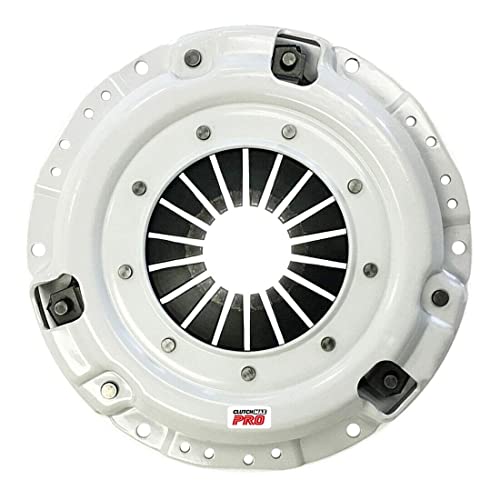
CMPRO OEM-Style Pressure Plate
The package includes a:
premium OEM-style pressure plate.
This kit is not positioned as a Stage 2 or competition clutch.
Instead, it is aimed at drivers who want:
- Factory-style engagement
- Normal street drivability
- Replacement durability
- Complete clutch service
That makes it more appropriate for stock or mildly modified naturally aspirated Subaru applications than for high-output turbo builds.
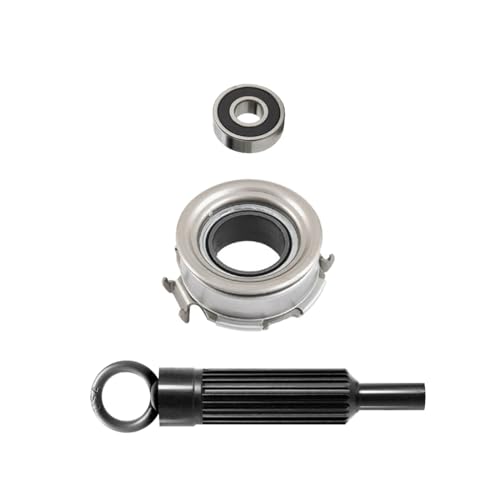
High-Temperature HD Release Bearing
CMPRO also includes a:
high-temperature heavy-duty release bearing.
The release bearing operates whenever the clutch pedal is used to disengage the pressure plate.
Because accessing it requires transmission removal, replacing it during a clutch job is generally preferable to reusing an old bearing with unknown mileage.
HD Pilot Bearing
The package includes a new:
heavy-duty pilot bearing.
The pilot bearing supports the transmission input shaft in applicable configurations.
Inspect and install it according to the proper Subaru service procedure.
Subaru Forester Fitment
The supplied listing identifies:
1998–2013 Subaru Forester 2.5L non-turbo EJ25
applications.
This does not imply compatibility with:
Forester XT
turbo models.
Because the Forester spans multiple generations during this period, confirm transmission fitment before ordering.
Subaru Impreza Fitment
CMPRO lists select:
1998–2023 Subaru Impreza
applications using:
- 2.0L FB20
- 2.5L non-turbo EJ25
This is a very broad stated range.
Do not assume every Impreza from 1998 through 2023 uses the same clutch.
Verify the actual engine and manual transmission.
Most importantly:
WRX and STI applications should not be assumed compatible.
Subaru Legacy Fitment
The clearer supplied application list identifies select:
1996–2009 Subaru Legacy
models equipped with:
- 2.5L non-turbo EJ25
- 3.0L EZ30
applications.
Because Legacy drivetrain configurations vary substantially by generation and trim, exact fitment verification is essential.
Subaru Outback Fitment
The supplied listing identifies:
2000–2009 Subaru Outback
applications with:
- 2.5L non-turbo EJ25
- 3.0L EZ30
engines.
Turbocharged Outback XT models are not included in the stated fitment.
Subaru Baja Fitment
The package is listed for:
2003–2006 Subaru Baja 2.5L non-turbo EJ25.
The naturally aspirated requirement matters.
Do not automatically apply this kit to:
Baja Turbo
models.
Subaru Crosstrek Fitment
The seller identifies select:
2016–2017 Subaru Crosstrek 2.0L FB20
applications.
The package is also marketed for earlier vehicles sold as:
XV Crosstrek.
Subaru XV Crosstrek Fitment
According to the supplied listing:
2013–2015 Subaru XV Crosstrek 2.0L FB20
applications are included.
The seller separately lists:
2013–2016 Subaru XV 2.0L FB20.
Because those ranges overlap and naming can vary by market/catalog, verify the exact VIN/application rather than treating the two lines as separate mechanical platforms.
Saab 9-2X Fitment
The package includes select:
2005 Saab 9-2X 2.5L non-turbo EJ25
applications.
The 9-2X shares substantial mechanical architecture with the Subaru Impreza.
That is why many Subaru drivetrain components appear in Saab 9-2X fitment catalogs.
The turbocharged:
9-2X Aero
should not be assumed compatible unless separately verified.
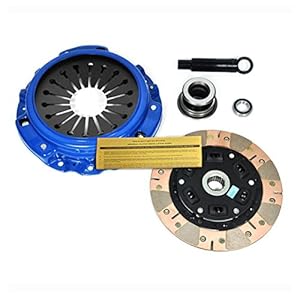
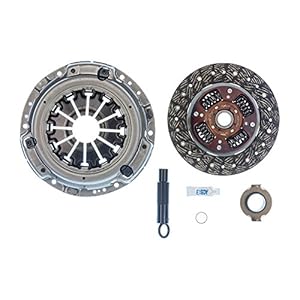
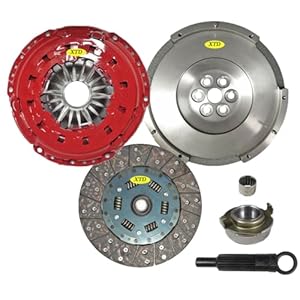
What Comes in the CMPRO Kit?
According to the supplied product information, the package contains:
- 1 × 23.12-lb premium nodular flywheel
- 1 × OEM-style pressure plate
- 1 × 8-7/8″ clutch disc
- 1 × high-temperature HD release bearing
- 1 × HD pilot bearing
- 1 × clutch alignment tool
- 1 × installation guide
This gives the installer most of the major components required for a full clutch and flywheel replacement.
Inspect the Rear Main Seal
With the flywheel removed, inspect the rear of the engine for oil leakage.
A leaking rear main seal can contaminate the new clutch.
Possible results include:
- Slipping
- Chatter
- Burning smell
- Premature clutch failure
Repair active leaks before assembling the new friction components.
Inspect the Transmission Input Seal
Transmission fluid contamination can create the same problem.
Check the input shaft area and bellhousing for signs of leakage.
Installing a brand-new clutch into a bellhousing already wet with oil is generally an expensive way to schedule the next clutch job.
Clean the Flywheel Before Installation
A new flywheel may have protective oil or manufacturing residue on its friction surface.
Clean it thoroughly using an appropriate residue-free cleaner before installing the clutch.
Do not leave:
- Grease
- Oil
- Fingerprints
- Protective coating
on the clutch friction surfaces.
Clutch Disc Orientation
Make sure the clutch disc is installed in the correct direction.
Depending on the disc design, one side may be marked:
- Flywheel side
- Gearbox side
- Transmission side
Installing the disc backward can cause interference or prevent proper clutch release.
Follow the supplied installation instructions.
Use the Alignment Tool
The clutch disc must be centered before tightening the pressure plate.
Use the included alignment tool.
If the disc is off-center, the transmission input shaft may not enter the pilot bearing during reinstallation.
Trying increasingly larger amounts of force rarely improves clutch-disc alignment.
Pressure Plate Installation
Install the pressure plate gradually and evenly.
Follow the proper tightening pattern and torque specification for the exact application.
Avoid tightening one bolt fully before the others.
Even tightening helps the pressure plate seat correctly against the flywheel.
Inspect the Clutch Fork
While the transmission is removed, inspect the release system.
Check components such as:
- Clutch fork
- Pivot
- Retaining clips
- Contact points
- Slave-cylinder operation
Wear in the release mechanism can affect clutch feel even with brand-new friction components.
Inspect the Hydraulic System
Many Subaru manual transmissions use hydraulic clutch actuation.
Check:
- Master cylinder
- Slave cylinder
- Hydraulic hose
- Fluid level
- Fluid condition
A weak hydraulic system can cause:
- Poor clutch release
- Hard shifting
- Gear grinding
- Inconsistent pedal feel
Do not assume every clutch problem comes from the clutch disc.
Symptoms of a Worn Clutch
A worn friction clutch commonly causes:
- Engine RPM rises without matching acceleration
- Slipping under heavy throttle
- High engagement point
- Burning clutch odor
- Chatter during takeoff
- Poor power transfer
These symptoms should be diagnosed before parts are ordered.
Clutch Problems vs Transmission Problems
Hard shifting does not automatically mean the clutch disc has failed.
Possible causes also include:
- Hydraulic problems
- Worn synchronizers
- Clutch not fully releasing
- Damaged linkage
- Incorrect adjustment
- Transmission wear
Proper diagnosis prevents expensive guessing.
Clutch Break-In
Follow CMPRO’s current break-in instructions after installation.
A new clutch generally benefits from normal street engagement cycles before aggressive use.
Avoid immediately subjecting the new components to:
- Hard launches
- Full-throttle clutch dumps
- Aggressive drag starts
- Excessive slipping
The goal is to allow the new disc, pressure plate and flywheel surfaces to mate evenly.
Good Choice for a Daily-Driven Subaru
This package makes the most sense for a compatible Subaru used primarily for:
- Commuting
- Daily transportation
- Normal street driving
- Light modifications
- OEM-style restoration
- Long-term maintenance
The full-weight nodular flywheel helps preserve the kind of drivability expected from a standard replacement clutch system.
Is It Good for a Modified Subaru?
For a mildly modified naturally aspirated application, potentially.
But the supplied listing does not provide a specific increased torque rating.
For cars with:
- Turbo conversions
- Superchargers
- Significant engine work
- Competition use
select a clutch based on actual torque output and drivetrain requirements.
Do not assume “heavy duty” means unlimited power capacity.
OEM Premium Does Not Mean Genuine Subaru
CMPRO describes these components using terms such as:
OEM premium.
That should be understood as aftermarket replacement positioning.
Unless specifically documented otherwise, these are not:
- Genuine Subaru parts
- Subaru OEM parts
- Genuine Saab parts
- Factory-installed components
A clearer description is:
OEM-style aftermarket replacement clutch and flywheel package.
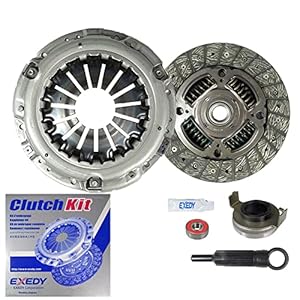
CMPRO vs Exedy/CMPRO Package
You may also encounter a similar package combining:
Exedy clutch components + CMPRO flywheel.
This CMPRO package is different.
CMPRO Kit
Uses:
- CMPRO/OEM-style clutch components
- CMPRO nodular flywheel
Exedy + CMPRO Kit
Uses:
- Exedy clutch disc
- Exedy pressure plate
- CMPRO flywheel
Keeping these products separate is important both for buyers and for search-engine targeting.
Who Should Buy This Kit?
This package is most relevant to owners of compatible:
- Forester
- Impreza
- Legacy
- Outback
- Baja
- XV
- Crosstrek
- Saab 9-2X
vehicles who need both:
a replacement clutch and a replacement flywheel.
Who Should Verify Further?
Additional verification is especially important if:
- The car is turbocharged
- The transmission has been swapped
- The engine has been swapped
- An aftermarket flywheel is installed
- Previous clutch modifications are unknown
- The vehicle falls near a generation transition
Subarus are popular project cars.
The parts installed today may not be the parts listed on the original window sticker.
Warranty
CMPRO advertises a limited manufacturer warranty of:
12 months or 15,000 miles.
Coverage may depend on:
- Correct fitment
- Proper installation
- Vehicle usage
- Proof of purchase
- Product condition
- Manufacturer exclusions
Review the current warranty terms before installation.
Fitment Checklist
Before purchasing, verify:
Make → Model → Model Year → Engine Code → Turbo/Non-Turbo → Transmission → 24-Spline Input → Flywheel
Supplied Engine Families
FB20 — 2.0L naturally aspirated
EJ25 — 2.5L naturally aspirated
EZ30 — 3.0L six-cylinder
Do not rely on the contradictory engine codes appearing elsewhere in the supplied seller copy without further verification.
Final Take
The CMPRO OEM Clutch Kit and 23.12-lb Nodular Flywheel package is a practical option for drivers who want to replace the major clutch wear components and flywheel during one transmission-out service.
The package includes:
23.12-lb nodular flywheel
8-7/8″ × 1″ × 24-spline clutch disc
OEM-style pressure plate
high-temperature release bearing
pilot bearing
and:
alignment tool.
Its strongest use case is a naturally aspirated Subaru that needs dependable, factory-style clutch behavior rather than an aggressive racing setup.
The biggest caution is the broad fitment.
Subaru used many drivetrain combinations across these years, and the supplied seller description itself contains inconsistent engine-code information.
Verify the exact transmission and engine configuration before ordering.







There are no reviews yet.