
Important Fitment Notes
Volkswagen and Audi used several auxiliary coolant pumps with similar housings and connectors. Fitment can vary by:
- Engine code
- Production date
- Front-wheel drive or Quattro
- Transmission
- Heater-system configuration
- Original pump revision
- Vehicle software and cooling layout
Confirm the OE number printed on the original pump. Do not purchase solely because the vehicle has a 2.0L engine; naturally aspirated, diesel and different-generation turbo engines may use another pump.
Reference and Replacement Numbers
This A-Premium pump is referenced as:
- 1K0965561D
- 1K0 965 561 D
- V10160032
Later VAG revisions commonly associated with this pump family include:
- 1K0965561G
- 1K0965561J
- 1K0 965 561 J
A later letter usually indicates a revised component, but supersession must still be verified for the exact VIN. Alphabetical progress does not automatically guarantee plug-and-play happiness.
Product Specifications
- Brand: A-Premium
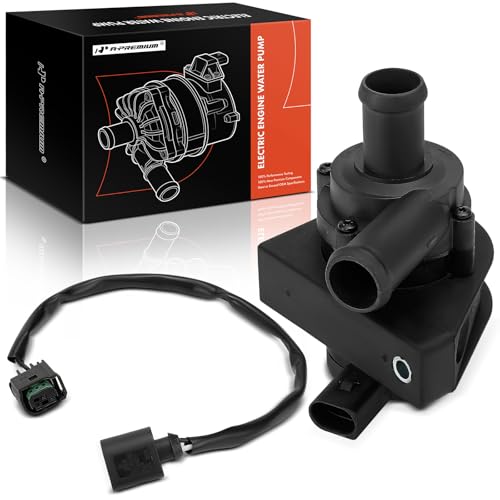
- Product type: Auxiliary electric coolant pump
- Drive type: 12-volt electric
- Fitment type: Vehicle-specific replacement
- Primary reference: 1K0965561D
- Coolant connections: Two hose ports
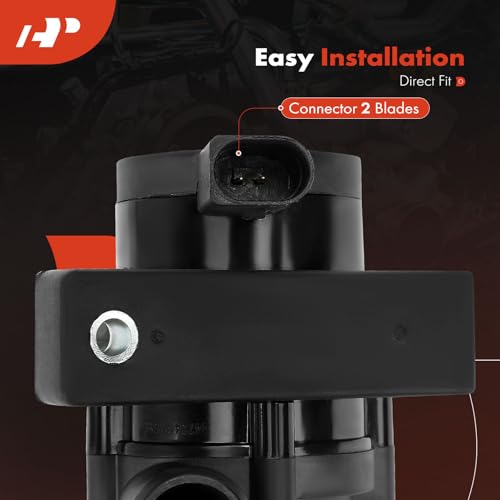
- Electrical connection: Vehicle-specific plug
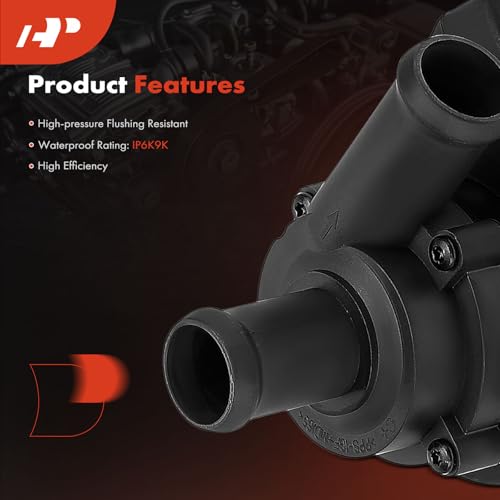
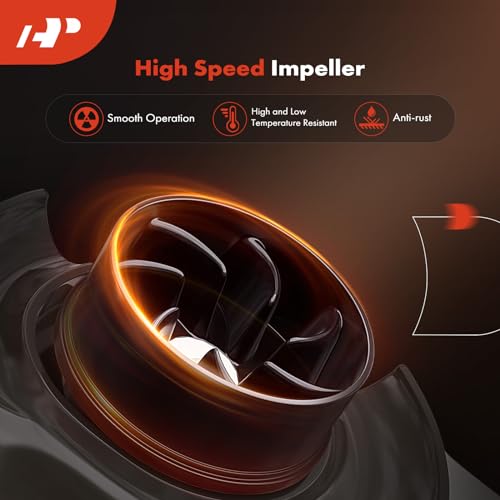
- Material features: Corrosion- and abrasion-resistant housing
- Warranty: One-year unlimited-mileage guarantee
What Does the Auxiliary Coolant Pump Do?
The pump supplements coolant circulation when the primary engine-driven pump cannot provide the flow requested by the vehicle’s control system.
Depending on the application, it may support:
- Cabin-heater performance
- Coolant circulation at idle
- Cooling after engine shutdown
- Turbocharger heat management
- Engine temperature control during high-load operation
- More consistent coolant flow through a secondary circuit
Volkswagen describes the later 1K0965561J revision as an engine auxiliary water pump that provides supplemental coolant circulation, including circulation supporting heater-core performance.
This pump does not replace the main water-pump assembly integrated with or installed near the engine thermostat housing on many 2.0T applications.
Common Symptoms of a Failed Auxiliary Pump
A faulty auxiliary coolant pump may cause:
- Weak cabin heat at idle
- Inconsistent heater temperature
- Coolant circulation faults
- Check Engine Light
- Cooling-system warning
- Pump-related diagnostic trouble codes
- Excessive heat after engine shutdown
- Unusual humming, grinding or whining
- Coolant leakage around the pump
- Pump that does not run when commanded
- Electrical faults or blown fuses
Some vehicles may continue driving with a failed auxiliary pump, but the related cooling or heating function may be reduced. Ignoring the problem can increase thermal stress in the circuit the pump is supposed to support.
Diagnose the Pump Before Replacement
Before ordering, verify:
- The exact diagnostic trouble code.
- The original pump’s part number.
- Power and ground at the electrical connector.
- Connector condition and terminal tension.
- Related fuse and relay operation.
- Coolant level.
- Evidence of air trapped in the system.
- Whether coolant is leaking from a hose rather than the pump.
- Pump activation with a capable scan tool.
- Main water-pump and thermostat operation.
A new pump cannot repair broken wiring or an unplugged connector. Automotive diagnostics remain stubbornly opposed to replacing the most convenient part first.
If coolant loss is present, use our guide on how to find a coolant leak before condemning the pump.
Auxiliary Pump Versus Main Water Pump
| Component | Auxiliary electric pump | Main water pump |
|---|---|---|
| Reference discussed here | 1K0965561D | Varies by engine |
| Drive type | Electric | Mechanical or electrically managed assembly |
| Primary purpose | Supplemental circulation | Main engine-coolant circulation |
| Operation with engine off | Possible | Application-dependent |
| Replaces thermostat housing | No | Sometimes integrated |
| Controls all engine cooling | No | Primary circulation component |
Ordering the auxiliary pump to replace a leaking main water-pump housing will not solve the leak. They are separate components even when an online marketplace decides both should simply be called “engine water pump.”
Installation Notes
Never open the cooling system while the engine is hot. Pressurized coolant can cause serious burns.
General replacement steps include:
- Allow the engine to cool completely.
- Disconnect the battery when required by service information.
- Locate the auxiliary pump using the OE repair manual.
- Drain or clamp the affected coolant circuit.
- Disconnect the electrical connector.
- Release the hose clamps.
- Remove the coolant hoses from the pump.
- Transfer any required mounting hardware.
- Install the replacement with the correct flow orientation.
- Reconnect both hoses and the electrical connector.
- Refill with coolant meeting VW/Audi specifications.
- Bleed the cooling system.
- Activate the pump with a scan tool when required.
- Check for leaks and stored fault codes.
Mark the hose locations before removal. Installing an electric pump backward is an impressively efficient way to create poor coolant flow using a brand-new part.
If the coolant is contaminated or incompatible fluids have been mixed, review our guide on how to flush a car cooling system before refilling it.
Coolant Selection Matters
Use coolant that meets the specification required for the exact Audi or Volkswagen model. Color alone does not establish compatibility.
Mixing incompatible coolant can cause:
- Deposit formation
- Reduced corrosion protection
- Seal deterioration
- Restricted heater-core flow
- Pump damage
- Sludge inside small coolant passages
Our guide to automotive coolant types explains why coolant chemistry matters more than whatever color happens to look familiar.
Frequently Asked Questions
Is 1K0965561D the primary engine water pump?
No. It is an auxiliary electric coolant pump that supplements circulation in specific operating conditions.
What vehicles does this A-Premium pump fit?
It fits select Audi A3, Q3 and TT models plus Volkswagen Beetle, CC, Eos, GTI, Jetta, Passat and Tiguan applications. Exact fitment depends on the engine code and production date.
Does it fit every Volkswagen 2.0T engine?
No. Several generations of Volkswagen 2.0T engines use different cooling layouts and pump revisions. Verify the OE number or VIN.
Does it fit a 3.6L Passat?
Some catalogs list 2009–2010 Passat 3.6L applications, but that engine is a VR6—not a four-cylinder. Confirm the original pump number before ordering.
Does it fit diesel models?
The supplied application list does not identify TDI diesel models. Do not assume diesel compatibility without OE-number confirmation.
What supersedes 1K0965561D?
The later 1K0965561J is commonly cataloged in the same auxiliary-pump family. Supersession should still be confirmed using the VIN.
Can a failed auxiliary pump cause overheating?
It can reduce circulation through the circuit it supports, but engine overheating can also result from low coolant, thermostat failure, the main water pump, radiator restriction or fan problems.
Can it cause weak heat at idle?
Yes. Volkswagen describes this pump family as providing supplemental coolant circulation that can improve flow through the heater core.
Is the pump activated after engine shutdown?
It may operate after shutdown on certain applications to manage retained heat. Control strategy varies by vehicle and engine.
Is the warranty unlimited mileage?
A-Premium states that the pump carries a one-year unlimited-mileage guarantee. Review the seller’s current warranty terms before ordering.
Official reference information for the later revision is available through Volkswagen’s 1K0965561J auxiliary water-pump listing. Additional application details are available from ECS Tuning’s VAG auxiliary-pump catalog.





There are no reviews yet.