

Special Warning for the 2012 BMW 328i
A 2012 BMW 328i can have substantially different cooling-system hardware depending on its chassis and engine.
- The F30 sedan with the N20/N26 turbocharged four-cylinder may use this pump.
- An E9x model with the N51/N52 naturally aspirated six-cylinder uses a different electric pump.
Verify the engine rather than ordering by year and badge alone.
Reference Numbers
This pump may replace or cross-reference:
- 11518635089
- 11-51-8-635-089
- 11517604027
- 11-51-7-604-027
- 11518625097
- 115-2280
- EWP101
- US8135
- 1152280
Part numbers are provided for cross-reference purposes. Match the number on the original pump whenever possible.
The BimmerWorld N20/N26 pump listing confirms 11518635089 as an electric water pump used on F22, F30, F32, F10, X1, X3, X4 and Z4 four-cylinder applications. Turner Motorsport also catalogs 11518635089 for N20/N26 engines.
Package Contents
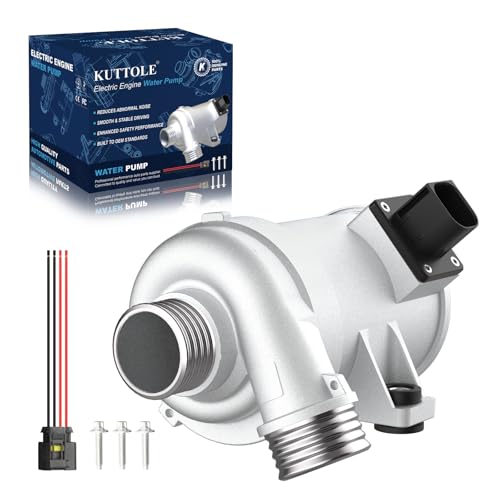
- One electric engine water pump
- One replacement wiring harness
- Three mounting bolts
- One set of installation instructions
The included bolts are useful because BMW water-pump mounting hardware may be designated for one-time use. Never substitute random hardware without confirming the required length, grade and tightening procedure.
This package does not list a thermostat. If the thermostat is old, leaking or storing temperature-control faults, consider replacing it during the same service because access overlaps.
How the BMW N20/N26 Electric Pump Works
The pump is controlled by the engine computer rather than driven continuously by a belt. Pump speed can change according to:
- Engine temperature
- Engine load
- Turbocharger heat
- Requested cabin heat
- Cooling-system demand
- Engine-management strategy
- Post-shutdown cooling requirements
Variable pump operation reduces mechanical drag and gives the engine computer greater control over thermal management. The downside is that an internal electronic failure can stop coolant circulation with very little mechanical warning.
For a broader explanation of coolant flow, system pressure and heat rejection, review the Complete Car Cooling System Guide.
Common Failure Symptoms
A failing BMW electric water pump may cause:
- Engine-temperature warning
- Rapid overheating
- Cooling fan running continuously at high speed
- Reduced-power or limp-mode operation
- Pump communication or speed faults
- Coolant leakage
- Whining or unusual electrical noise
- Weak or inconsistent cabin heat
- Temperature fluctuations
- Pump that fails to activate during bleeding
Our guide explaining why a car overheats provides a complete diagnostic starting point.
If temperature rises primarily while driving or under boost, follow Why Does My Car Overheat While Driving? before assuming the pump is the only possible cause.
Diagnose the Pump Before Replacing It
The pump should be tested as part of the complete cooling and electrical system.
Recommended diagnostic checks include:
- Scan the vehicle for BMW-specific fault codes.
- Compare commanded pump speed with actual operation.
- Check battery and charging-system voltage.
- Verify pump power and ground.
- Inspect the fuse and power-distribution circuit.
- Examine the connector for heat, corrosion or coolant intrusion.
- Inspect the harness for damaged insulation.
- Confirm the cooling system is full.
- Check for trapped air.
- Inspect the radiator, thermostat, hoses and expansion tank.
- Activate the pump with an appropriate scan tool when supported.
- Consider engine-computer failure only after the other circuits pass testing.
A coolant-temperature circuit fault can imitate cooling-system trouble or make the computer react to inaccurate data. Use the P0115 coolant-temperature sensor circuit guide when electrical temperature faults are present.
For readings that change unexpectedly during warm-up, consult the P0116 coolant-temperature performance guide.
Why the Included Wiring Harness Matters
Certain BMW N20/N26 pump replacements may involve an updated connector or repair harness. The harness must be installed using the supplied instructions and proper automotive wiring practices.
Check for:
- Correct wire identification
- Secure terminal engagement
- Proper sealing
- Approved splicing method
- Heat protection
- Strain relief
- Routing away from exhaust components
- Protection from water and road debris
Do not connect wires solely by color without confirming circuit position. A wrong connection can damage the pump, control circuit or engine computer. Electricity remains deeply committed to punishing guesses.
Check for Coolant Leaks
Before ordering the pump, inspect:
- Pump housing and seals
- Thermostat assembly
- Expansion tank
- Radiator seams
- Quick-connect hose fittings
- Cylinder-head coolant flange
- Turbocharger coolant lines
- Heater hoses
- Undercar splash shield
Coolant can travel along hoses and covers before dripping, making the pump appear guilty when the leak started above it. Follow our step-by-step coolant-leak diagnosis and pressure-test the system while cold.
Water Pump or Thermostat?
Pump and thermostat failures can produce similar symptoms.
| Symptom | More likely cause |
|---|---|
| Pump-speed or communication fault | Pump, harness or power circuit |
| Cooling fan immediately runs at maximum speed | Pump or temperature-control fault |
| Engine consistently warms too slowly | Thermostat stuck open |
| P0128 with no overheating | Thermostat or temperature-sensing problem |
| No circulation during commanded pump operation | Pump or electrical supply |
| Coolant leak at thermostat housing | Thermostat assembly or connection |
| Rapid overheating under load | Pump, thermostat, trapped air or coolant loss |
Use our bad thermostat versus bad water pump comparison before loading the parts cannon.
A P0128 coolant-thermostat code usually indicates that the engine is warming too slowly. That is different from a failed pump causing rapid overheating.
Installation Overview
Professional installation is recommended because pump access, electrical work and cooling-system bleeding require care.
A typical installation involves:
- Allowing the engine to cool completely.
- Disconnecting battery power as specified.
- Raising and safely supporting the vehicle.
- Removing underbody panels and braces as required.
- Draining the coolant into a suitable container.
- Disconnecting the pump wiring.
- Removing the pump hoses.
- Removing the original pump and mounting hardware.
- Comparing both pumps before installation.
- Installing the included wiring harness when required.
- Installing the pump with new bolts and seals.
- Refilling with BMW-approved coolant.
- Running the electronic bleeding procedure.
- Clearing applicable diagnostic codes.
- Confirming pump operation and stable temperature.
- Rechecking for leaks after the engine cools.
If the coolant is contaminated or incompatible, follow our guide to flushing a cooling system safely.
Bleeding the Cooling System
Air trapped during service can interrupt circulation and produce overheating immediately after the repair.
Possible symptoms include:
- Temperature spikes
- Gurgling
- Weak cabin heat
- Unstable coolant level
- Pump cavitation
- Cooling-system faults
Use the BMW-specified electronic bleeding procedure for the exact chassis. Maintain battery voltage with an appropriate charger if required, keep the coolant level correct and never operate the pump dry.
A thermostat, water-pump or coolant service can also contribute to intermittent temperature readings. Our P0119 intermittent coolant-temperature circuit guide explains how connectors, wiring and trapped air can affect temperature signals.
Cooling a Turbocharged BMW
The N20 and N26 engines create additional thermal load through turbocharging. Pump operation is only part of the solution; the radiator, cooling fan, airflow path, thermostat, coolant mixture and tune must also work properly.
Our guide to turbo-car cooling-system upgrades explains why a larger radiator or replacement pump cannot repair poor airflow, trapped air, coolant loss or an incorrect engine calibration.
Stop Driving When It Overheats
Do not continue driving if:
- A red temperature warning appears
- Steam exits the engine compartment
- Coolant is pouring out
- The heater suddenly blows cold
- The engine enters reduced-power mode
- The temperature rises rapidly
- The electric fan runs at maximum speed and overheating follows
Continuing can damage the cylinder head, head gasket, turbocharger or complete engine. Review When Should You Stop Driving Your Car? for the warning signs that justify shutting it down.
Features and Benefits
- Designed for compatible BMW N20/N26 applications
- Electronically controlled coolant circulation
- Aluminum and heat-resistant composite construction
- Replacement wiring harness included
- Three new mounting bolts included
- Tested for operation and leakage
- Helps restore controlled engine temperature
- Direct-fit mounting for confirmed applications
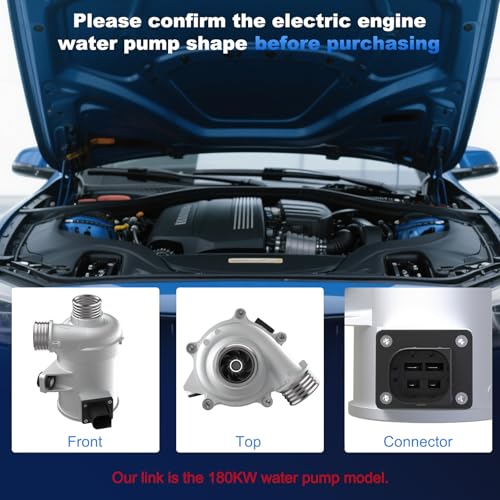
- Suitable for 180 kW pump configurations
- Installation instructions included
“OE replacement” describes the intended fit and function. It does not mean the product is genuine BMW or manufactured by BMW’s original supplier unless the seller explicitly identifies it that way.
Frequently Asked Questions
What BMW engines use this water pump?
This pump is primarily intended for compatible N20 and N26 turbocharged 2.0-liter four-cylinder engines using the 180 kW pump configuration.
Does it fit every 2012–2016 BMW 328i?
No. Confirm that the vehicle has an N20 or N26 engine and the correct pump number. Earlier N51/N52 six-cylinder configurations use a different pump.
Does it fit a BMW 335i or 435i?
No. Those models generally use six-cylinder engines with different cooling-system components.
Does it fit a BMW 320i?
Do not assume compatibility. Some 320i applications use a different-output pump. Match the VIN, original part number, connector and pump housing.
Does this package include a thermostat?
No thermostat is listed. The stated package includes the pump, wiring harness, three bolts and instructions.
Why does the BMW cooling fan run at full speed?
Maximum fan operation can be an emergency response to a failed pump, abnormal temperature data or another cooling-system fault. Scan the vehicle before replacing components.
Can the pump run after the engine is switched off?
Yes. The engine-management system may operate the electric pump after shutdown when its cooling strategy requires continued circulation.
Must the cooling system be bled after installation?
Yes. Complete the correct BMW electronic bleeding procedure and confirm that the pump runs without air pockets.
Is the wiring harness always required?
Not necessarily. Compare the installed connector and follow the included instructions. Do not modify a healthy harness without confirming that the supplied update applies.
What is the primary OE number?
The primary current reference is 11518635089. Earlier or superseded references may include 11517604027 and 11518625097.
Final Verdict
This electric water pump is a strong fitment candidate for select BMW vehicles powered by the 180 kW N20 or N26 2.0-liter turbo engine. The included harness and three bolts make it more complete than a bare replacement pump, but installation still requires part-number verification, electrical testing and proper cooling-system bleeding.
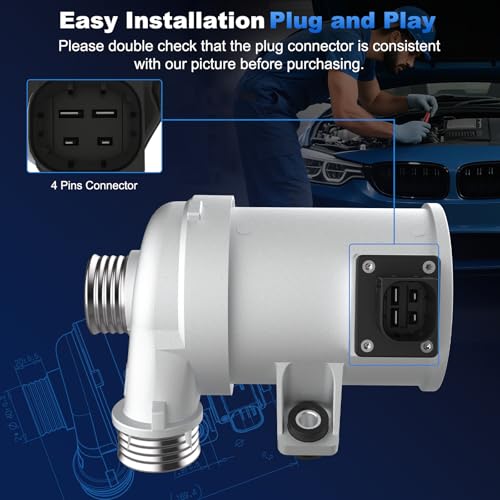
Confirm the VIN, engine code, pump shape, four-pin connector and original part number before purchasing. With BMW cooling parts, “it looks close” is rarely the opening chapter of a cheap repair.



There are no reviews yet.