
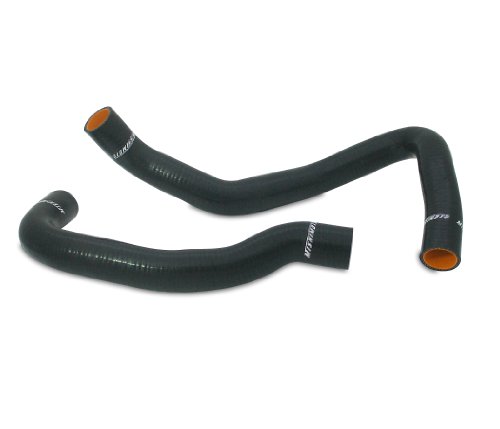
Reinforced Silicone Construction
Mishimoto constructs these radiator hoses using two layers of high-grade silicone and embedded heat-resistant fibers.
This reinforced design provides increased resistance to heat, pressure and repeated engine-temperature changes compared with deteriorated factory rubber hoses.
Mishimoto lists the following specifications:
- Maximum temperature: 330°F
- Listed inner diameter: 1.34 inches
- Listed outer diameter: 1.69 inches
- Color: Black
- Construction: Dual-layer reinforced silicone
Dimensions should be treated as manufacturer-listed specifications rather than universal measurements for every section of each molded hose.
Product Features
- Direct fit for 1989–1998 Nissan 240SX models with KA engines
- Compatible with KA24E and KA24DE applications
- Covers S13 and S14 chassis generations
- High-grade silicone construction
- Embedded heat-resistant reinforcing fibers
- Increased heat and pressure tolerance
- Maximum temperature rating of 330°F
- Factory-style black appearance
- OEM-replacement hose routing
- Backed by the Mishimoto Lifetime Warranty
Vehicle Fitment
Make: Nissan
Model: 240SX
Model years: 1989–1998
Chassis: S13 and S14
Compatible engines: KA24E and KA24DE
Color: Black
Manufacturer part number: MMHOSE-240SX-89KABK
Always confirm the engine, radiator and water-outlet configuration before ordering. The kit is designed around KA-powered vehicles using compatible factory-style cooling connections.
Why Replace the Original 240SX Radiator Hoses?
Even the newest U.S.-market 240SX is now several decades old. If the car still has original cooling hoses, they have already provided substantially more service than Nissan probably expected.
Rubber hoses can degrade internally while appearing acceptable from the outside. Heat cycles, coolant contamination and engine movement can cause them to soften, swell, crack or collapse.
Common warning signs include:
- Coolant residue near a hose connection
- Cracks around the clamp area
- Soft or swollen sections
- A hose that feels unusually hard
- Oil contamination
- Abrasion against the fan shroud or accessory drive
- Sweet coolant odor after driving
- Unexplained coolant loss
- Temperature changes at highway speed
- Internal hose collapse
A failed radiator hose can quickly drain enough coolant to overheat the KA engine. Upgrading the hoses is considerably cheaper than discovering how much machine-shop work an overheated aluminum cylinder head requires.
Black Hoses Keep the Engine Bay Clean
The MMHOSE-240SX-89KABK kit uses a restrained black finish that works well in factory restorations, street cars and performance builds.
Black silicone provides the durability and appearance of an aftermarket hose without turning the cooling system into the loudest visual component under the hood. That makes it particularly suitable for clean OEM-plus engine compartments.
Owners who prefer stronger color contrast can also investigate Mishimoto’s other available color options, but fitment should always be confirmed by part number.
Installation Overview
Never open the radiator cap or disconnect a hose while the engine is hot. Pressurized coolant can cause serious burns.
Basic installation includes:
- Allow the engine to cool completely.
- Raise and support the vehicle safely if lower access is required.
- Place a suitable drain pan beneath the radiator.
- Remove the radiator cap only after confirming the system is cold.
- Open the radiator drain and collect the coolant.
- Remove the factory upper and lower hoses.
- Clean and inspect every hose connection.
- Compare the new and original hose shapes.
- Install the Mishimoto hoses without twisting them.
- Position each clamp behind the raised bead on its fitting.
- Refill the cooling system with the correct coolant mixture.
- Bleed trapped air and verify heater operation.
- Inspect every connection after reaching operating temperature.
Recheck the coolant level after the engine cools. Inspect hose routing and clamp tension again after several complete heat cycles.
For additional access information, review our guide explaining how to remove a KA24DE. The procedure includes radiator draining and factory cooling-hose disconnection.
Inspect the Rest of the Cooling System
New radiator hoses cannot compensate for worn or damaged components elsewhere in the system. While the coolant is drained, inspect:
- Radiator tanks and hose necks
- Radiator cap
- Water pump
- Thermostat and housing
- Cooling fan and fan clutch
- Electric auxiliary fan
- Overflow hose and reservoir
- Heater hoses
- Drive belts
- Coolant temperature sensor connections
Airflow also matters. Bent radiator fins, missing shrouding and poorly mounted electric fans can reduce cooling performance even when every hose is new.
Readers planning a larger project can review the 240SX engine-removal guide or browse additional articles in the KA24DE technical archive.
Is This Hose Kit Compatible With an Engine-Swapped 240SX?
Not automatically.
Engine swaps often change the location, diameter and angle of the coolant outlets. Radiator selection can also affect the required hose lengths and routing.
A 240SX with an SR20DET, RB25DET, 2JZ or LS engine may require a different application-specific kit, modified hoses or custom coolant plumbing.
For example, our 2JZ-powered 240SX swap guide discusses the cooling-system changes required when the factory KA is replaced.
Measure the installed engine and radiator connections instead of assuming the chassis determines every cooling component.
Why Choose the Mishimoto 240SX KA Hose Kit?
The MMHOSE-240SX-89KABK provides a direct cooling-system refresh for KA-powered S13 and S14 models.
Its reinforced silicone construction improves resistance to temperature and pressure, while the black finish retains a clean engine-bay appearance. The 330°F maximum temperature rating and Mishimoto Lifetime Warranty add value for daily-driven, drift, autocross and street-performance builds.
Additional cooling-system parts and performance components are available through Pro Street Online. More Nissan technical guides can be found at My Pro Street.
Internal links:
- How to Remove Your KA24DE
- How to Remove a Nissan 240SX Engine
- How to Swap a 2JZ-GTE Into a 240SX
- KA24DE Technical Articles
- Pro Street Online






There are no reviews yet.